Best rat traps for a chicken coop
A coop is a rat buffet with a roof, and the usual rodent advice is dangerous here: poison, open snap traps and glue boards all put the flock at risk.
By Ryder M.Published Updated
Swat & Snap earns a commission from qualifying purchases made through the links on this page, at no extra cost to you. It does not change which products we pick — see how we pick and our affiliate disclosure.
Why a coop needs different advice
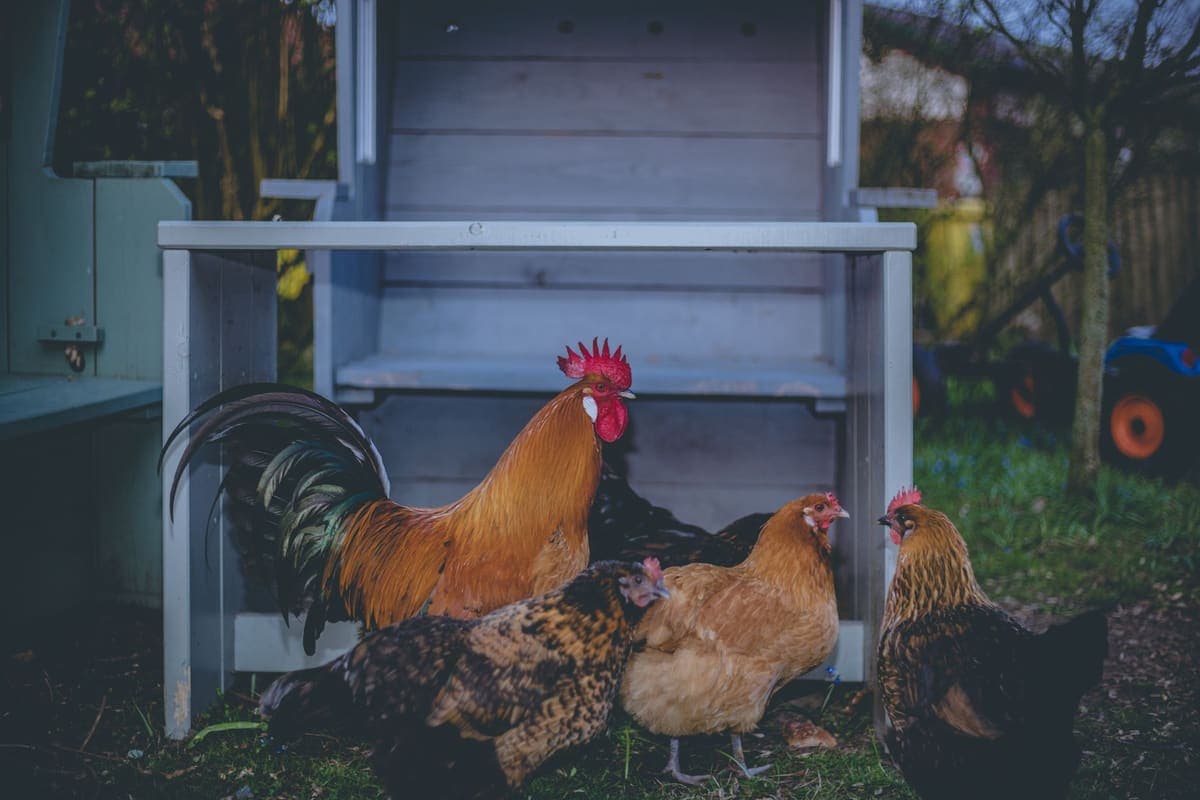
A chicken coop concentrates everything a rat wants in one place: spilled grain, a warm dry structure, bedding to nest in, water, and often eggs. Rats will tunnel under a coop and live there permanently, and the problem does not stay cosmetic — they foul feed, gnaw structure, take eggs and occasionally kill chicks.
So you have a real rat problem and a hard constraint: whatever you deploy has to be completely unable to harm a bird. That rules out most of what the rodent aisle sells.
Rodenticide is out, without exception. Chickens will eat bait pellets straight out of a station if they can reach one, and a bait station sized for a rat is not chicken-proof in a run. Worse, a rat that has taken an anticoagulant stays alive for days and is easy prey — a hen that eats a poisoned rat, or a farm cat or an owl that does, takes the dose. The EPA restricts how consumer rodenticide may be sold because of exactly these secondary hazards. There is no version of this that is safe around livestock you eat eggs from. Rat trap vs poison has the longer argument.
Glue boards are out. They catch birds. A chicken that stands on one will injure itself trying to get free, and wild birds around a coop are at the same risk.
A bare snap trap inside the run is out. A full-size rat trap has enough spring force to break a small dog's toe. It will badly injure a chicken's foot, and chickens investigate anything new on the ground immediately.
What is left is the right answer anyway: lethal traps, enclosed so the birds cannot reach the mechanism, placed where the rats travel rather than where the chickens scratch.
What to look for
An enclosure the birds cannot get into. This is the whole specification. A locked weatherproof station with rat-sized entry holes, loaded with snap traps rather than bait, gives you a trap that kills rats and is physically inaccessible to a hen. Buy the station for the lock and the lid; use traps inside it.
Full rat size. A mouse trap will injure rather than kill a rat, which is cruel and makes every remaining rat far harder to catch. If you are unsure which rodent you have, mice vs rats settles it from the droppings.
Weatherproof. Everything here lives outdoors permanently. Wooden traps swell, plastic goes brittle in sun, and electronic contacts corrode in a damp coop.
Self-resetting, if you can afford it. A coop is under continuous pressure from outside rather than hosting one closed population, so a trap that resets itself keeps working between your visits. Mounted high on a post, it is also out of reach of the birds by position as well as by design.
Anchorable. Rats drag things. A station that can be screwed to a paver or a post stays where you put it.
Quick picks
| # | Product | Best for | Mechanism | Price |
|---|---|---|---|---|
| 1 |  Our pickVictor Easy Set Rat Trap (M205)The rat-sized version of the trap that defined the category. Enough spring force to be lethal instantly, which matters more with rats than with mice. | Most rat jobs | Spring bar, expanded trigger pedal | |
| 2 |  JT Eaton Top Loader Bait StationSold as a bait station, better used as a weatherproof box for two snap traps — all the placement advantage, none of the poison. | Holding snap traps outdoors | Locked box, top access | |
| 3 |  Victor Electronic Rat Trap (M240)A large shock tunnel that handles rat-sized animals. The no-touch disposal is worth more in an attic than anywhere else in the house. | Attics and crawl spaces | High-voltage shock tunnel | |
| 4 |  Goodnature A24 Automatic Rat TrapA gas-powered piston trap that resets itself and drops the rat underneath. Expensive, and the only thing here that handles continuous outdoor pressure without daily attention. | Outdoor, ongoing pressure | CO2 piston, self-resetting |
#ad — every price link goes to Amazon and Swat & Snap earns a commission on qualifying purchases. No price is shown until it can be pulled live from the retailer.
Victor Easy Set Rat Trap (M205)
Victor · Most rat jobs
The rat-sized version of the trap that defined the category. Enough spring force to be lethal instantly, which matters more with rats than with mice.
- Kills instantly when placed square to a runway, which cheap traps often do not
- Wide pedal fires even on a cautious approach
- Genuinely dangerous to set in a home with pets — it must be boxed
- Rats are neophobic: expect to leave it unset for several days first
Check price on Amazon
JT Eaton Top Loader Bait Station
JT Eaton · Holding snap traps outdoors
Sold as a bait station, better used as a weatherproof box for two snap traps — all the placement advantage, none of the poison.
- Turning a station into a trap box is the single best rodent tip on this site
- Top access means you service it without lying on the ground
- Bulky where space is tight
- Plastic goes brittle after a few summers in direct sun
Check price on Amazon
Victor Electronic Rat Trap (M240)
Victor · Attics and crawl spaces
A large shock tunnel that handles rat-sized animals. The no-touch disposal is worth more in an attic than anywhere else in the house.
- Tunnel shape keeps the plates away from paws
- You tip it out — no bar to release over a dead rat
- D cells, and it drains them faster than the box suggests
- Damp crawl spaces corrode the contacts
Check price on Amazon
Goodnature A24 Automatic Rat Trap
Goodnature · Outdoor, ongoing pressure
A gas-powered piston trap that resets itself and drops the rat underneath. Expensive, and the only thing here that handles continuous outdoor pressure without daily attention.
- Resets itself, so a yard with steady rat traffic does not need a daily round
- No rodenticide, so nothing that scavenges the carcass is poisoned
- Costs many times a snap trap, and the CO2 canisters are an ongoing spend
- Mounted at a fixed height — not a solution for inside a kitchen
Check price on Amazon
Where to put them
The rule is simple: outside the run, on the rat runs, never inside with the birds.
Rats travel the same routes every night, with one flank against a vertical surface, and they leave obvious evidence. Look for:
- Burrow entrances — smooth holes roughly 5-8 cm across, usually against the coop foundation, under a shed, or at the base of a wall or fence
- Runways — flattened trails in grass, or dark greasy smears along the bottom of boards
- Droppings in a line, raisin-sized and blunt-ended
- Gnaw damage at the corners of feed bins and around the coop door
Place stations against the coop exterior wall, along the fence line the runs follow, and between the burrows and the feed. Anchor each one. For a self-resetting trap, mount it nose-down on a post or a tree on the run, at a height no bird can reach.
Then pre-bait before you arm anything. This is the step that separates rat trapping from mouse trapping, and skipping it is why most people conclude rat traps do not work.
Rats are neophobic — they avoid new objects for days. Put the stations out with the traps inside baited but unset for three to five nights. Let the rats feed off them with nothing happening. Then arm every trap on the same night. Trap-shy rats covers what to do if you have already made this mistake, and how to get rid of rats is the full campaign.
Bait, when the whole yard is already food
The usual high-value rat baits lose their edge next to a feeder full of grain. You are competing with an unlimited supply of exactly what rats want.
Two things help. First, fix the feed — covered in the next section — so your bait is no longer the second-best option. Second, bait with something the coop does not provide: peanut butter mixed with oats, bacon fat, or a piece of dried fruit tied to the trigger so it cannot be carried off. Nesting material pressed into peanut butter works well in cold weather. Best rat trap bait ranks them.
Tie or wire bait on where you can. A rat that removes bait cleanly has learned that your station is a free feeder.
The part that matters more than the traps
You can trap rats out of a coop and have them back in three weeks, because the coop is still broadcasting an invitation. Rodent control is a named element of poultry biosecurity guidance for a reason.
Feed, in order of impact:
- Store feed in metal bins with tight lids. Rats chew through plastic tubs and bags in a night.
- Take feeders in overnight, or use a treadle feeder that only opens under a bird's weight. This single change does more than any trap.
- Clear spilled grain daily. A hanging feeder with a wide lip throws less on the ground.
- Do not leave scraps or kitchen waste in the run overnight.
- Collect eggs daily. Rats take eggs, and an egg is a reason to stay.
Structure:
- Hardware cloth, not chicken wire, on every opening — rats go through chicken wire. Use 1.2 cm mesh or finer.
- Skirt the coop: hardware cloth extending 30 cm out from the base, buried or pinned flat, stops burrowing underneath.
- Raise the coop on legs so there is open, lit space beneath it. Rats will not nest where they are exposed.
- Close gaps at the door, the pop hole and the roof line. A rat needs about 20 mm.
- Clear cover within a few metres — woodpiles, long grass, pallet stacks. Rats cross open ground reluctantly.
Rats in the yard covers the habitat side in more depth, and best outdoor rat traps is the general outdoor roundup if your problem is not coop-specific.
Handling and hygiene
Wear gloves to clear a trap, and bag the carcass before it goes in the bin rather than leaving it where a dog or a hen can reach it. Do not sweep or hose droppings dry — the CDC's rodent cleanup guidance is to wet the area with disinfectant first and then wipe it up, because dry sweeping puts particles into the air.
Wash your hands before you handle eggs or feed, and keep the trap stations away from the areas you walk the birds through.
What to expect
With pre-baiting done properly, a coop rat population usually drops sharply in the first armed night and then tails off over a week or two. Because a coop sits under continuous outside pressure, expect to keep two or three stations permanently in place and to check them weekly — this is maintenance rather than a one-off job.
If you are catching rats indefinitely and the count never falls, the feed is still available somewhere. Go back up to the list.
Frequently asked
What is the best rat trap for a chicken coop?
Can you use rat poison around chickens?
Will a rat trap hurt a chicken?
How do I keep rats out of a chicken coop for good?
Should I pre-bait rat traps at a coop?
More on rats
Rats are cautious, strong and much harder to trap than mice. Everything here assumes you only get one good attempt at a wary animal.
Not sure yet? Read how we pick.
Ryder M.
Ryder M. is the hands-on owner behind Magoo Media Group. He writes Swat & Snap because he got tired of pest-control advice that was either a sales pitch or a scare story.
Related on Swat & Snap
- The best outdoor rat trapsWeatherproof sets, self-resetting traps, and how to keep non-target animals out of an outdoor trap.

- Rats in the yardThe food and harborage audit that actually ends it, plus where outdoor stations go.

- How to get rid of ratsPre-bait, set everything at once, then exclude. Timeline, the harborage audit, and when to call someone.

- Trap-shy ratsWhy a survivor stops feeding, and the reset that gets a stalled campaign working again.

- Rat trap vs poisonWhere the rat dies, what happens next, and why a locked station full of traps beats a locked station full of bait.
- The best rat trap baitWhat rats actually take, how to secure it so they cannot lift it, and why pre-baiting matters more.

- Pet-safe rat trapsTunnel traps and locked stations for homes with animals — the force involved makes this mandatory, not optional.