How to clean up mouse droppings safely
This is the one part of a mouse problem with a genuine health rule attached, and the rule is counter-intuitive: the broom and the vacuum are the wrong tools.
By Ryder M.Published Updated
Swat & Snap earns a commission from qualifying purchases made through the links on this page, at no extra cost to you. It does not change which products we pick — see how we pick and our affiliate disclosure.
Why the broom is the wrong tool
Every other page on this site is about mechanics: which trap, where, baited with what. This one is about a real health precaution, and it is worth two minutes of your time because the instinctive response — sweep it up, or run the vacuum over it — is the one thing public health guidance specifically tells you not to do.
Rodent droppings and dried urine can carry bacteria and viruses, and in parts of North America deer mice carry hantavirus. The transmission route that matters for cleanup is inhalation of aerosolised particles: dried droppings and urine crumble into dust, and sweeping or vacuuming lifts that dust into the air you are standing in. The CDC's rodent cleanup guidance is therefore built around one principle — wet it first, then wipe it up — so that nothing becomes airborne.
Hantavirus is rare. The point is not to alarm anyone; it is that the safe method is no harder than the unsafe one, so there is no reason to use the unsafe one.
Before you start
Finish the trapping first. Cleaning while mice are still active means doing it again next week. Keep traps running until a week has passed with no catch and no fresh droppings, then clean. Signs of mice in the house explains how to read whether the problem is actually over, and best mouse traps is the roundup if you still need to catch them.
Ventilate. Open the windows and doors of the affected room and leave it for at least 30 minutes before you go in to work. This matters most in closed-up spaces: a cabin, an attic, a crawl space, a shed, a stored camper.
Get the kit together so you are not improvising halfway through:
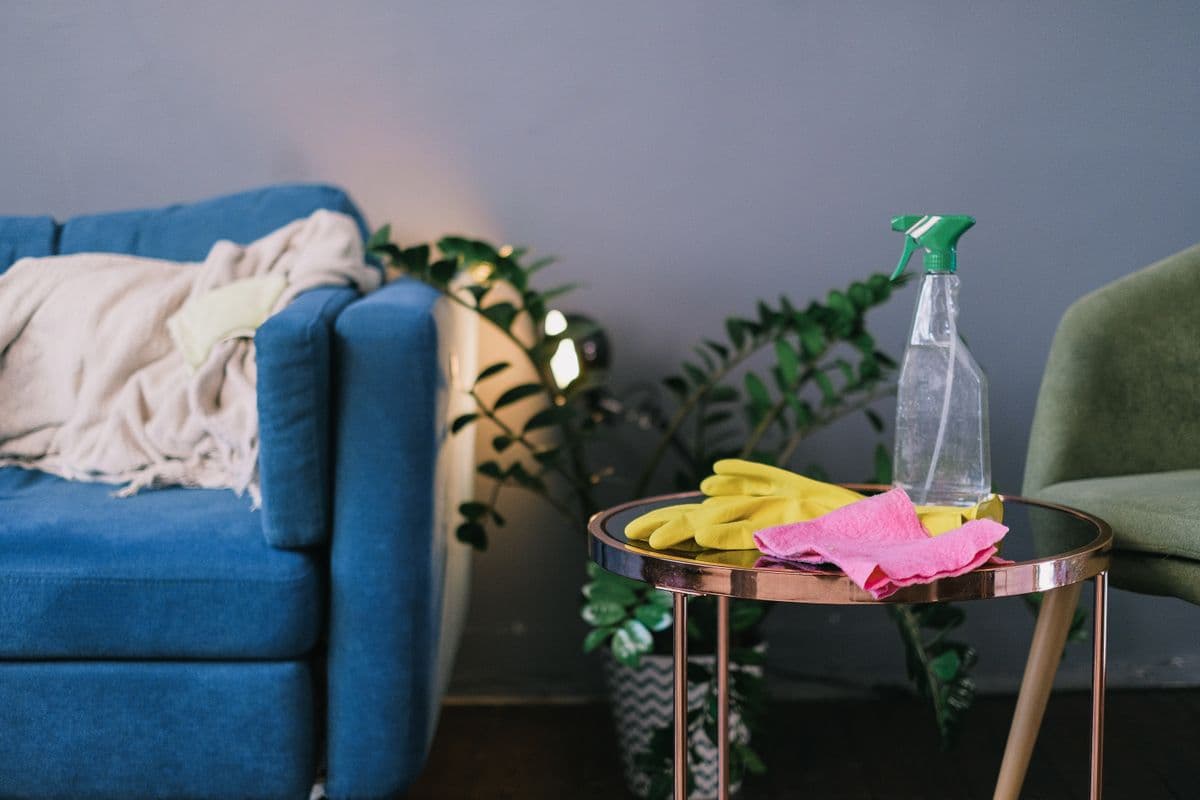
- Rubber, latex or nitrile gloves
- A disinfectant spray, or a fresh bleach solution of roughly one part bleach to nine parts water
- A spray bottle
- Paper towels
- Two trash bags
- A damp mop and a bucket for the floor afterwards
- In a heavily contaminated enclosed space — a crawl space, an attic, a cabin closed up all winter — add a respirator rated N95 or better, goggles and coveralls
Do not mix bleach with any other cleaner, especially anything containing ammonia.
The method, step by step
- Spray, do not sweep. Soak the droppings, urine stains and any nest material thoroughly with disinfectant or bleach solution. Let it sit for five minutes. The aim is for nothing to be dry when you touch it.
- Wipe up with paper towels and put them straight into a trash bag. Do not shake anything out.
- Nest material and dead mice go into the bag the same way, picked up with gloved hands or a paper towel — never bare-handed. Spray them first too.
- Double-bag and bin it outside. Seal the first bag, put it inside the second, and put it in an outdoor trash container with a lid.
- Disinfect the surface. Spray the whole area again — the cupboard floor, the drawer liner, the shelf, the baseboard — and wipe it down. For floors, mop with disinfectant rather than sweeping.
- Clean the tools. Wash the mop head, bucket and any reusable cloths with disinfectant.
- Wash your hands with soap and warm water after removing the gloves, even if the gloves stayed intact. If gloves were reusable, disinfect them before taking them off.
Specific items and surfaces
Food. Anything in a packet, box or bag that has been gnawed or has droppings on or in it is finished — bin it. Cans and sealed glass jars can be washed with disinfectant and kept. Do not try to salvage opened dry goods.
Cutlery, crockery and food-prep surfaces. Wash with hot soapy water, then disinfect. Run cutlery through a dishwasher cycle if you have one.
Countertops, shelves and drawers. Disinfect and wipe. Replace any paper liner rather than cleaning it.
Bedding, soft furnishings and clothing. Launder with detergent on a hot cycle. Items that cannot be washed should be aired in sunlight for several hours or dry-cleaned.
Carpets and upholstery. Use a steam cleaner or a carpet shampoo rather than a dry vacuum. Spray the affected patch with disinfectant first and let it sit.
Insulation, foam and cardboard. These do not clean. Contaminated loft insulation, upholstery foam and stored cardboard that has been nested in should be bagged and replaced. This is the main reason catching a problem early saves money, especially in a vehicle or a camper.
Attics, crawl spaces and cabins. Ventilate for at least 30 minutes, wear a respirator and goggles, and work in sections. These are the spaces where the CDC's extra precautions genuinely apply, because the dust has nowhere to go.
Quick picks
| # | Product | Best for | Mechanism | Price |
|---|---|---|---|---|
| 1 |  Our pickVictor Electronic Mouse Trap (M250S)A battery tunnel that delivers a high-voltage shock. You tip the mouse out without seeing or touching it, which is the whole appeal. | No-touch disposal indoors | High-voltage shock inside a tunnel | |
| 2 |  Victor Kill Vault Mouse Trap (M267)A snap trap sealed inside a plastic vault. The kill happens out of sight and out of reach, and you never touch the mouse. | Homes with a dog or a toddler | Enclosed snap bar in a sealed chamber | |
| 3 |  Catchmaster Glue Boards (72TC)We list these because people search for them, and because they are the one product on this site we recommend against using as a kill method. | Monitoring only — read the warning | Adhesive board, no kill |
#ad — every price link goes to Amazon and Swat & Snap earns a commission on qualifying purchases. No price is shown until it can be pulled live from the retailer.
Victor Electronic Mouse Trap (M250S)
Victor · No-touch disposal indoors
A battery tunnel that delivers a high-voltage shock. You tip the mouse out without seeing or touching it, which is the whole appeal.
- The tunnel is the safety feature — a dog's nose does not fit the plates
- Indicator light means you are not checking traps blind
- Tip-out disposal, no handling
- Batteries die, usually unnoticed, and a dead trap catches nothing
- Has to sit flat against a wall run or mice walk past it
Check price on Amazon
Victor Kill Vault Mouse Trap (M267)
Victor · Homes with a dog or a toddler
A snap trap sealed inside a plastic vault. The kill happens out of sight and out of reach, and you never touch the mouse.
- The enclosure is the reason to buy it: a dog cannot get to the bar
- Seals after firing, so there is no smell and nothing to see
- Sets by pressing the lid, not by arming a bar with your fingers
- Single-use, so a real infestation gets expensive
- Bulkier than a bare snap trap in a tight wall run
Check price on Amazon
Catchmaster Glue Boards (72TC)
Catchmaster · Monitoring only — read the warning
We list these because people search for them, and because they are the one product on this site we recommend against using as a kill method.
- Genuinely useful for one job: confirming a runway before you place real traps
- Flat enough to slide under an appliance where nothing else fits
- As a kill method it is indiscriminate and slow — use a snap or electronic trap instead
- Catches lizards, songbirds and kittens as readily as mice
Check price on Amazon
While you are in there: close the loop
The clean-up is a good moment to do the two jobs that stop a repeat, because you are already in the cupboard with a flashlight.
Seal what you can see. Any gap wider than a pencil is an entry point — pipe and cable penetrations under the sink, the gap behind the kickboard, the corner where the countertop meets the wall, the dryer vent, the threshold under an exterior door. Pack with copper mesh or coarse steel wool and seal over it; expanding foam alone gets chewed straight through.
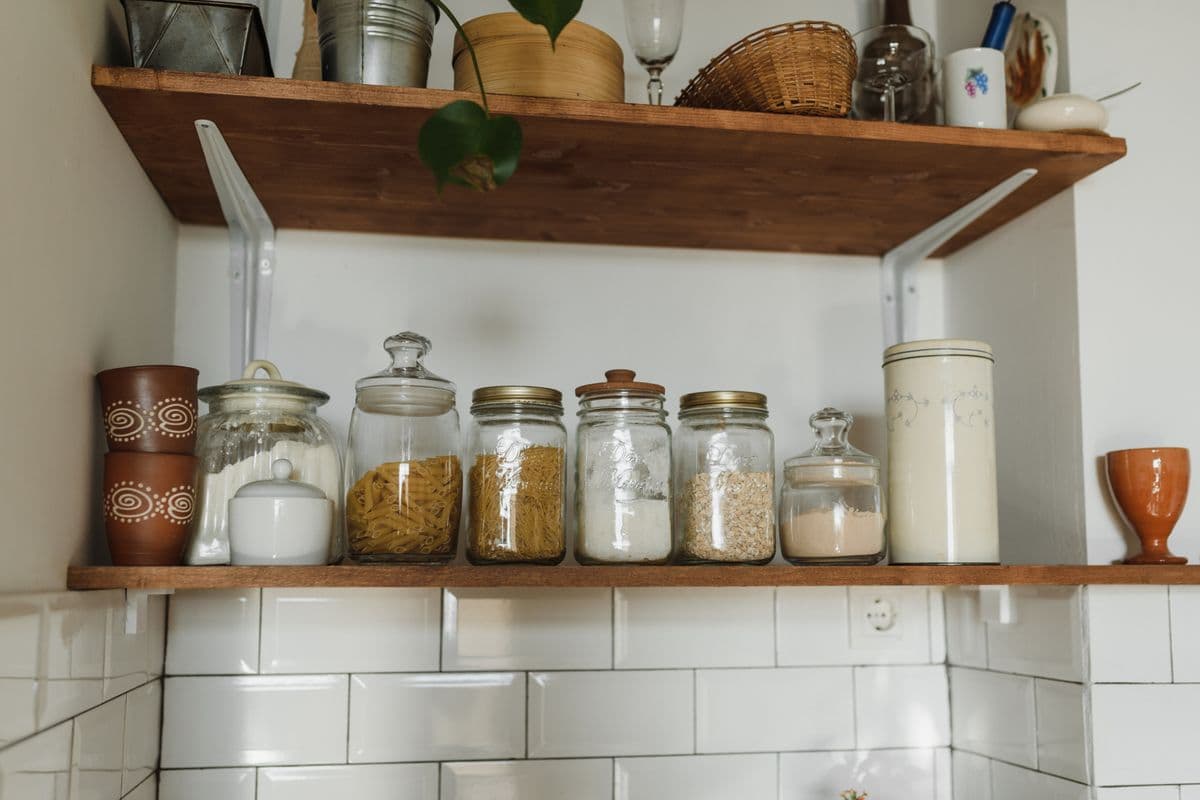
Take the food away. Dry goods into glass or metal containers, pet food up off the floor overnight, crumbs swept nightly, trash lidded. How to get rid of mice is the full sequence in order.
How to tell when it is actually over
Clean one area completely and note the date. Then check it:
- No fresh droppings after a week — fresh droppings are dark and slightly soft, older ones are grey and crumble — and no catches for a week means the population is cleared.
- Fresh droppings in a cleaned area means active traffic on that exact route. Put a trap there tonight.
- A persistent stale ammonia smell with no droppings usually means urine soaked into something porous nearby, or a carcass in a void. Follow your nose with the panel off.
Leave two traps set for that whole confirmation week. It costs nothing and it is the difference between "finished" and "paused".
What not to do
- Do not sweep or dry-vacuum droppings, including with a shop vac. This is the whole point of the guidance.
- Do not use a leaf blower or compressed air in an attic or crawl space to clear debris.
- Do not handle a dead mouse bare-handed, or let a pet near it.
- Do not mix bleach with ammonia-based cleaners.
- Do not clean while the infestation is still live — finish trapping first.
- Do not skip the gloves because it is only a few droppings. The method takes the same two minutes either way.
Frequently asked
Can you vacuum mouse droppings?
What should I use to clean mouse droppings?
Do I need a mask to clean up mouse droppings?
Should I clean up before or after trapping?
Is it safe to eat food that mice have been near?
More on mice
One mouse is rarely one mouse. This hub covers what kills them, what only looks like it does, and where to put the thing you buy.
Not sure yet? Read how we pick.
Ryder M.
Ryder M. is the hands-on owner behind Magoo Media Group. He writes Swat & Snap because he got tired of pest-control advice that was either a sales pitch or a scare story.
Related on Swat & Snap
- Signs of mice in the houseConfirm mice from droppings, smears, sounds and gnaw marks — and read how many you are dealing with.
- How to get rid of miceThe full sequence: find the runs, trap in quantity, bait small, seal the gaps. Timeline and what to skip.

- The best mouse traps, by situationSix traps chosen by situation — cheap and plentiful, pet-safe by design, no-touch, or live catch.
- Mice in wallsWhy you trap outside the cavity, how to find the exit points, and what to do about the smell.
- Best enclosed mouse trapsCovered snap, electronic and live traps that hide the catch and keep fingers and paws off the mechanism.

- How to get rid of ratsPre-bait, set everything at once, then exclude. Timeline, the harborage audit, and when to call someone.