DynaTrap DT1775 review
The DT1775 is the unit most people mean when they say "DynaTrap". It is a genuine trap rather than a bug zapper, which is the single most important thing to understand before buying one — and also the reason most of the disappointed reviews exist.
By Ryder M.Published Updated

Swat & Snap earns a commission from qualifying purchases made through the links on this page, at no extra cost to you. It does not change which products we pick — see how we pick and our affiliate disclosure.
What it is, and what it is not
The DT1775 is a hanging, mains-powered insect trap. Three things happen inside it:
- A UV bulb draws insects that navigate by light.
- A titanium-dioxide coated surface reacts with the UV to produce carbon dioxide — the cue mosquitoes actually use to find a warm-blooded host.
- A quiet fan pulls whatever comes close into a retaining cage, where the insects dehydrate.
That third step is the important one, and it is why this is a trap rather than a zapper. There is no electrified grid. Nothing is electrocuted, nothing snaps, and no insect fragments are scattered — a distinction that matters if the unit is going anywhere near a patio or a feed store.
The second step is what separates it from every zapper on the market. A bug zapper offers light and nothing else. Mosquitoes are not meaningfully drawn to light; they track CO2, body heat and skin chemistry, which is why University of Florida IFAS testing of electrocuting traps found mosquitoes to be a negligible fraction of the catch. A CO2-generating surface is a genuine attempt at the right lure. Do bug zappers work sets out that evidence, and bug zapper vs DynaTrap is the direct comparison.
So: a real mosquito product, built on the right mechanism, operating on a slow timescale.
The specifications that matter
Taken from DynaTrap's own stated figures for this model.
| DynaTrap DT1775 | |
|---|---|
| Mechanism | UV light + TiO2 CO2 surface + suction fan |
| Stated coverage | Up to 1 acre |
| Power | Mains, designed to run continuously |
| Catch handling | Retaining cage, emptied by hand |
| Consumables | Replacement UV bulbs, roughly annually |
| Noise | Fan only — no zap |
| Debris | None scattered; insects stay in the cage |
| Chemicals | None — no propane, no cartridges, no bait |
Two notes on reading that table honestly.
"Up to 1 acre" is a manufacturer figure under favorable conditions. An open acre of flat lawn is not the same object as a yard with dense planting, a fence line, a slope and prevailing wind. Treat it as the ceiling, not the expectation.
"Runs continuously" is a real cost, not a footnote. This is a mains appliance left on through the season. The draw is small, but it is constant, and the trap does nothing while it is switched off — which is the most common way people make the DT1775 look like a failure.
What it does well
It targets the right thing. The CO2 surface is not marketing garnish. It is the difference between a trap that catches mosquitoes and a grid that catches moths.
It is genuinely unattended. Plug it in, empty the cage every week or two, change the bulb roughly once a year. There is no evening routine, no cartridge to remember, nothing to refill before guests arrive.
It is silent and clean. No snapping, no smell, no smoke, no fragments. That is why it can go in a yard where a zapper cannot, and why we would choose it over a grid even for people who mostly want fewer moths.
It removes insects rather than relocating them. Every female it catches is a batch of eggs that is never laid. That compounding effect is the whole argument for a trap over a repeller, and it is real — it just takes weeks to show.
It is physically durable. The DT1775 is a long-running model in DynaTrap's line, which is a useful signal in a category full of units that last a season.
What it will not do — the honest cons
It will not fix tonight. This is the single biggest source of disappointment with this product and it is not the product's fault. A trap works on a population over weeks. If the complaint is "we cannot eat on the deck this evening", the correct purchase is a metofluthrin repeller, which establishes a treated zone in about fifteen minutes. DynaTrap vs Thermacell lays out that choice properly.
It catches a great deal that is not a mosquito. Midges, moths, small flies and gnats all end up in the cage. Some people read a full cage as proof it is working; the honest reading is that a full cage is mostly bycatch, and some of that bycatch is harmless or beneficial. If that bothers you ecologically, it is a fair reason to skip the whole category and spend on larvicide instead.
The coverage figure will not survive your yard. Dense shrubs, a fence, a change in level and any breeze all cut the effective radius. Plan for a working zone rather than an acre.
It runs up a standing power cost all season. Small per day, continuous for months.
It cannot out-run a neighbor's standing water. If the mosquitoes are being produced next door, in a storm drain or in a ditch at the end of the street, the trap is working against a supply line rather than a finite population.
Emptying the cage is unpleasant. Not difficult, but it is a cage of dried insects and it needs doing every week or two in season or the catch rate drops.
The bulb fades before it fails. A dim UV bulb still lights up and still looks like it is working, which is why the roughly annual replacement is easy to skip and worth diarizing.
Quick picks
| # | Product | Best for | Mechanism | Price |
|---|---|---|---|---|
| 1 | 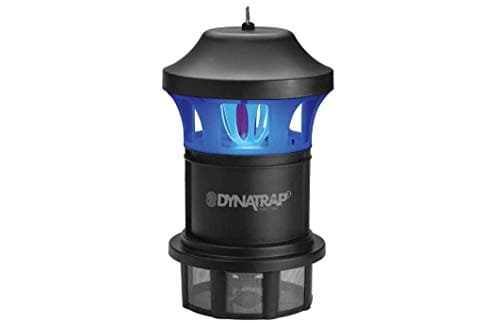 Our pickDynaTrap DT1775 Insect TrapUV light plus a titanium-dioxide CO2 surface and a fan. It is a trap, not a zapper, and that distinction is the whole reason it belongs on a mosquito page. | Yard-scale mosquito reduction | UV + TiO2 CO2 lure + suction fan | $70.00$89.9922% offView on Amazon Price as of October 23, 2026 |
| 2 | 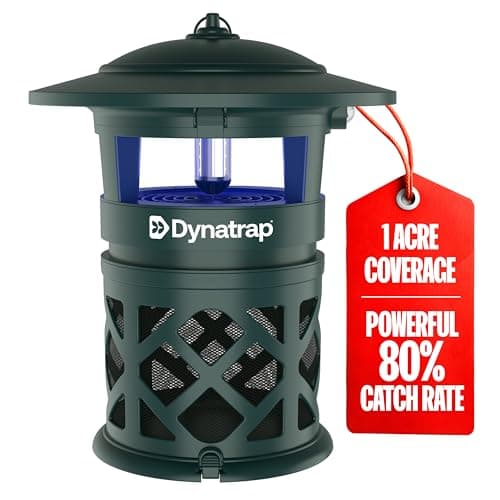 DynaTrap DT2030 Two-Tier Insect TrapThe two-tier version of the same UV, CO2 and fan design. It covers the same acre as the DT1775, so buy it for the larger basket and the button-release emptying, not for more ground. | A one-acre yard, with less emptying | UV-LED + CO2 lure + suction fan | $99.00View on Amazon Price as of October 23, 2026 |
| 3 | 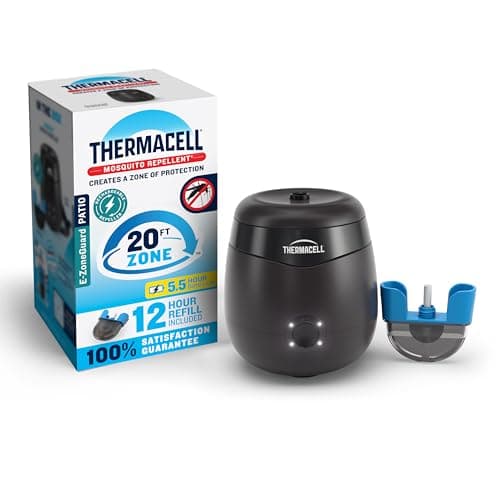 Thermacell E55 Rechargeable Mosquito RepellerHeats a metofluthrin cartridge into a zone of repellent air. It is the only thing here that changes your evening within fifteen minutes. | A seat on the patio, tonight | Heated metofluthrin cartridge | $35.99View on Amazon Price as of October 23, 2026 |
| 4 | 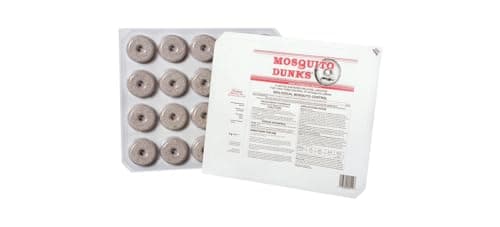 Summit Mosquito DunksBTI, a bacterium that kills mosquito larvae and nothing else you care about. This is the product that actually reduces the mosquitoes in your yard. | Standing water you cannot drain | Bacillus thuringiensis israelensis | $24.70View on Amazon Price as of October 23, 2026 |
#ad — every price link goes to Amazon and Swat & Snap earns a commission on qualifying purchases. Prices are pulled live from the retailer; where one is not available the button reads “Check price on Amazon” rather than showing a stale number.
DynaTrap DT1775 Insect Trap
DynaTrap · Yard-scale mosquito reduction
UV light plus a titanium-dioxide CO2 surface and a fan. It is a trap, not a zapper, and that distinction is the whole reason it belongs on a mosquito page.
- Lures with warmth and CO2, which is what mosquitoes actually track
- Silent apart from the fan — no snapping, no smell
- Takes weeks to dent a population, not one evening
- Runs continuously, so it is an ongoing power draw
DynaTrap DT2030 Two-Tier Insect Trap
DynaTrap · A one-acre yard, with less emptying
The two-tier version of the same UV, CO2 and fan design. It covers the same acre as the DT1775, so buy it for the larger basket and the button-release emptying, not for more ground.
- Button-release basket, so emptying it does not mean unscrewing anything
- Weather-resistant and quiet enough to leave running all season
- Long-life LED bulb, so there is no annual bulb to buy
- No more coverage than the cheaper DT1775 — you are paying for capacity, not area
- Coverage figures assume open ground — hedges, fences and buildings cut it down
- Still a weeks-long population tool, not something that clears tonight
Thermacell E55 Rechargeable Mosquito Repeller
Thermacell · A seat on the patio, tonight
Heats a metofluthrin cartridge into a zone of repellent air. It is the only thing here that changes your evening within fifteen minutes.
- Works on the timescale people actually want — minutes, not weeks
- No spray on skin, no smoke, no citronella smell
- The zone collapses in a breeze — it needs still air
- Cartridges are a recurring cost, and the unit is useless without one
Summit Mosquito Dunks
Summit · Standing water you cannot drain
BTI, a bacterium that kills mosquito larvae and nothing else you care about. This is the product that actually reduces the mosquitoes in your yard.
- Attacks the larvae, which is the only intervention that lowers the population
- Safe in a pond with fish and in water a dog drinks from
- Does nothing to the adult mosquitoes biting you tonight
- Useless unless you find every container holding water
How it compares to the obvious alternatives
Against the DT2030, its bigger sibling. The two-tier DT2030 is the one to buy if your yard genuinely is around an acre and emptying the cage weekly is the part you will resent — it holds more and services less often. If the space is a normal suburban yard, the DT1775 is the right size and the cheaper buy.
Against a Thermacell. Not a competition, because they solve different problems. The repeller makes a seating area usable in minutes and does nothing to the population; the trap lowers the population and does nothing for your chair tonight. Most yards that take mosquitoes seriously end up running both, and the order to buy them in is repeller first.
Against BTI dunks. The dunks win on cost-effectiveness and it is not close. A bacterium that kills mosquito larvae in standing water, harmless to fish, pets and birds, one dunk treating roughly 100 square feet of water for up to 30 days. If you buy one thing for a mosquito problem, walk the property looking for water and buy these. The trap is what you add afterwards, for the mosquitoes arriving from water you do not own. Do mosquito dunks work and mosquito dunks vs bits cover the format choice.
Against a bug zapper. The zapper is cheaper and worse at this job. It has no mosquito-specific lure, it is loud, and it scatters debris. The only reason to prefer one is if you specifically want fewer moths around a porch light and do not care about the bycatch. Best bug zappers is honest about that narrow case, and are bug zappers safe covers the fire and debris questions that come with a grid.
Where to hang it — the part that decides the result
Siting is the difference between a working DT1775 and an expensive lamp.
- Twenty to forty feet from where you sit. It is a lure. Hanging it over the patio table concentrates insects exactly where you do not want them.
- Between the mosquitoes and you, which in practice means toward the shaded, damp, planted part of the yard rather than out in the open.
- Three to six feet off the ground, which is where DynaTrap's own guidance puts it and where host-seeking mosquitoes fly.
- Out of direct wind. A breeze disperses the CO2 plume that is doing the work.
- In shade if you can. It competes badly with bright daylight and with any other light source, including a porch light left on.
- Where the cable run is safe and outdoor-rated. It is a mains appliance living outdoors all season.
- And leave it on. Continuously, for the whole season. Switching it on for a weekend is the commonest way to conclude it does not work.
Who should buy it
Buy it if: you want a lower mosquito nuisance level across a whole summer, you can leave it running, your yard is suburban rather than an open acre, and you have already dealt with the standing water you control.
Buy the DT2030 instead if: the yard is genuinely close to an acre, or emptying a cage every week is the thing that will make you stop using it.
Buy a Thermacell instead if: the actual problem is one seating area on specific evenings. Faster, cheaper, and the right tool.
Buy BTI dunks first if: you have not yet walked the property looking for standing water. Saucers under plant pots, an uncovered water butt, a blocked gutter, a bird bath, a tarpaulin fold, a tire rut — a bottle cap of water is enough for some species.
Do not buy any of it if: what you want is one mosquito dealt with in the bedroom at 2am. That is a racket, and it costs a fraction of everything on this page.
The verdict
The DT1775 is a well-made trap built on the correct mechanism for mosquitoes, and it does the job it claims — slowly, quietly, and over weeks rather than evenings. The reason it attracts frustrated reviews is almost entirely a mismatch of expectation: people buy a trap and want a repeller's timescale.
Bought for what it is — a season-long background measure, running continuously, sited away from where you sit, on a property where the standing water has already been dealt with — it is a reasonable purchase and the pick we would make in its category. Bought the afternoon before a barbecue, it will disappoint you, and no amount of build quality changes that.
Full category context is on best mosquito traps; the honest sequence for a yard is on how to get rid of mosquitoes in your yard.
Frequently asked
Does the DynaTrap DT1775 actually work on mosquitoes?
Is the DynaTrap DT1775 a bug zapper?
How long does the DT1775 take to work?
Where should I put a DynaTrap DT1775?
What does the DT1775 cost to run?
Should I buy the DT1775 or the DT2030?
Does a DynaTrap catch things other than mosquitoes?
More on mosquitoes
Most of the money spent on mosquito control goes to products that kill insects other than mosquitoes. This hub separates the two.
Not sure yet? Read how we pick.
Ryder M.
Ryder M. is the hands-on owner behind Magoo Media Group. He writes Swat & Snap because he got tired of pest-control advice that was either a sales pitch or a scare story.
Related on Swat & Snap
- The best mosquito trapsCO2 and lure traps that target what mosquitoes actually follow, and an honest timeline for results.
- DynaTrap vs ThermacellTrap versus repeller, with the honest answer about which fixes tonight and which fixes the season.
- DynaTrap vs FlowtronTrap versus electrified grid: which catches mosquitoes, which catches everything else, and what beats both.
- Bug zapper vs DynaTrapGrid versus fan-and-lure, model to model: noise, mess, what each catches, and which suits which yard.
- The best mosquito traps for large yardsAcre-scale traps, how many you actually need, and the larvicide step that beats all of them.
- How to get rid of mosquitoes in your yardThe water audit, BTI, repellent zones and traps — in the order that costs least and works most.