Is there pet-safe rat poison?
No. This is the page where we answer a shopping question by telling you not to buy the product, and it is worth explaining why properly.
By Ryder M.Published Updated
Swat & Snap earns a commission from qualifying purchases made through the links on this page, at no extra cost to you. It does not change which products we pick — see how we pick and our affiliate disclosure.
The short answer, and why it is not a dodge
Products are marketed as pet-safe rodenticides. What that phrase generally refers to is tamper resistance — the bait is inside a locked station a dog cannot open — rather than anything about the poison itself.
That is a real safety feature and it addresses one of the two ways a pet gets poisoned. It does nothing about the other one.
Route 1 — primary poisoning: the animal eats the bait. A locked, anchored station prevents this, and it is why the EPA requires consumer rodenticide to be sold in or with one for residential use.
Route 2 — secondary poisoning: the animal eats a rodent that ate the bait. No station prevents this, and no packaging can.
Route 2 is the one people underestimate, and it is the reason the honest answer to this page's title is no.
Why secondary poisoning is not a remote possibility
A rat or mouse that has taken anticoagulant bait does not die immediately. For a day or two it is slow, disoriented and out in the open at times it would normally be hidden.
That is precisely the animal a cat catches easily, a dog picks up, or an owl takes. The poisoned rodent is the most catchable rodent in the area, which is exactly backwards from a safety perspective.
Second-generation anticoagulants — brodifacoum, bromadiolone, difethialone, difenacoum — persist in the liver of the animal that ate them for weeks to months. A cat does not need to eat many. Anticoagulant rodenticide poisoning is a routine presentation in veterinary practice, and residues in wild raptors are well documented.
What the lower-risk products actually change
First-generation anticoagulants (warfarin, chlorophacinone, diphacinone) generally require multiple feeds and persist less. Lower risk than second-generation, not no risk.
Bromethalin is a neurotoxin rather than an anticoagulant. It is often presented as lower secondary risk, and it comes with a serious catch: there is no antidote. Vitamin K1 treats anticoagulant poisoning effectively when started early. For bromethalin there is only supportive care. For a pet owner, that trade is usually worse, not better.
Cholecalciferol (vitamin D3) is another alternative. It carries genuine secondary risk and the poisoning is difficult and expensive to treat.
Corn gluten and similar "non-toxic" baits are a different category. Efficacy evidence is thin, and we would not rely on one for an actual infestation.
So the honest summary: the alternatives to second-generation anticoagulants trade one problem for another, and none of them gets you to safe.
Quick picks
| # | Product | Best for | Mechanism | Price |
|---|---|---|---|---|
| 1 |  Our pickProtecta LP Rat Bait StationThe low-profile station professionals use. Buy it for the lock and the anchoring, and read our poison page before you decide to put bait in it at all. | Locked exterior baiting | Locked tamper-resistant station | |
| 2 |  Victor Easy Set Rat Trap (M205)The rat-sized version of the trap that defined the category. Enough spring force to be lethal instantly, which matters more with rats than with mice. | Most rat jobs | Spring bar, expanded trigger pedal | |
| 3 |  Victor Electronic Rat Trap (M240)A large shock tunnel that handles rat-sized animals. The no-touch disposal is worth more in an attic than anywhere else in the house. | Attics and crawl spaces | High-voltage shock tunnel | |
| 4 | 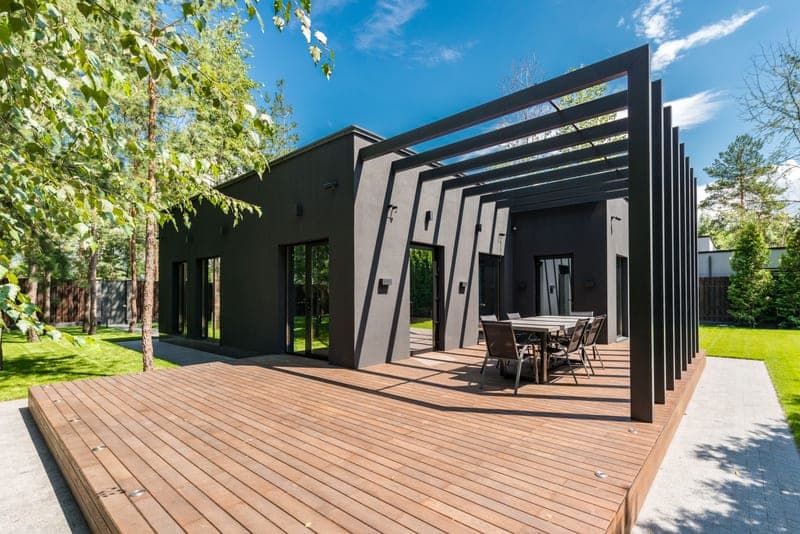 JT Eaton Top Loader Bait StationSold as a bait station, better used as a weatherproof box for two snap traps — all the placement advantage, none of the poison. | Holding snap traps outdoors | Locked box, top access |
#ad — every price link goes to Amazon and Swat & Snap earns a commission on qualifying purchases. No price is shown until it can be pulled live from the retailer.
Protecta LP Rat Bait Station
Bell Labs · Locked exterior baiting
The low-profile station professionals use. Buy it for the lock and the anchoring, and read our poison page before you decide to put bait in it at all.
- Properly tamper-resistant, unlike the unlocked trays sold as stations
- Can be loaded with snap traps instead of bait — which is what we would do
- The station is safe; anticoagulant bait inside it still poisons what eats the rat
- Needs anchoring or it gets dragged
Check price on Amazon
Victor Easy Set Rat Trap (M205)
Victor · Most rat jobs
The rat-sized version of the trap that defined the category. Enough spring force to be lethal instantly, which matters more with rats than with mice.
- Kills instantly when placed square to a runway, which cheap traps often do not
- Wide pedal fires even on a cautious approach
- Genuinely dangerous to set in a home with pets — it must be boxed
- Rats are neophobic: expect to leave it unset for several days first
Check price on Amazon
Victor Electronic Rat Trap (M240)
Victor · Attics and crawl spaces
A large shock tunnel that handles rat-sized animals. The no-touch disposal is worth more in an attic than anywhere else in the house.
- Tunnel shape keeps the plates away from paws
- You tip it out — no bar to release over a dead rat
- D cells, and it drains them faster than the box suggests
- Damp crawl spaces corrode the contacts
Check price on Amazon
JT Eaton Top Loader Bait Station
JT Eaton · Holding snap traps outdoors
Sold as a bait station, better used as a weatherproof box for two snap traps — all the placement advantage, none of the poison.
- Turning a station into a trap box is the single best rodent tip on this site
- Top access means you service it without lying on the ground
- Bulky where space is tight
- Plastic goes brittle after a few summers in direct sun
Check price on Amazon
What to do instead
Put snap traps in the locked station.
This is the recommendation, and it is not a consolation prize. Everything that makes a tamper-resistant station a safe place for poison makes it a better place for traps:
- Key-locked, so a dog cannot get in
- Weatherproof, so the trap stays dry and reliable
- Anchorable, so it cannot be dragged off
- Rat-sized entry holes, which exclude almost every non-target animal
- Tunnel-shaped, which is how rats prefer to approach — so the catch rate goes up
And in exchange:
- The dead rat is inside the box, where you pick it up. No carcass in a wall, no smell for a month.
- Nothing downstream is poisoned. Not the cat, not the neighbor's dog, not an owl.
- You can count catches, which tells you when the problem is over. Bait disappearing tells you nothing.
Bait stations covers which stations actually lock, and pet-safe rat traps covers the indoor equivalent.
If you decide to use poison anyway
Your property, your call, and it should at least be done with the risks in view:
- Follow the label exactly. It is legally binding and overrides anything on this page.
- Locked, anchored station only. Never loose pellets, never an open tray, never a roof void where a carcass cannot be recovered.
- Prefer a first-generation active on persistence grounds if you have the choice.
- Photograph the label and keep it. If a pet is exposed, the vet needs the active ingredient, and it changes the treatment completely.
- Warn your neighbors, especially anyone with a cat that hunts.
- Search for carcasses daily and bag them. You will not find most of them.
If your pet may have been exposed
Call your vet immediately. Do not wait for symptoms.
Anticoagulant poisoning takes days to become visible, and by the time a pet is obviously unwell, treatment is much harder. Vitamin K1 is effective when it starts early.
Take the product packaging or a photograph of the label. "Rat poison" is not enough information — the active ingredient determines whether there is an antidote at all.
Signs worth acting on: lethargy, pale gums, bleeding from the nose or gums, blood in urine or stool, unexplained bruising, difficulty breathing, weakness, tremors or seizures.
Keep your emergency vet's number and an animal poison control line somewhere you can find them without searching. The ASPCA line is linked below.
Why this page exists
Someone searching for pet-safe rat poison is about to buy something, and we earn commission when readers buy through our links. This page answers that search by telling you the product does not exist and recommending a cheaper alternative.
That is the arrangement the site is run on. The reasoning is on how we pick.
Frequently asked
Is there a rat poison that is safe for pets?
What happens if my dog eats a poisoned rat?
Is bromethalin safer than anticoagulant rat poison?
What should I use instead of rat poison?
How do I know if my pet has rodenticide poisoning?
More on pet-safe & kid-safe
The constraint that overrides every other buying decision. These pages re-sort the same products by what a dog, a cat or a toddler can reach.
Not sure yet? Read how we pick.
Ryder M.
Ryder M. is the hands-on owner behind Magoo Media Group. He writes Swat & Snap because he got tired of pest-control advice that was either a sales pitch or a scare story.
Related on Swat & Snap
- Rat trap vs poisonWhere the rat dies, what happens next, and why a locked station full of traps beats a locked station full of bait.
- Mouse trap vs poisonRodenticide works — and then the carcass is in your wall and a cat can be poisoned by eating it. The honest comparison.
- Pet-safe rat trapsTunnel traps and locked stations for homes with animals — the force involved makes this mandatory, not optional.
- The best rat bait stationsTamper-resistant stations that actually lock — and the case for loading them with traps rather than bait.

- Pet-safe mouse trapsEnclosed and tunnel traps that are safe because of their geometry, plus a free way to make any trap safer.