How to get rid of a rat nest
Finding the nest feels like the win. It is not — it is the diagnosis. Clearing it before you have dealt with the animals just relocates the problem two feet to the left.
By Ryder M.Published Updated

Swat & Snap earns a commission from qualifying purchases made through the links on this page, at no extra cost to you. It does not change which products we pick — see how we pick and our affiliate disclosure.
What a rat nest actually looks like
Not a neat bird-style construction. A rat nest is a loose mass of shredded material packed into a void: insulation, cardboard, paper, fabric, plastic sheeting, dried grass, chewed-up anything. It is roughly the size of a football, it smells strongly of ammonia, and there will be a heavy concentration of droppings around it — rat droppings are dark and up to about three-quarters of an inch long, far bigger than a mouse's rice-grain.
Around the nest you will usually find:
- Greasy rub marks along the route in and out, from oil in the fur
- Gnaw marks on timber, pipe lagging, cable insulation and plastic
- A worn runway — on soil or dust, a visible track two to three inches wide
- Food caches — a pile of pet biscuits, seed or fruit stones somewhere improbable
- Urine staining that fluoresces under UV light, if you want to be thorough
If what you have found is rice-grain droppings and a grapefruit-sized ball of shredded paper, you are looking at mice rather than rats. Mice vs rats will settle it in a minute, and the two problems need different sized traps — see mouse traps vs rat traps.
Where to look, by species
Which rat you have decides where you look, and the two behave completely differently.
Roof rats (black rats) are climbers. They nest HIGH: attic and roof voids, soffits, the cavity above a suspended ceiling, inside dense ivy on a wall, in palm crowns, in a fruit tree canopy, along a fence line, and on top of kitchen cabinets in a voided ceiling. If you hear noise above you at night, start here. Rats in the attic is the dedicated page.
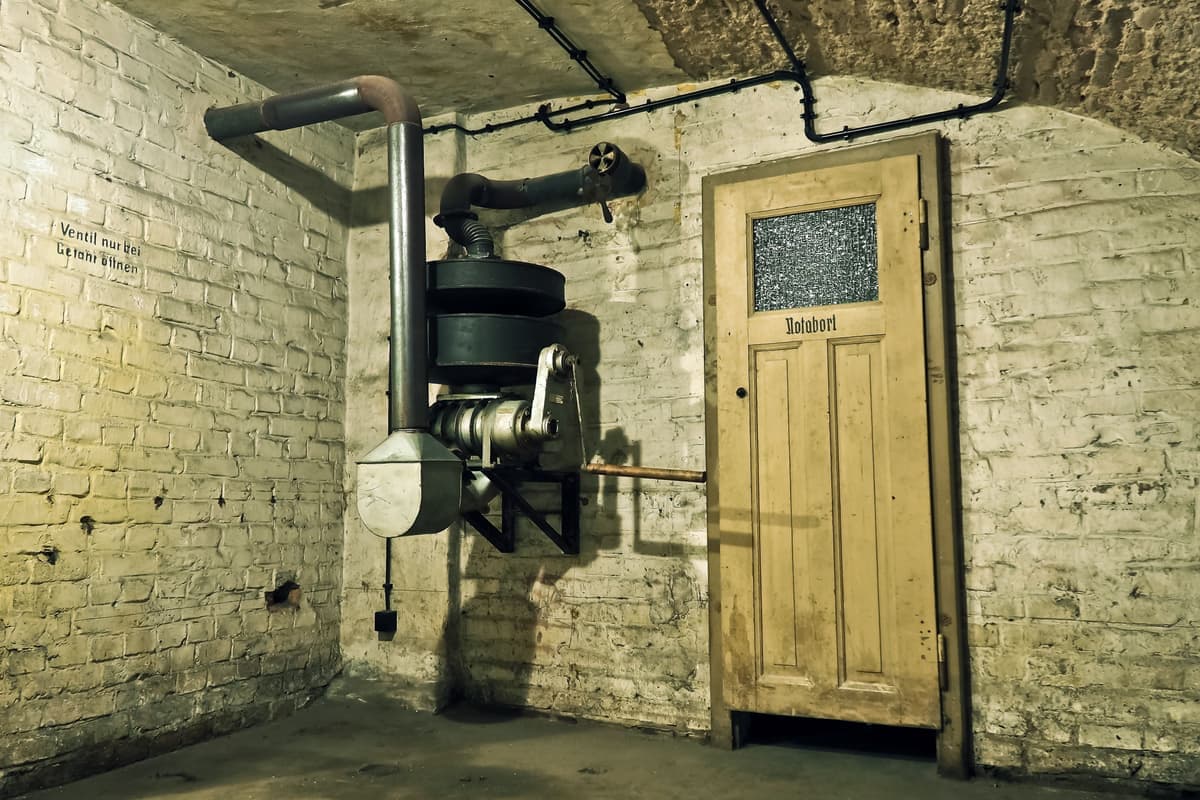
Norway rats (brown rats) are burrowers. They nest LOW: burrows in soil against a foundation or under a shed, under decking, in a crawl space, behind a compost heap, inside a stacked woodpile, in a drain or sewer void, under a concrete slab. The burrow entrance is a smooth hole two to four inches across with a fan of excavated soil. Rats in the yard covers the outdoor side, and roof rats vs Norway rats tells you which you have.
Both will use a wall cavity, which is the hardest case — see rats in the walls.
Work from the noise, the droppings and the rub marks back toward the void. Rats follow the same routes every night, which is exactly what makes them trappable.
Why you trap before you clear
This is the part most people get backwards, and it costs them weeks.
Rats are neophobic. They avoid new objects in a familiar environment, sometimes for days. If you tear out the nest first, you have changed their environment comprehensively — and now you want to introduce a brand new trap into it. You have made the animals cautious at exactly the moment you need them careless.
They relocate, they do not leave. A colony turned out of a crawl space moves into the wall cavity, the garage, or under the decking. Now you have the same rats somewhere less accessible, and no idea where.
The nest is your best information. It tells you the species, the route, the size of the problem and where the traps should go. Destroy it and you are trapping blind.
And there may be young in it. Clearing a nest with a litter in it is an unpleasant surprise and a welfare problem. Trapping the adults first avoids it.
So: find it, leave it, trap the route.
Setting traps on a rat nest route
Place along the runway, flat against the wall, with the trigger end toward the vertical surface. Rats travel on edges even more rigidly than mice. Put traps between the nest and the food source, not at the nest mouth.
Use enough. Rats breed fast and you are almost never dealing with one. Six traps on the main run is a reasonable start; twelve is not excessive for an established colony.
Pre-bait for several days. Set the traps out unset and baited until the bait is being taken confidently, then set them all on the same night. This is the single most effective technique against neophobia, and skipping it is why so many people report that rats "avoid" their traps. Trap-shy rats covers it in detail.
Secure the trap. A rat can drag a loose trap into a void. Wire or screw it down.
Bait small and sticky. Peanut butter, bacon fat, dried fruit or a nut pressed into the trigger — see best rat trap bait.
Box traps where pets, children or wildlife are about. A rat snap trap has enough force to break a dog's toe. A locked top-loading station used as a trap box gives you all of the placement advantage with none of the risk — and none of the poison.
On poison: we would not, and the reason is on rat trap vs poison. A poisoned rat dies inside the structure, which gives you a smell you cannot reach and a secondary-poisoning risk to any cat, dog, owl or fox that scavenges the body.
Quick picks
| # | Product | Best for | Mechanism | Price |
|---|---|---|---|---|
| 1 |  Our pickVictor Easy Set Rat Trap (M205)The rat-sized version of the trap that defined the category. Enough spring force to be lethal instantly, which matters more with rats than with mice. | Most rat jobs | Spring bar, expanded trigger pedal | |
| 2 |  Victor Electronic Rat Trap (M240)A large shock tunnel that handles rat-sized animals. The no-touch disposal is worth more in an attic than anywhere else in the house. | Attics and crawl spaces | High-voltage shock tunnel | |
| 3 |  Kat Sense Large Rat TrapsPlastic jaw traps sold in packs. Individually less forceful than a Victor; collectively they let you cover every runway at once, which is how rat trapping actually succeeds. | Buying traps in quantity | Plastic jaw, serrated bite | |
| 4 |  JT Eaton Top Loader Bait StationSold as a bait station, better used as a weatherproof box for two snap traps — all the placement advantage, none of the poison. | Holding snap traps outdoors | Locked box, top access |
#ad — every price link goes to Amazon and Swat & Snap earns a commission on qualifying purchases. No price is shown until it can be pulled live from the retailer.
Victor Easy Set Rat Trap (M205)
Victor · Most rat jobs
The rat-sized version of the trap that defined the category. Enough spring force to be lethal instantly, which matters more with rats than with mice.
- Kills instantly when placed square to a runway, which cheap traps often do not
- Wide pedal fires even on a cautious approach
- Genuinely dangerous to set in a home with pets — it must be boxed
- Rats are neophobic: expect to leave it unset for several days first
Check price on Amazon
Victor Electronic Rat Trap (M240)
Victor · Attics and crawl spaces
A large shock tunnel that handles rat-sized animals. The no-touch disposal is worth more in an attic than anywhere else in the house.
- Tunnel shape keeps the plates away from paws
- You tip it out — no bar to release over a dead rat
- D cells, and it drains them faster than the box suggests
- Damp crawl spaces corrode the contacts
Check price on Amazon
Kat Sense Large Rat Traps
Kat Sense · Buying traps in quantity
Plastic jaw traps sold in packs. Individually less forceful than a Victor; collectively they let you cover every runway at once, which is how rat trapping actually succeeds.
- Quantity is the strategy with rats, and these make quantity affordable
- Foot-press arming means you never put a hand near the jaw
- Less spring force than a metal-bar trap on a big Norway rat
- Jaws weaken after repeated cycles
Check price on Amazon
JT Eaton Top Loader Bait Station
JT Eaton · Holding snap traps outdoors
Sold as a bait station, better used as a weatherproof box for two snap traps — all the placement advantage, none of the poison.
- Turning a station into a trap box is the single best rodent tip on this site
- Top access means you service it without lying on the ground
- Bulky where space is tight
- Plastic goes brittle after a few summers in direct sun
Check price on Amazon
Clearing the nest safely
Only once catches have stopped for several days.
Ventilate first. Open the space up and leave it for half an hour before you go in, especially an attic or crawl space.
Gloves and a mask. Rodent urine, droppings and nesting material can carry pathogens, and the hazard increases when dry material is disturbed and becomes airborne. The CDC's rodent cleanup guidance is built around not raising dust.
Spray, wait, bag wet. Soak the nest and the surrounding droppings with a disinfectant or bleach solution, leave it five minutes, then lift everything into a bag while it is still wet. Double bag it and put it straight in the outside bin.
Never sweep or vacuum dry material. This is the one rule on the page that is a health rule rather than a technique rule.
Replace what cannot be cleaned. Contaminated loft insulation, chewed cable, soiled stored goods. Have an electrician check any gnawed wiring — rodent damage to cables is a genuine fire risk, not a theoretical one.
Then wash the surfaces and wash yourself.
Collapse a burrow rather than just filling it. For an outdoor Norway rat burrow, dig the run out and backfill with soil and rubble, or pack it with gravel. A loosely filled hole is simply reopened.
Sealing so it does not come back
Rats need a bigger hole than mice — about half an inch — but they will gnaw a small gap into a large one.
- Quarter-inch hardware cloth over vents, weep holes and openings. Not plastic mesh, not foam alone.
- Cement or metal on anything they have already gnawed at. Rats chew through expanding foam, timber and soft plastic without difficulty.
- Pipe and cable penetrations packed with stainless steel wool and sealed over.
- Roof line, soffits, loose tiles and the gap where a service enters — for roof rats this is the whole game.
- Cut back the climbing routes: ivy on the wall, branches overhanging the roof, a fence line running to the eaves.
- Remove the food: bird feeders, fallen fruit, pet food left out, an open compost heap, an unsecured bin. How to get rid of rats is the complete sequence.
Leave two traps set as permanent monitors in the space where the nest was. A catch six weeks later tells you the entry point is still open.
The short version
Find the nest and leave it alone. Pre-bait, then trap the runway between the nest and the food, using enough traps and securing each one. When catches stop, clear the nest wet — spray, wait, bag, never sweep. Then seal with hardware cloth and metal, remove the food, and keep two traps running. Clearing first is the mistake that turns a two-week job into a two-month one.
Frequently asked
Should I remove a rat nest or trap the rats first?
What does a rat nest look like?
Where do rats build nests?
How do I clean up a rat nest safely?
Will rats come back after you remove the nest?
Is there a litter in the nest?
More on rats
Rats are cautious, strong and much harder to trap than mice. Everything here assumes you only get one good attempt at a wary animal.
Not sure yet? Read how we pick.
Ryder M.
Ryder M. is the hands-on owner behind Magoo Media Group. He writes Swat & Snap because he got tired of pest-control advice that was either a sales pitch or a scare story.
Related on Swat & Snap
- How to get rid of ratsPre-bait, set everything at once, then exclude. Timeline, the harborage audit, and when to call someone.

- Rats in the atticRoof rats, joist-run trapping, the branches that let them in, and the honest limits on the clean-up.
- Rats in the wallsConfirm it is rats, trap at the exits rather than opening the cavity, and seal the climb that got them in.

- Trap-shy ratsWhy a survivor stops feeding, and the reset that gets a stalled campaign working again.

- Roof rats vs Norway ratsTail, ears, droppings and nest height — which rat you have, and whether to trap high or low.

- The best rat traps, by situationSnap, electronic, self-resetting and live traps compared — plus the pre-baiting step that decides success.