Best fly traps for chicken coops
Flies around a coop are a manure-management problem with a trap bolted on. Get the trap type and the distance right and you cut the nuisance hard; get them wrong and you have simply moved the flies closer to the birds.
By Ryder M.Published Updated
Swat & Snap earns a commission from qualifying purchases made through the links on this page, at no extra cost to you. It does not change which products we pick — see how we pick and our affiliate disclosure.
The one thing to understand before you buy anything
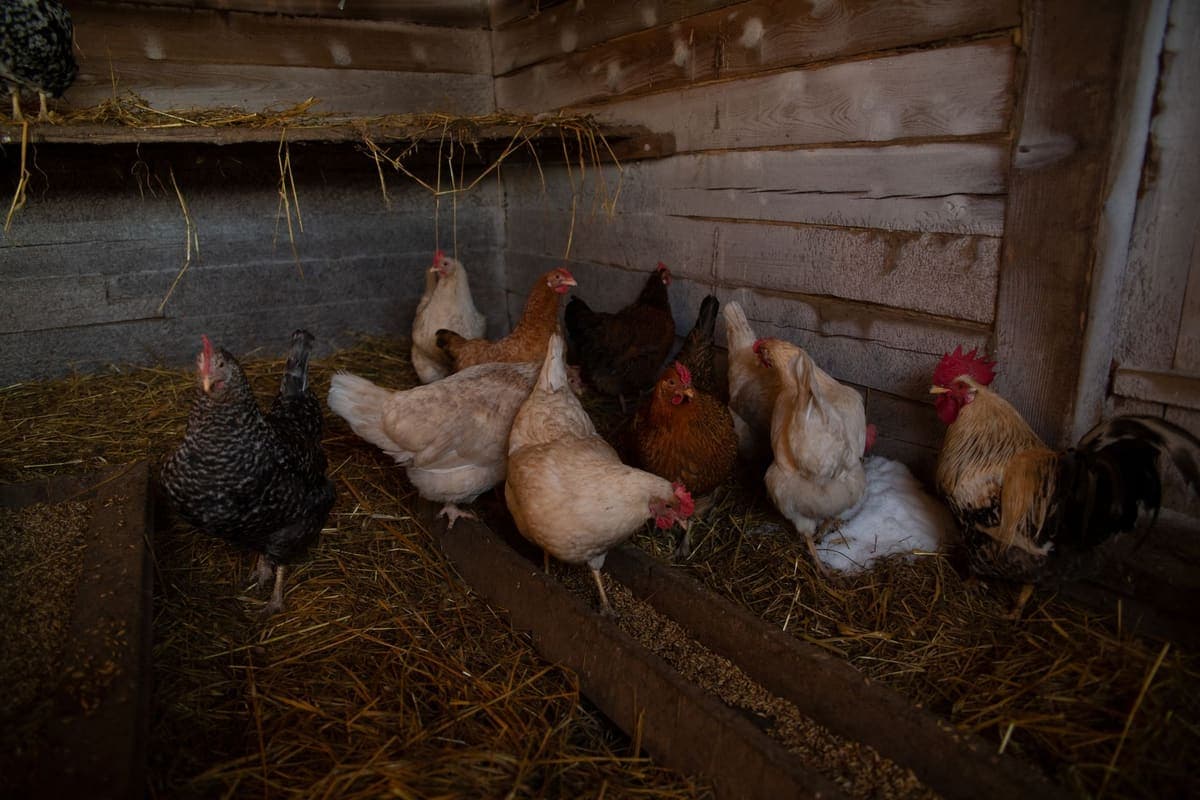
House flies around poultry are not visiting from somewhere else. They are being produced on site, in manure, bedding and spilled wet feed, and the cycle is fast — egg to adult in roughly a week to ten days in warm weather. A single accumulating pile under a perch can turn out flies continuously all summer.
That matters for two reasons.
First, trapping alone cannot win. A bag trap that catches thousands of flies is removing the adults while the substrate keeps producing replacements. You will see a reduction in nuisance, which is worth having, but you will not see the problem end.
Second, the trap's placement is the dangerous part. The baited traps that work best around livestock work because they smell like decomposition. That attractant pulls flies in from a long way. If you hang one on the coop wall you have installed a fly magnet next to your birds. The manufacturer's own guidance on these traps is to place them well away from the areas you want protected, and with poultry that advice is not optional.
What to look for in a coop fly trap
A bait trap goes outside, downwind, and far. Thirty feet minimum from the coop and the run, further if the prevailing wind runs toward the birds. Downwind of the coop, upwind of nothing you care about.
Anything inside the coop must have no grid and no bait. Birds peck. An electrified grid at bird height is a hazard, and a liquid bait is something a chicken will drink. Inside, the only sensible device is a sealed glue-card light mounted above bird reach, or a plain glue ribbon.
Nothing that sheds debris over feed or water. A zapper disperses fragments of what it kills. Over a feeder or a waterer that is a contamination issue, not an aesthetic one.
Weatherproof if it lives outside. A disposable bag trap handles rain. A plug-in device needs a dry mount and a protected outlet.
Serviceable without a drama. Bag traps get full, heavy and extremely unpleasant. Plan for how you take one down before you hang it — gloves, a bin bag, and a day when you are not expecting visitors.
No residual sprays or foggers over birds, feed or water. That is the hard line on a coop. Flies are a management problem, not a spraying problem.
Quick picks
| # | Product | Best for | Mechanism | Price |
|---|---|---|---|---|
| 1 |  Our pickRESCUE! Non-Toxic Disposable Fly TrapA hanging bag with a powerful bait. Effective, genuinely foul-smelling, and therefore a product you hang well away from the door you use. | Outdoor house flies | Water-activated attractant bag | |
| 2 |  RESCUE! FlyWeb Indoor Fly LightA plug-in UV light over a glue card. No zap, no smell, and it works on house flies that ignore a fruit fly lure. | Quiet indoor fly control | UV light + glue card | |
| 3 |  The Executioner Fly Swatter RacketTriple-layer mesh, so your finger cannot reach the live layer. That is the one design difference worth paying for in this category. | A racket that lasts | Electrified mesh, three layers | |
| 4 |  Aspectek Indoor Bug ZapperA wall-mount indoor zapper with a removable tray. Suited to a garage or workshop, not to a room you sit in. | Garages and utility rooms | UV tubes + electrified grid |
#ad — every price link goes to Amazon and Swat & Snap earns a commission on qualifying purchases. No price is shown until it can be pulled live from the retailer.
RESCUE! Non-Toxic Disposable Fly Trap
RESCUE! · Outdoor house flies
A hanging bag with a powerful bait. Effective, genuinely foul-smelling, and therefore a product you hang well away from the door you use.
- Pulls flies away from a patio better than anything else at the price
- Nothing to plug in, nothing to refill
- The smell is the mechanism — hang it close and you have made things worse
- Full bags are unpleasant to take down
Check price on Amazon
RESCUE! FlyWeb Indoor Fly Light
RESCUE! · Quiet indoor fly control
A plug-in UV light over a glue card. No zap, no smell, and it works on house flies that ignore a fruit fly lure.
- Silent and debris-free, which a zapper indoors is not
- Card hides the catch, so it is not a display of dead flies
- Only pulls flies within a room, and only in low light
- Glue cards need replacing more often than the box implies
Check price on Amazon
The Executioner Fly Swatter Racket
The Executioner · A racket that lasts
Triple-layer mesh, so your finger cannot reach the live layer. That is the one design difference worth paying for in this category.
- Triple mesh is the reason to choose it — a child's finger cannot reach the charge
- Frame survives being swung hard, unlike the bargain rackets
- Several times the price of a single-layer racket
- Still only ever kills what you aim at
Check price on Amazon
Aspectek Indoor Bug Zapper
Aspectek · Garages and utility rooms
A wall-mount indoor zapper with a removable tray. Suited to a garage or workshop, not to a room you sit in.
- Removable tray makes the mess manageable, which most indoor zappers ignore
- Bright enough to pull flies across a big garage
- Audible snap every catch — wrong for a bedroom or living room
- Same mosquito caveat as every zapper
Check price on Amazon
How the four compare
Built from each product's own stated specifications.
| RESCUE! Bag Trap | RESCUE! FlyWeb | The Executioner | Aspectek Zapper | |
|---|---|---|---|---|
| Mechanism | Water-activated bait bag | UV light + glue card | Electrified mesh racket | UV tubes + electrified grid |
| Where it goes | Outdoors, 30+ ft from the coop | Inside, above bird reach | In your hand | Feed room or workshop only |
| Power | None | Mains plug-in | 2 x AA | Mains plug-in |
| Smell | Strong — that is the mechanism | None | None | None |
| Stated capacity | Up to 20,000 flies per bag | Glue cards, replaced as filled | One fly at a time | Removable debris tray |
| Debris | Contained in the bag | Hidden on the card | None | Falls into the tray |
| Safe near birds | Only at distance | Yes, mounted high | Yes, used by you | No — keep out of the coop |
The take-away from that table is the second row. Three of the four are defined by where they are allowed to be, and the bag trap is the one that does the most damage if you put it in the wrong place.
The manure routine that does the real work
This is the part that actually reduces the fly count, and it costs nothing but time.
Keep the area under the perches dry. Flies need moisture in the substrate. Dry manure does not produce flies. A droppings board under the roost that you scrape every day or two removes the single most productive site in the coop.
Deep litter, done properly, or not at all. A well-managed deep-litter system stays dry and aerobic and produces very few flies. The same bedding left damp and compacted is the worst thing in the yard. If it smells of ammonia, it is wet.
Fix the waterer drip. A nipple or dish that leaks creates a permanently damp patch, and that patch becomes a fly nursery. This is the most commonly missed item on the list.
Clean up spilled feed daily. Wet mash and scattered pellets ferment. Use a feeder that does not throw feed onto the ground.
Move or compost manure properly. A pile sitting against the coop is still on site. Either get it well away or get it hot — a properly turned compost heap reaches temperatures that kill larvae; a cold heap just produces flies.
Roosters, hens and heat. Summer is when the cycle compresses to about a week. Your routine has to tighten in July, not stay the same as it was in April.
If you are also fighting rodents around the feed — and you almost certainly are, because stored feed is the main attraction — see best mouse traps for chicken coops and best rat traps for chicken coops, both of which deal with the same bird-safety constraints.
Which fly are you actually dealing with
Worth checking, because the trap changes.
House flies. Large, grey, loud, land on everything. These are the coop's own production, and they are what the bag traps and glue lights above are for.
Stable flies and biting flies. They bite the birds and you. Same manure management, but baited bag traps are less effective because the attractant is tuned for house flies. Sticky ribbons and management do more here.
Small flies around the feed or a damp corner. If they are tiny and hovering rather than landing, you may be looking at fungus gnats or fruit flies rather than house flies. Gnats vs fruit flies vs drain flies sorts that out, and gnats outside covers damp outdoor ground.
Flies that come from a neighbor's livestock. If your own manure management is genuinely tight and the count is still high, the source may not be yours. Bag traps placed on your boundary, downwind, are the right response to that.
Mistakes that make it worse
- Hanging the bag trap on the coop. The most common and most costly error on this page. It works exactly as designed, which is the problem.
- Putting a zapper in the roost. Grid plus curious bird plus debris over the waterer. No.
- Using liquid bait where birds can reach it. A chicken will drink out of it.
- Relying on sticky ribbons alone in a large coop. They help, they do not control.
- Trapping instead of scraping. The manure is the fly source. The trap is a nuisance reducer.
- Waiting until July. Start the routine in spring, before the cycle speeds up, and the summer peak never arrives.
The short version
Hang a baited bag trap well downwind and at least 30 feet out. Put a silent glue-card UV light inside the coop, mounted above bird height. Keep a racket by the door for the ones that get in, and save the mains zapper for a feed room. Then scrape under the perches, fix the waterer drip and sweep up the spilled feed, because the trap catches flies and the routine stops them existing.
Frequently asked
What is the best fly trap for a chicken coop?
Where should I hang a fly trap near chickens?
Can I use a bug zapper in a chicken coop?
Why are there so many flies in my chicken coop?
How do I stop flies breeding in chicken manure?
Are fly traps safe around chickens?
More on fruit flies & gnats
Tiny flies in the kitchen are almost never one problem. Identify which of the three you have, then treat the source — the trap alone never finishes it.
Not sure yet? Read how we pick.
Ryder M.
Ryder M. is the hands-on owner behind Magoo Media Group. He writes Swat & Snap because he got tired of pest-control advice that was either a sales pitch or a scare story.
Related on Swat & Snap
- How to get rid of house fliesWhere they breed outside, how they get in, and the traps that work on flies this size.

- The best fly traps for a garageTraps that hold up in an unheated garage, matched to the smell source that is drawing the flies in.
- Best mouse traps for a chicken coopBird-safe mouse trapping in and around a coop — enclosed traps, bucket traps, no poison, and the feed fix.
- Best rat traps for a chicken coopTrapping rats around poultry without risking the birds — enclosed traps, no poison, and the feed fix.
- Gnats vs fruit flies vs drain fliesBehavior, not anatomy: the one-minute test that tells you which tiny fly you have.

- The best bug zappers for fliesZappers judged on the insect they actually catch — flies and moths — indoors and out, plus the silent option.