How to set mouse traps
Arming a snap trap is a two-second job that almost everybody does slightly wrong, and the wrong version costs you the first night.
By Ryder M.Published Updated

Swat & Snap earns a commission from qualifying purchases made through the links on this page, at no extra cost to you. It does not change which products we pick — see how we pick and our affiliate disclosure.
Bait first, arm second
This is the whole safety rule and it is the step most people reverse.
If you arm the trap and then try to spread peanut butter on a loaded trigger, your fingertip is directly under the bar at the exact moment you are applying pressure to the thing that fires it. A standard mouse trap will not break a finger, but it hurts enough that people set the rest of their traps badly — too loose, too fast, too far from the wall.
Bait the trigger while the trap is completely slack. Then arm it. Then put it down.
Arming a wooden snap trap, step by step
Using the classic metal-pedal design:
- Put a pea-sized smear of peanut butter on the pedal, pressed into the holes or the texture rather than mounded on top. More on quantity below.
- Lay the trap flat on a hard surface, not in your palm.
- Pull the U-shaped kill bar back over the body of the trap until it sits flat against the base on the opposite side.
- Hold it there with your thumb on the wooden base, not on the bar itself — your thumb should be touching wood, with the bar held down by the edge of your thumb.
- Swing the thin retaining arm over the bar and hook its tip into the notch at the back edge of the pedal.
- Lift your thumb slowly. If the bar creeps, the arm is not seated — redo it rather than hoping.
- Pick the trap up by the base only, carry it low, and set it down without sliding it.
Two things to know. The hook needs very little engagement; people push it deep into the notch, which makes the trap stiff and insensitive. And if the trap fires while you are arming it, that is normal — it is why you do this over a table rather than over the floor you are kneeling on.
If that paragraph is why your traps are unused
Plenty of people own snap traps and have never set one. That is a design problem, not a character flaw, and there are two ways around it.
A one-press trap. The plastic-jaw designs arm by pressing a single tab. There is no loaded bar and no hooked arm, so the step that makes people flinch is gone. They release the mouse over a bin by squeezing the same tab, so there is no contact at either end.
An enclosed or electronic trap. An enclosed snap trap arms by closing the lid; an electronic trap arms by sliding a switch. Neither exposes a mechanism at any point, which also makes them the right call in a house with a dog or a toddler. Best electronic mouse traps covers that category, and pet-safe mouse traps covers the enclosed ones.
A trap you will actually set beats a trap with a better spring sitting in a drawer. If arming is the blocker, buy around it.
Quick picks
| # | Product | Best for | Mechanism | Price |
|---|---|---|---|---|
| 1 | 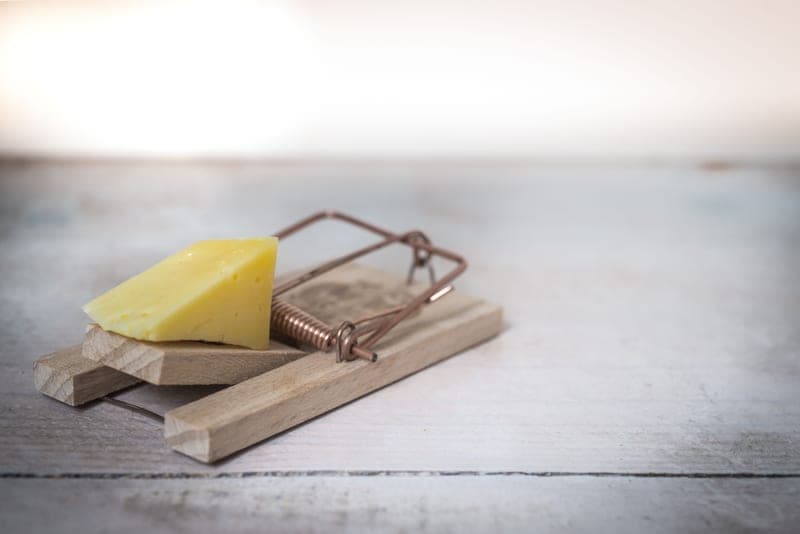 Our pickVictor Metal Pedal Mouse Trap (M150)The wooden snap trap everything else is measured against. Cheap enough to set a dozen, which is how mouse trapping actually works. | Most homes, in quantity | Spring-loaded bar, metal pedal | |
| 2 |  Tomcat Press 'N Set Mouse TrapA plastic snap trap you arm by pressing one tab. If the reason you avoid snap traps is the moment of arming them, this is the fix. | Setting without touching a bar | Plastic jaw, single-press arming | |
| 3 |  Victor Electronic Mouse Trap (M250S)A battery tunnel that delivers a high-voltage shock. You tip the mouse out without seeing or touching it, which is the whole appeal. | No-touch disposal indoors | High-voltage shock inside a tunnel |
#ad — every price link goes to Amazon and Swat & Snap earns a commission on qualifying purchases. No price is shown until it can be pulled live from the retailer.
Victor Metal Pedal Mouse Trap (M150)
Victor · Most homes, in quantity
The wooden snap trap everything else is measured against. Cheap enough to set a dozen, which is how mouse trapping actually works.
- Costs little enough that quantity stops being a decision
- The metal pedal fires on weight, so a mouse cannot lick the bait off
- Nothing to charge, nothing to refill
- You see the result, and you have to handle it
- Exposed bar is a genuine hazard to a dog's nose or a toddler's fingers
Check price on Amazon
Tomcat Press 'N Set Mouse Trap
Tomcat · Setting without touching a bar
A plastic snap trap you arm by pressing one tab. If the reason you avoid snap traps is the moment of arming them, this is the fix.
- One-press arming removes the flinch that makes people set traps badly
- Releases the mouse into a bin without handling
- Plastic jaw loses snap force over many cycles
- Still an open mechanism, so it needs a box in a pet home
Check price on Amazon
Victor Electronic Mouse Trap (M250S)
Victor · No-touch disposal indoors
A battery tunnel that delivers a high-voltage shock. You tip the mouse out without seeing or touching it, which is the whole appeal.
- The tunnel is the safety feature — a dog's nose does not fit the plates
- Indicator light means you are not checking traps blind
- Tip-out disposal, no handling
- Batteries die, usually unnoticed, and a dead trap catches nothing
- Has to sit flat against a wall run or mice walk past it
Check price on Amazon
How much bait, and what kind
A pea. That is the whole answer, and it is counter-intuitive enough that most people get it wrong by a factor of five.
A large blob lets the mouse feed from the edge without putting weight on the trigger. It walks away full and the trap never fires. A pea-sized amount pressed into the pedal forces the mouse to stand on the trigger and work at it, which is exactly the contact the mechanism needs.
Peanut butter is the default because it is sticky, strongly aromatic and impossible to carry off. Hazelnut spread works. A shred of cotton wool or dental floss pressed into the peanut butter works better still in winter, because nesting material is in shorter supply than food. Cheese is a cartoon convention; it dries out, it is easy to carry away, and nothing prefers it. The full ranking is in best mouse trap bait.
Replace bait every three or four days. Dried-out peanut butter stops smelling, and smell is what pulls a mouse across a room.
Which way round, and how far from the wall
Setting the trap correctly and placing it correctly are two different skills, and the second one matters more.
Mice navigate by touch, with one flank against a vertical surface, and they cross open floor only when they have to. So:
- Trigger end touching the baseboard, trap perpendicular to the wall. A mouse running the wall meets the trigger square.
- Not parallel to the wall. A trap laid along the wall presents its long side and gets stepped over.
- Against the wall, not near it. A gap of a few centimetres is enough for the mouse to pass behind the trap.
Where to place mouse traps is the full room-by-room version, including the three spots almost everyone misses.
How many, and all on the same night
Set every trap you have on the same evening. This is the single biggest difference between a problem that ends in three days and one that drags for a month.
Mice are not neophobic the way rats are — they investigate a new object within hours. That means there is no pre-baiting period to respect and no reason to stagger. Six to twelve traps covering every active route, armed on the same night, clears most household infestations in two or three nights. Two traps moved around for a fortnight does not. How many mouse traps do I need works through the count by house size.
Note that this is the opposite of rat trapping, where the traps go out baited and unset for several nights first. If you are not certain which animal you have, mice vs rats settles it from the droppings, and mouse traps vs rat traps covers the hardware difference.
When to check, and when to move a trap
Set in the evening, look in the morning. Mice are nocturnal, and every visit you make shifts the trap slightly and adds disturbance to a route they are judging carefully. Checking at midnight costs you catches.
Give a placement four or five nights. If a trap in a spot you believed in has caught nothing by then, the belief was wrong. Move it to where the droppings are concentrated rather than waiting longer.
Re-set immediately after a catch. A productive spot stays productive — there is very often a second mouse on the same route the following night.
Safety, briefly
A standard mouse trap will hurt a finger and can genuinely injure a dog's nose or a toddler's hand. The fix is not placement, because "behind the refrigerator where the dog cannot reach" fails the first day the dog can reach.
The fix is either an enclosed trap, or the cheap version: put the armed trap inside a cardboard box with a mouse-sized hole, about 3 cm, cut in two opposite sides, and put the lid on. A nose does not fit through a 3 cm hole, a small hand does not either, and mice actively prefer running through an enclosed tunnel — so the catch rate goes up rather than down.
Wear disposable gloves to clear a catch, bag it before it goes in the bin, and do not sweep or vacuum droppings dry. The CDC's rodent cleanup guidance is to wet the area with disinfectant first and wipe it up, because dry sweeping puts particles into the air.
Frequently asked
How do you set a mouse trap without snapping your fingers?
How much bait should you put on a mouse trap?
Which way should a mouse trap face?
Should you set all your mouse traps at once?
How soon will a mouse trap catch something?
More on mice
One mouse is rarely one mouse. This hub covers what kills them, what only looks like it does, and where to put the thing you buy.
Not sure yet? Read how we pick.
Ryder M.
Ryder M. is the hands-on owner behind Magoo Media Group. He writes Swat & Snap because he got tired of pest-control advice that was either a sales pitch or a scare story.
Related on Swat & Snap
- Where to place mouse trapsHow to read a runway, how to orient a trap, and the three rooms people forget to cover.

- The best mouse trap baitPeanut butter, pea-sized and pressed in. What to switch to when that stops working, and the winter trick.

- The best mouse traps, by situationSix traps chosen by situation — cheap and plentiful, pet-safe by design, no-touch, or live catch.

- How many mouse traps do I need?The trap count that actually ends an infestation, broken down by room and by house size.
- How to get rid of miceThe full sequence: find the runs, trap in quantity, bait small, seal the gaps. Timeline and what to skip.

- The best electronic mouse trapsNo-touch disposal and a tunnel a dog's nose will not fit. Which models survive real use.
- Pet-safe mouse trapsEnclosed and tunnel traps that are safe because of their geometry, plus a free way to make any trap safer.