Snap trap vs glue trap
This is not a close comparison, and we are not going to pretend it is. One kills in under a second. The other holds an animal until it dies of exhaustion.
By Ryder M.Published Updated

Swat & Snap earns a commission from qualifying purchases made through the links on this page, at no extra cost to you. It does not change which products we pick — see how we pick and our affiliate disclosure.
The mechanisms, side by side
A snap trap is a spring-loaded bar held under tension. Weight on the trigger releases it and the bar strikes across the neck or skull. Correctly set, death is effectively instantaneous — well under a second.
A glue board is a sheet of card or plastic coated in high-tack adhesive. A rodent that steps on it is stuck. Nothing about it kills. The animal remains alive, conscious and struggling until it dies of exhaustion, dehydration, or suffocation when the glue reaches its face — commonly over three to twenty-four hours. Animals routinely tear skin and break limbs trying to free themselves.
That difference is the whole comparison, and it drives everything below.
The comparison table
| Snap trap | Glue board | |
|---|---|---|
| Kills | Yes, near-instant | No — immobilizes until the animal dies slowly |
| Time to death | Under a second | Hours, commonly overnight |
| Cost per unit | Very low | Very low |
| Reusable | Yes | No |
| Catches non-target animals | Only what steps on the trigger | Anything that touches it — lizards, songbirds, kittens, snakes |
| Safe around pets | No, unless boxed or enclosed | No — sticks to fur and paws |
| Works in a tight gap | Needs clearance for the bar | Yes, slides anywhere flat |
| Tells you where rodents travel | No | Yes — this is its real use |
| What you have to handle | A dead mouse | A live, injured, stuck one |
The part people do not think about until it happens
The practical problem with a glue board is not philosophical. It is that you have to deal with what you find.
A snap trap presents you with a dead mouse. A glue board presents you with a live one, stuck, frightened, often injured, at seven in the morning before work. There is no good next move. Vegetable oil will sometimes free a stuck animal, and then you are holding a live mouse covered in oil. The alternative is killing it yourself, which most people are not prepared to do and should not have to improvise.
Several jurisdictions have restricted or banned retail sale of glue traps in recent years for exactly these reasons. Whatever your local rules say, this is worth knowing before the board is on the floor rather than after.
Quick picks
| # | Product | Best for | Mechanism | Price |
|---|---|---|---|---|
| 1 | 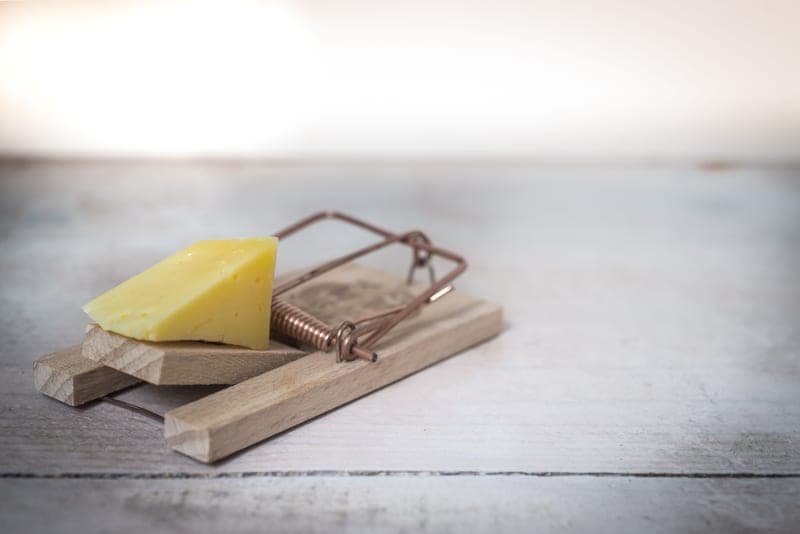 Our pickVictor Metal Pedal Mouse Trap (M150)The wooden snap trap everything else is measured against. Cheap enough to set a dozen, which is how mouse trapping actually works. | Most homes, in quantity | Spring-loaded bar, metal pedal | |
| 2 |  Victor Kill Vault Mouse Trap (M267)A snap trap sealed inside a plastic vault. The kill happens out of sight and out of reach, and you never touch the mouse. | Homes with a dog or a toddler | Enclosed snap bar in a sealed chamber | |
| 3 |  Catchmaster Glue Boards (72TC)We list these because people search for them, and because they are the one product on this site we recommend against using as a kill method. | Monitoring only — read the warning | Adhesive board, no kill |
#ad — every price link goes to Amazon and Swat & Snap earns a commission on qualifying purchases. No price is shown until it can be pulled live from the retailer.
Victor Metal Pedal Mouse Trap (M150)
Victor · Most homes, in quantity
The wooden snap trap everything else is measured against. Cheap enough to set a dozen, which is how mouse trapping actually works.
- Costs little enough that quantity stops being a decision
- The metal pedal fires on weight, so a mouse cannot lick the bait off
- Nothing to charge, nothing to refill
- You see the result, and you have to handle it
- Exposed bar is a genuine hazard to a dog's nose or a toddler's fingers
Check price on Amazon
Victor Kill Vault Mouse Trap (M267)
Victor · Homes with a dog or a toddler
A snap trap sealed inside a plastic vault. The kill happens out of sight and out of reach, and you never touch the mouse.
- The enclosure is the reason to buy it: a dog cannot get to the bar
- Seals after firing, so there is no smell and nothing to see
- Sets by pressing the lid, not by arming a bar with your fingers
- Single-use, so a real infestation gets expensive
- Bulkier than a bare snap trap in a tight wall run
Check price on Amazon
Catchmaster Glue Boards (72TC)
Catchmaster · Monitoring only — read the warning
We list these because people search for them, and because they are the one product on this site we recommend against using as a kill method.
- Genuinely useful for one job: confirming a runway before you place real traps
- Flat enough to slide under an appliance where nothing else fits
- As a kill method it is indiscriminate and slow — use a snap or electronic trap instead
- Catches lizards, songbirds and kittens as readily as mice
Check price on Amazon
The one thing a glue board is genuinely good for
Monitoring.
Before you set eight snap traps you want to know where mice actually travel, and a glue board answers that better than anything else. It is flat enough to slide under a refrigerator, behind a washing machine, or into the two-centimeter gap under a kitchen kickboard where no trap fits. Leave a few out overnight; the ones that pick up hair, droppings or footprints have found the runway.
Then you take them up and put real traps there.
Used that way — a monitoring tool you lift in the morning, not a kill method you leave for a week — a glue board earns its place in a mouse campaign. That is the only use we recommend, and it is why one appears in the picks above rather than being silently omitted.
What to use instead, by situation
- Default: a plain snap trap, in quantity. Cheap enough to cover every runway at once, which is what actually ends an infestation. The picks.
- Pets or children in the house: an enclosed trap, where the bar is sealed inside a chamber a paw cannot enter. See pet-safe mouse traps.
- You cannot handle the disposal: an electronic trap tips out without contact. See electronic mouse traps.
- You will not kill it: a live trap, with the twice-daily checking obligation spelled out in humane mouse traps.
- You were considering poison instead: read mouse trap vs poison first. It has the same shape of problem — the method works and the consequences land somewhere you did not plan for.
If you already have an animal stuck
- Non-target wildlife — a bird, a lizard, a snake: call a local wildlife rehabilitator. Do not try to pull it free; skin tears.
- A pet: vegetable or mineral oil worked gently into the glue will release fur. If it is near the face or the animal is distressed, this is a vet visit.
- A mouse or rat you intend to release: oil will free it, but a rodent that has struggled on a board is often injured, and releasing an injured animal is not a kind outcome. This is the situation the board put you in, and it is the reason not to use one.
Frequently asked
Are glue traps illegal?
Do glue traps work on mice?
What is the most humane mouse trap?
Can I use a glue board if I check it every morning?
More on mice
One mouse is rarely one mouse. This hub covers what kills them, what only looks like it does, and where to put the thing you buy.
Not sure yet? Read how we pick.
Ryder M.
Ryder M. is the hands-on owner behind Magoo Media Group. He writes Swat & Snap because he got tired of pest-control advice that was either a sales pitch or a scare story.
Related on Swat & Snap
- The best mouse traps, by situationSix traps chosen by situation — cheap and plentiful, pet-safe by design, no-touch, or live catch.
- Pet-safe mouse trapsEnclosed and tunnel traps that are safe because of their geometry, plus a free way to make any trap safer.

- Mouse trap vs poisonRodenticide works — and then the carcass is in your wall and a cat can be poisoned by eating it. The honest comparison.
- The best humane mouse trapsCatch-and-release traps that actually hold a mouse, and the twice-a-day obligation that makes them humane.

- Where to place mouse trapsHow to read a runway, how to orient a trap, and the three rooms people forget to cover.