How many rat traps do I need?
The most common reason a rat trapping effort fails is not the trap, the bait or the placement. It is the count — two traps against a colony is a survey, not a solution.
By Ryder M.Published Updated
Swat & Snap earns a commission from qualifying purchases made through the links on this page, at no extra cost to you. It does not change which products we pick — see how we pick and our affiliate disclosure.
The arithmetic nobody likes
Two things about rats make the count matter more than it does with mice.
A colony is plural. If you are seeing droppings, you are almost never dealing with one animal. Norway rats live in social groups, and a female can produce multiple litters a year with half a dozen or more young in each. By the time the evidence is obvious, the number is not one.
Rats learn from a failure. They are strongly neophobic and they avoid places where something bad happened. A trap that fires and catches is fine. A trap that fires and misses, or injures, effectively removes that location from your options — and often the neighboring locations too. So trapping slowly, one trap at a time, is actively worse than trapping heavily for a few nights, because every mistake trains the survivors.
Put together, that gives a strategy: saturate the runways for a short period, rather than running a small number of traps for a long one. This is the opposite of how most people buy.
How many, by situation
These are working numbers, not a formula.
| Situation | Traps to set | Notes |
|---|---|---|
| One confirmed runway, light evidence | 2-3 | Two minimum on any runway you are working |
| Attic with droppings in one area | 6 | Along the joist runs and at the roof-line entry |
| Garage or shed | 4-6 | Perimeter walls, behind stored items |
| Crawl space | 6-8 | Hard to service, so set more and visit less |
| Kitchen or utility room evidence | 4-6 | Boxed or enclosed, given the room is used |
| Yard only — compost, decking, fence line | 4-6 boxed | Two per station, two to three stations |
| Yard plus a building | 10-12 | Treat them as two jobs running at once |
| Chicken coop and run | 4-6 boxed | Outside the enclosure, never inside it |
| Heavy, multi-room evidence | 12+ | Consider a professional at this scale |
Two per runway is the floor. Rats often jump or baulk at a single trap. Setting two in line, a few inches apart, catches the animal that cleared the first one.
Why quantity beats quality here
A premium trap on the wrong runway catches nothing. A cheap trap on the right runway catches on night one. Given a fixed budget, coverage wins — and that is why multi-packs exist as a category.
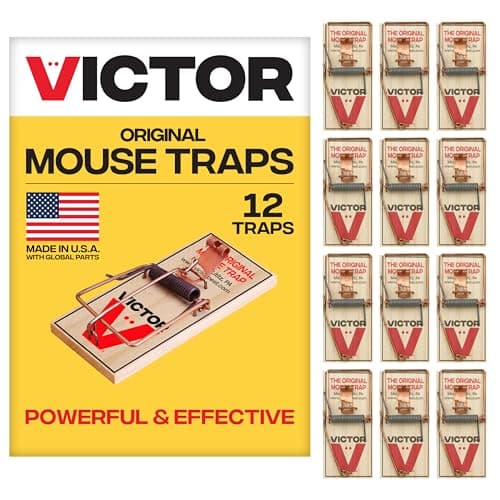
That said, do not read "quantity" as "any trap". The force has to be enough to kill an adult rat outright. A mouse trap on a Norway rat injures it, which is both cruel and the single best way to make the rest of your week harder. Mouse traps vs rat traps and what size rat trap do I need cover the sizing.
So the practical rule is: buy the cheapest trap that is genuinely rat-rated, and buy a lot of them. Add one or two electronic traps where the disposal matters — an attic you do not want to crawl into twice.
What to look for
Multi-pack pricing. This is the specification that decides your coverage. If a trap is only sold singly at a premium, it is a supplement, not your main buy.
Enough spring force for an adult, not a juvenile. Metal-bar rat traps are the benchmark; plastic jaw traps are lighter but acceptable in quantity on smaller rats.
Setting you can do without your hand near the jaw. Foot-press arming on a plastic jaw trap, or the pedal on a metal rat trap. When you are setting eight of these, how you arm it stops being a detail.
Reusability, because you will reset. A trap you bin after each catch means your coverage falls every night unless you bought spares.
One or two no-touch traps for the awkward places. An electronic tunnel trap tips out into a bin, which is worth real money in a crawl space or attic. They are not the pick for your whole quantity — batteries and cost — but one or two alongside the snap traps is a good split.
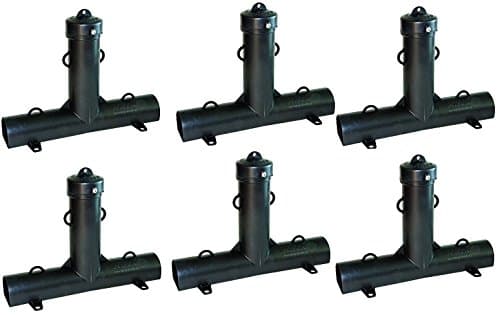
Locked boxes for anything outdoors or near a pet. Count the boxes as well as the traps: a station holds two, so three stations is six traps. Best rat traps for gardens.
Quick picks
| # | Product | Best for | Mechanism | Price |
|---|---|---|---|---|
| 1 | 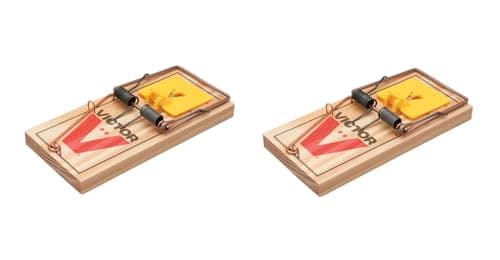 Our pickVictor Easy Set Rat Trap (M205)The rat-sized version of the trap that defined the category. Enough spring force to be lethal instantly, which matters more with rats than with mice. | Most rat jobs | Spring bar, expanded trigger pedal | $13.92View on Amazon Price as of October 17, 2026 |
| 2 | 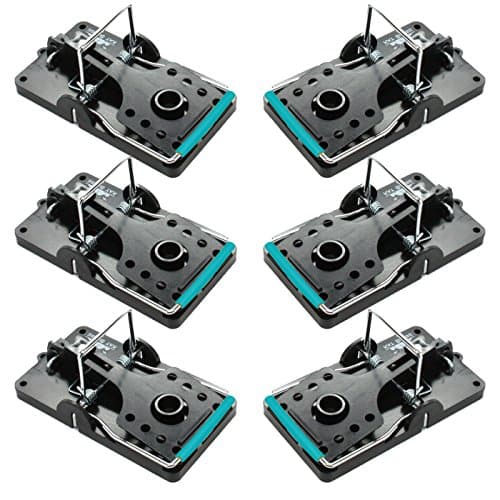 Kat Sense Large Rat TrapsPlastic jaw traps sold in packs. Individually less forceful than a Victor; collectively they let you cover every runway at once, which is how rat trapping actually succeeds. | Buying traps in quantity | Plastic jaw, serrated bite | $19.97View on Amazon Price as of October 17, 2026 |
| 3 | 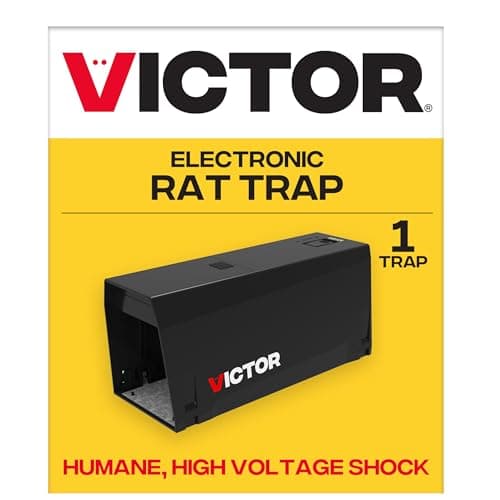 Victor Electronic Rat Trap (M241B)A large shock tunnel that handles rat-sized animals. The no-touch disposal is worth more in an attic than anywhere else in the house. | Attics and crawl spaces | High-voltage shock tunnel | $34.27View on Amazon Price as of October 17, 2026 |
#ad — every price link goes to Amazon and Swat & Snap earns a commission on qualifying purchases. Prices are pulled live from the retailer; where one is not available the button reads “Check price on Amazon” rather than showing a stale number.
Victor Easy Set Rat Trap (M205)
Victor · Most rat jobs
The rat-sized version of the trap that defined the category. Enough spring force to be lethal instantly, which matters more with rats than with mice.
- Kills instantly when placed square to a runway, which cheap traps often do not
- Wide pedal fires even on a cautious approach
- Genuinely dangerous to set in a home with pets — it must be boxed
- Rats are neophobic: expect to leave it unset for several days first
Kat Sense Large Rat Traps
Kat Sense · Buying traps in quantity
Plastic jaw traps sold in packs. Individually less forceful than a Victor; collectively they let you cover every runway at once, which is how rat trapping actually succeeds.
- Quantity is the strategy with rats, and these make quantity affordable
- Foot-press arming means you never put a hand near the jaw
- Less spring force than a metal-bar trap on a big Norway rat
- Jaws weaken after repeated cycles
Victor Electronic Rat Trap (M241B)
Victor · Attics and crawl spaces
A large shock tunnel that handles rat-sized animals. The no-touch disposal is worth more in an attic than anywhere else in the house.
- Tunnel shape keeps the plates away from paws
- You tip it out — no bar to release over a dead rat
- D cells, and it drains them faster than the box suggests
- Damp crawl spaces corrode the contacts
How to spend it: the split that works
For a typical attic or garage job, a sensible allocation looks like this:
- Six to eight cheap rat-rated snap traps as the main coverage, set two per runway.
- One electronic tunnel trap at the place you least want to visit — the far end of the crawl space, the awkward corner of the loft.
- Two locked stations, each holding two snap traps, if any part of the problem is outdoors or within reach of a dog.
That is ten to thirteen trapping points for less than the price of a single call-out, and it is a far better use of the money than three expensive traps.
Where to put them
Count is only half the job. Placement:
- Flat against a vertical surface, trigger end toward the wall. Rats run with a shoulder against something.
- On confirmed runways only. Droppings, dark greasy smear marks along a joist or skirting, flattened tracks in grass, gnawed material. Do not guess.
- Two in line, a few inches apart, so the animal that clears the first meets the second.
- At the entry point as well as the feeding area — the roof line, the air brick, the gap under the garage door.
- Never in the open floor, and never in a place a pet or child can reach unless it is inside a locked box.
Best rat traps covers the trap choice and trap-shy rats covers the animals that beat all of this.
The pre-baiting step that makes the count work
Setting ten traps tonight and arming all of them is better than setting two, but it is not the best version. The best version:
- Place all the traps on the runways unset, with bait on them, for three to five days.
- Let the rats eat off them and learn the objects are harmless. Top the bait up.
- Arm everything on the same night.
Because rats are neophobic, this converts most of your traps from "objects to be avoided" into "known food sources", and the result is several catches in one night rather than one a week. It feels like doing nothing for most of a week. It is the difference between clearing a colony and training it.
When to stop
Stop adding traps once you have two on every runway you can identify and the catches have started.
Keep everything set for a full week after the last catch, not a day.
Then drop to two permanent monitors at the highest-traffic points — typically the roof-line entry in an attic, or the main runway in a garage. Leave them there indefinitely. A set trap in the loft costs nothing to leave and tells you the month something new gets in.
Reassess rather than re-buy if you are still catching at the same rate after two weeks. Steady catches mean an open route in, not an infinite colony: find the gap. Rats in the walls and what attracts rats are where to look.
The short version
Two traps minimum per runway, six minimum for a single-location problem, ten to twelve if a yard and a building are both involved. Buy cheap rat-rated traps in quantity rather than two good ones, add one no-touch trap for the awkward corner, leave everything unset with bait for three to five days, then arm it all on the same night. Keep it all set for a week after the last catch, then leave two as permanent monitors.
Frequently asked
How many rat traps should I set?
Is it better to use a few good rat traps or many cheap ones?
Why am I only catching one rat a week?
How many rat traps do I need in an attic?
Should I set all the rat traps at once?
How long should I leave rat traps out?
More on rats
Rats are cautious, strong and much harder to trap than mice. Everything here assumes you only get one good attempt at a wary animal.
Not sure yet? Read how we pick.
Ryder M.
Ryder M. is the hands-on owner behind Magoo Media Group. He writes Swat & Snap because he got tired of pest-control advice that was either a sales pitch or a scare story.
Related on Swat & Snap
- The best rat traps, by situationSnap, electronic, self-resetting and live traps compared — plus the pre-baiting step that decides success.
- Trap-shy ratsWhy a survivor stops feeding, and the reset that gets a stalled campaign working again.
- What size rat trap do I need?Size by droppings and species, not by guesswork — plus why a mouse trap on a rat is the worst outcome of all.
- How many mouse traps do I need?The trap count that actually ends an infestation, broken down by room and by house size.
- The best rat traps for gardensWeatherproof boxed traps, a locked station used as a trap box, and the automatic option for continuous garden pressure.
- The best rat trap baitWhat rats actually take, how to secure it so they cannot lift it, and why pre-baiting matters more.