What attracts rats to your house and yard?
Rats are not drawn to neglect in the abstract. They need around an ounce of food and an ounce of water a day, plus cover to move under — and a compost bin, a bird feeder and an overgrown fence line supply all three.
By Ryder M.Published Updated

Swat & Snap earns a commission from qualifying purchases made through the links on this page, at no extra cost to you. It does not change which products we pick — see how we pick and our affiliate disclosure.
The three requirements
A rat moving into your property is doing a simple assessment, and it is looking for all three of these within a short distance of each other.
1. Food, in quantity. An adult Norway rat eats roughly an ounce a day and is a genuine omnivore — grain, fruit, meat, fat, pet food, rubbish. Unlike a mouse, which lives off crumbs, a rat colony needs a real food supply, which is why rat problems usually trace back to a single identifiable source rather than general untidiness.
2. Water, every day. This is the difference that matters most and the one almost nobody accounts for. A house mouse gets most of its water from food and can live without drinking. A rat cannot — it needs to drink daily. Cut the water and you make a property genuinely harder to live on.
3. Cover to travel under. Rats are prey animals and will not cross open ground if they can avoid it. They need continuous cover: a hedge line, long grass against a fence, ivy, stacked materials, decking, a drain run. Clear the cover and the same yard with the same food becomes much less attractive.
What is actually attracting them, in order of impact
- Compost with the wrong things in it. Cooked food, meat, fish, dairy, bread and fat in an open heap is the single most common rat attractant on a residential property. A closed bin with a solid base, used for garden waste and raw vegetable peelings only, is a different object entirely.
- Bird feeders and the spill under them. Seed on the ground overnight is a reliable food source, and feeders are usually hung in exactly the kind of covered corner a rat likes. Catch trays and daily sweeping fix it.
- Bins that do not latch. A wheeled bin with a loose lid, bags left beside it, or a bin stored against a fence with cover on both sides.
- Pet food, chicken feed and bird seed stored in bags. A sack in a shed or garage is both the food source and, often, the nesting material.
- Chicken runs and rabbit hutches. Feed, water and bedding, undisturbed at night, with cover underneath. Best rat traps for chicken coops is the dedicated page.
- Fallen fruit and ripe vegetables. Windfall apples under a tree in autumn is a seasonal rat magnet, and it coincides with the season rats look for shelter.
- Water you have not thought of — a dripping outside tap, pet bowls left out, a water butt without a lid, a bird bath, a blocked gutter, a leaking downpipe, a pond edge, condensation in a crawl space.
- Barbecue grease trays and outdoor kitchens. Fat is high-value food and a grill left uncleaned is a dependable supply.
- Dog waste. Unpleasant but true: it is a food source for rats, and an uncleared yard is a draw.
- Harbourage: the cover that makes all of it usable. Long grass and weeds against a fence, stacked firewood or timber on the ground, bags of soil, old furniture, an unused trampoline, ivy up a wall, a shed on bearers, open-sided decking.
- A gap about the size of a quarter. Not an attractant, but the enabler for getting indoors — air bricks, service penetrations, gaps under a garage door, a damaged soffit, an uncapped drain.
What is not attracting them
General untidiness, on its own. A spotless yard with an open compost heap and a bird feeder has rats. A messy yard with latched bins and no food source often does not. Food and water decide it; clutter decides whether they can move around.
Your house being old. It decides how easily they get indoors, not whether they come to the property.
Ultrasonic stakes, in reverse. They do not repel rats, and in an open yard there is nothing to hold a sound field at all.
A cat or a dog. Dogs may deter rats from the middle of a lawn. Neither stops a colony living under decking, and a dog's food bowl and waste are themselves attractants.
What to look for
If you are buying now, the attractant list tells you what the purchase has to do.
Hard storage before pest products. Metal bins with lids for chicken feed, pet food and bird seed; a compost bin with a base and a closing lid; latching bin lids. This is the cheapest and most effective part of the job.
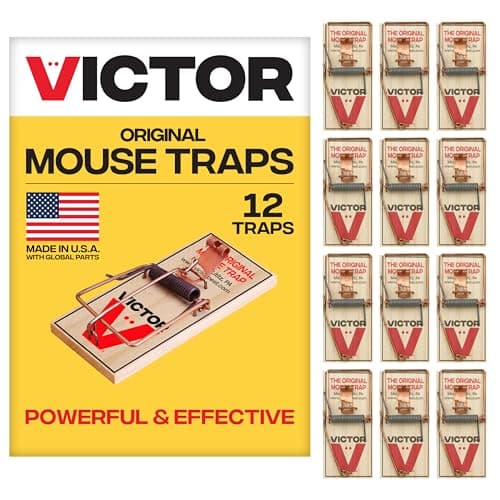
Rat-sized traps, because the attractants being present means animals probably are too. A mouse trap does not kill a rat — it injures it, and an injured survivor teaches the colony to avoid your traps. Get the size right the first time: what size rat trap do I need.
Traps in quantity, not one good one. Rat colonies are plural. Covering every runway at once is what works, which is why multi-packs matter more than a single premium trap.
A locked box for anything outdoors. A bare rat trap in a yard is a hazard to birds, hedgehogs, cats and dogs, and it gets rained on. Best rat traps for gardens covers the boxed setup.
Nothing poisoned. Anticoagulant bait kills whatever eats the rat afterwards — owls, foxes, cats, dogs — and leaves a carcass you cannot find. Rat trap vs poison.
Quick picks
| # | Product | Best for | Mechanism | Price |
|---|---|---|---|---|
| 1 | 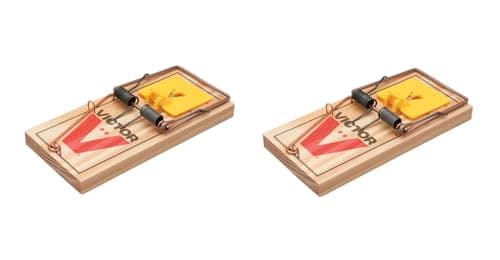 Our pickVictor Easy Set Rat Trap (M205)The rat-sized version of the trap that defined the category. Enough spring force to be lethal instantly, which matters more with rats than with mice. | Most rat jobs | Spring bar, expanded trigger pedal | $13.92View on Amazon Price as of October 17, 2026 |
| 2 | 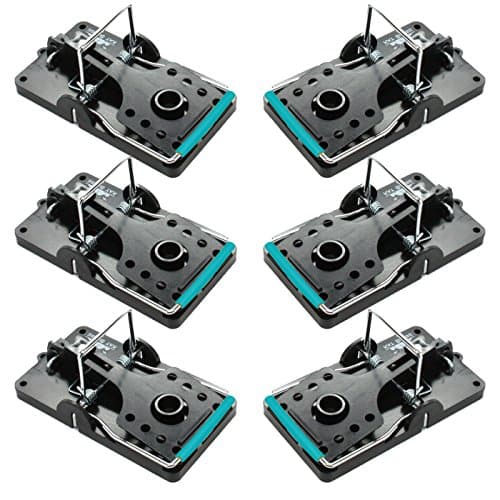 Kat Sense Large Rat TrapsPlastic jaw traps sold in packs. Individually less forceful than a Victor; collectively they let you cover every runway at once, which is how rat trapping actually succeeds. | Buying traps in quantity | Plastic jaw, serrated bite | $19.97View on Amazon Price as of October 17, 2026 |
| 3 | 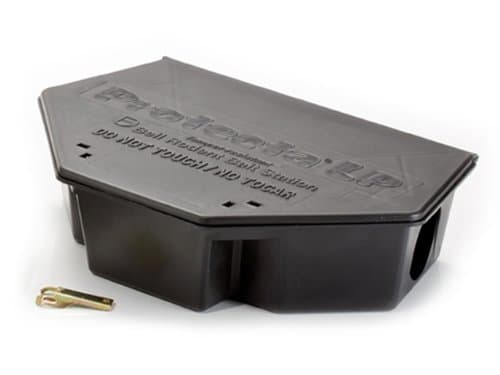 Protecta LP Rat Bait StationThe low-profile station professionals use. Buy it for the lock and the anchoring, and read our poison page before you decide to put bait in it at all. | Locked exterior baiting | Locked tamper-resistant station | $26.99View on Amazon Price as of October 17, 2026 |
#ad — every price link goes to Amazon and Swat & Snap earns a commission on qualifying purchases. Prices are pulled live from the retailer; where one is not available the button reads “Check price on Amazon” rather than showing a stale number.
Victor Easy Set Rat Trap (M205)
Victor · Most rat jobs
The rat-sized version of the trap that defined the category. Enough spring force to be lethal instantly, which matters more with rats than with mice.
- Kills instantly when placed square to a runway, which cheap traps often do not
- Wide pedal fires even on a cautious approach
- Genuinely dangerous to set in a home with pets — it must be boxed
- Rats are neophobic: expect to leave it unset for several days first
Kat Sense Large Rat Traps
Kat Sense · Buying traps in quantity
Plastic jaw traps sold in packs. Individually less forceful than a Victor; collectively they let you cover every runway at once, which is how rat trapping actually succeeds.
- Quantity is the strategy with rats, and these make quantity affordable
- Foot-press arming means you never put a hand near the jaw
- Less spring force than a metal-bar trap on a big Norway rat
- Jaws weaken after repeated cycles
Protecta LP Rat Bait Station
Bell Labs · Locked exterior baiting
The low-profile station professionals use. Buy it for the lock and the anchoring, and read our poison page before you decide to put bait in it at all.
- Properly tamper-resistant, unlike the unlocked trays sold as stations
- Can be loaded with snap traps instead of bait — which is what we would do
- The station is safe; anticoagulant bait inside it still poisons what eats the rat
- Needs anchoring or it gets dragged
What attracts rats to a trap
A different question, and the answer is counter-intuitive if you have only trapped mice.
Familiarity beats bait. Rats are strongly neophobic. A brand-new trap, however well baited, is an object to be avoided for several days. The single most effective thing you can do is place the trap — or the box holding it — on the runway and leave it unset with food on it for three to five days, so the animals learn it is safe. Then arm it. This one step changes the outcome more than any bait choice. Trap-shy rats is the full method.
High-value, high-fat food. Peanut butter, bacon, chocolate, nuts and dried fruit all work well. Unlike mice, rats will also take fresh fruit and vegetable scraps, and in a yard where they are already eating compost, matching the food they are used to works better than something novel. Best rat trap bait goes through it.
Tie the bait on. Rats are strong and dexterous enough to remove loose bait. Secure it so the animal has to work at the trigger.
The runway, above all. Tight against a vertical surface, trigger end toward the wall, on a track you have confirmed with droppings, smears or flattened grass. A trap in the open catches nothing no matter what is on it.
The order to work in
- Cut the water first — fix the dripping tap, lid the water butt, bring pet bowls in at night, clear the gutter. This is the step most people skip and it is the one rats cannot work around.
- Fix the food — compost bin with a base and no cooked waste, catch trays under feeders, latching bin lids, feed into metal bins, windfall fruit picked up.
- Cut the cover — a clear strip along the fence line, timber up off the ground, ivy off the wall, nothing stored against the house.
- Trap — boxed snap traps in quantity on the runways, left unset for a few days first.
- Seal — hardware cloth, sheet metal or mortar over every gap bigger than a quarter. Not foam alone, which rats chew through.
Sealing before you have trapped can shut animals inside. Trapping without doing steps one to three means you do it again next season.
The short version
Rats come for food, water and cover, and they need all three. The practical list is compost with cooked food in it, spilled bird seed, unlatched bins, bagged pet and chicken feed, fallen fruit — plus a drinking source, which is the thing people miss — and an overgrown fence line to travel along. Remove the water and the food, cut back the cover, then trap in quantity with boxed traps left unset for a few days first, and seal anything bigger than a quarter.
Frequently asked
What attracts rats to your house the most?
Do rats need water?
Does compost attract rats?
Does cutting the grass get rid of rats?
What attracts rats to a trap?
What attracts rats and mice both?
More on rats
Rats are cautious, strong and much harder to trap than mice. Everything here assumes you only get one good attempt at a wary animal.
Not sure yet? Read how we pick.
Ryder M.
Ryder M. is the hands-on owner behind Magoo Media Group. He writes Swat & Snap because he got tired of pest-control advice that was either a sales pitch or a scare story.
Related on Swat & Snap
- Rats in the yardThe food and harborage audit that actually ends it, plus where outdoor stations go.
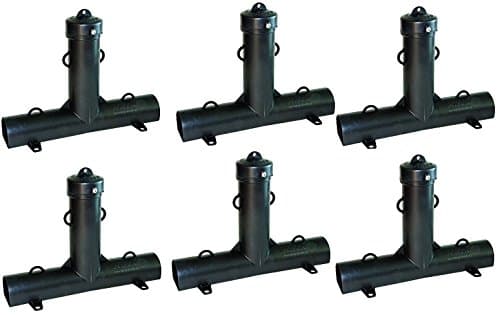
- How to get rid of ratsPre-bait, set everything at once, then exclude. Timeline, the harborage audit, and when to call someone.
- The best rat trap baitWhat rats actually take, how to secure it so they cannot lift it, and why pre-baiting matters more.
- The best rat traps for gardensWeatherproof boxed traps, a locked station used as a trap box, and the automatic option for continuous garden pressure.
- What attracts mice to your house?The food, warmth and shelter that actually pull mice indoors, ranked by how much difference removing each one makes.
- Mice vs rats: which one do you actually have?Droppings, sound, gnaw marks and gap size — the fast way to tell mice from rats before you buy a trap.