The best fly traps for barns and stables
A barn generates flies at a scale a kitchen never does, because manure, feed and animals are all in one building. The products that work here are chosen for capacity and placement, not for subtlety.
By Ryder M.Published Updated
Swat & Snap earns a commission from qualifying purchases made through the links on this page, at no extra cost to you. It does not change which products we pick — see how we pick and our affiliate disclosure.
Why a barn is a different problem
A kitchen fly problem is a few adults from one small breeding site. A barn is a production facility: house flies and stable flies breed in manure, soiled bedding, spilled wet feed and standing water, and every one of those is present in quantity. The life cycle in warm weather runs about a week from egg to adult, so the population compounds.
That changes what you buy in three ways.
Capacity matters more than cleverness. A trap sized for a kitchen fills in a day and then does nothing. Barn traps are measured in thousands of flies.
Placement becomes the main skill. A bait trap pulls flies toward it. Hang it inside the barn and you have concentrated the problem over your horses. Hang it thirty feet out and you have pulled flies away from the building, which is the entire point.
Animals and feed constrain the options. No debris above a stall. No zapper over a feed bin. Nothing that relies on a chemical the animals breathe or lick.
What to look for
Stated capacity in the thousands. The RESCUE! bags state up to 20,000 flies. That is the scale a barn needs, and it is why a disposable bag beats a refillable kitchen trap here.
A lure strong enough for the distance, and the honesty to admit it stinks. Bait traps work because the attractant smells like decomposition. That is the mechanism, not a flaw — and it is also why the trap goes well away from the house, the barn door and the arena.
Silent and debris-free for occupied rooms. The tack room, feed room and office want a light trap over a glue card: no snap, no smell, no scatter of insect parts. A glue card also hides the catch, which matters in a room people sit in.
Nothing electrical over feed, bedding or a stall. An electrified grid drops fragments. That is unacceptable above anything an animal eats or lies on, and it is the main reason a zapper is a workshop product in a barn rather than a stable product.
Weatherproofing, because half of this hangs outside. Bags are disposable and shed rain. Mains-powered units need a dry, covered mounting point and a safe cable run.
Something handheld. No trap deals with the fly on your arm while you are picking out a hoof, and a racket with a shielded triple mesh is the one you can safely leave hanging on a nail.
And a feed-through or manure plan, not just traps. Traps intercept adults. Dry bedding, covered muck storage well away from the building, prompt removal of spilled feed, and no standing water in buckets or gutters remove the breeding site. That is where most of the result comes from.
Quick picks
| # | Product | Best for | Mechanism | Price |
|---|---|---|---|---|
| 1 | 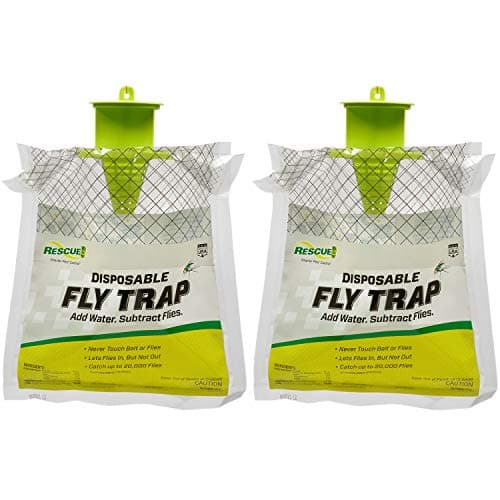 Our pickRESCUE! Non-Toxic Disposable Fly TrapA hanging bag with a powerful bait. Effective, genuinely foul-smelling, and therefore a product you hang well away from the door you use. | Outdoor house flies | Water-activated attractant bag | $11.92$14.9920% offView on Amazon Price as of October 17, 2026 |
| 2 | 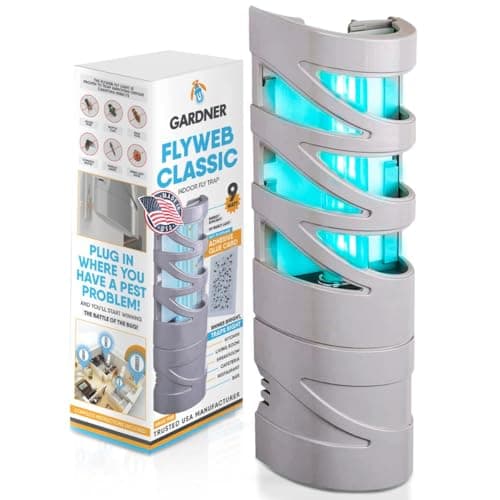 Gardner FlyWeb Indoor Fly LightA plug-in UV light over a glue card. No zap, no smell, and it works on house flies that ignore a fruit fly lure. | Quiet indoor fly control | UV light + glue card | |
| 3 | 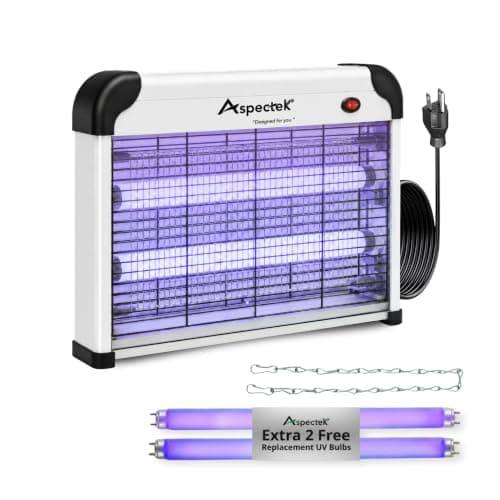 Aspectek Indoor Bug ZapperA wall-mount indoor zapper with a removable tray. Suited to a garage or workshop, not to a room you sit in. | Garages and utility rooms | UV tubes + electrified grid | $42.74$44.995% offView on Amazon Price as of October 17, 2026 |
| 4 |  The Executioner Fly Swatter RacketTriple-layer mesh, so your finger cannot reach the live layer. That is the one design difference worth paying for in this category. | A racket that lasts | Electrified mesh, three layers | $30.99View on Amazon Price as of October 17, 2026 |
#ad — every price link goes to Amazon and Swat & Snap earns a commission on qualifying purchases. Prices are pulled live from the retailer; where one is not available the button reads “Check price on Amazon” rather than showing a stale number.
RESCUE! Non-Toxic Disposable Fly Trap
RESCUE! · Outdoor house flies
A hanging bag with a powerful bait. Effective, genuinely foul-smelling, and therefore a product you hang well away from the door you use.
- Pulls flies away from a patio better than anything else at the price
- Nothing to plug in, nothing to refill
- The smell is the mechanism — hang it close and you have made things worse
- Full bags are unpleasant to take down
Gardner FlyWeb Indoor Fly Light
Gardner · Quiet indoor fly control
A plug-in UV light over a glue card. No zap, no smell, and it works on house flies that ignore a fruit fly lure.
- Silent and debris-free, which a zapper indoors is not
- Card hides the catch, so it is not a display of dead flies
- Only pulls flies within a room, and only in low light
- Glue cards need replacing more often than the box implies
Aspectek Indoor Bug Zapper
Aspectek · Garages and utility rooms
A wall-mount indoor zapper with a removable tray. Suited to a garage or workshop, not to a room you sit in.
- Removable tray makes the mess manageable, which most indoor zappers ignore
- Bright enough to pull flies across a big garage
- Audible snap every catch — wrong for a bedroom or living room
- Same mosquito caveat as every zapper
The Executioner Fly Swatter Racket
The Executioner · A racket that lasts
Triple-layer mesh, so your finger cannot reach the live layer. That is the one design difference worth paying for in this category.
- Triple mesh is the reason to choose it — a child's finger cannot reach the charge
- Frame survives being swung hard, unlike the bargain rackets
- Several times the price of a single-layer racket
- Still only ever kills what you aim at
How the four compare
Built from each product's own stated specifications.
| RESCUE! Bait Bag | Gardner FlyWeb | Aspectek Zapper | Executioner Racket | |
|---|---|---|---|---|
| Mechanism | Water-activated bait bag | UV light + glue card | UV tubes + electrified grid | Electrified mesh, three layers |
| Stated capacity | Up to 20,000 flies | Glue card | Removable debris tray | One at a time |
| Where it goes | Outside, 30+ ft from doors | Tack room, feed room, office | Workshop, utility area | On a hook, in your hand |
| Over a stall? | No — it draws flies in | No need, but harmless | No — debris and noise | n/a |
| Power | None | Mains | Mains | 2 x AA |
| Noise | Silent | Silent | Audible snap per catch | Snap when you connect |
| Smell | Strong, deliberately | None | None | None |
| Running cost | New bag | Glue cards | Replacement bulbs | Batteries |
| Best barn use | Perimeter interception | Occupied rooms | Workshop only | The fly in your face |
The row that decides most barn purchases is "where it goes". These four products do not compete with each other — they cover four different places, and a barn that is handled properly has all four.
Where to hang them
Bait bags: outside, downwind, far. Thirty feet or more from the barn doors, the arena, the house and anywhere people gather, and ideally downwind of the building. Hang several around the perimeter rather than one. The trap pulls flies toward itself, so every foot of distance between it and the door is doing work. Hang them at about head height on a fence post or a tree, not on the barn wall.
Light traps: inside, in occupied rooms, low and away from competing light. A light trap is competing with daylight and with whatever lamp you have on. Mount it on a wall at around waist to chest height, away from windows, in the tack room, feed room or office. It is a room-scale device and it will not clear a barn aisle.
Zapper: workshop and utility areas only. Away from feed, bedding, water troughs and stalls. If there is nowhere in the barn that qualifies, skip it — it is the most optional item here.
Racket: on a nail by the door, where you will actually pick it up.
The manure and moisture work that does the heavy lifting
Traps are interception. Breeding-site management is control, and in a barn it is the difference between a nuisance and an infestation.
- Muck heap well away from the building, covered or turned so it heats, never left as a damp open pile against the barn wall.
- Strip wet bedding daily, not weekly. Stable flies in particular breed in soiled, wet straw and bedding rather than in dry manure.
- Clean up spilled feed immediately. Wet grain is prime breeding material.
- No standing water — check buckets, troughs, tire ruts, gutters and the base of downpipes. These breed mosquitoes as well as flies; do mosquito dunks work covers the water you genuinely cannot drain.
- Keep the water troughs clean, and site them where spill drains away rather than making a permanent wet patch.
- Fans in the aisle. Flies are poor fliers in moving air, and airflow is one of the cheapest practical deterrents in a barn.
- Fly masks and sheets on sensitive animals, which is animal management rather than pest control but is part of the same decision.
What to skip
- Bait bags hung inside or by the barn door. The most common mistake with this product, and it makes the problem worse by concentrating flies at the entrance.
- Zappers over stalls, feed or bedding. Debris falls, and the snap unsettles animals.
- Fruit fly lure traps. The wrong insect entirely. These are for Drosophila on a kitchen counter — see best fruit fly traps if that is what you actually have, and gnats vs fruit flies vs drain flies if you are not sure what you are looking at.
- Ultrasonic devices. No credible evidence, and an open barn is the worst possible case for any sound-based claim.
- Relying on traps alone while the muck heap sits against the wall. The traps will fill and the barn will stay full of flies.
The short version
Hang several RESCUE! bait bags around the perimeter, thirty feet or more from any door, and accept that they smell because that is how they work. Put a silent FlyWeb light trap in the tack room and feed room. Keep a zapper for the workshop only, never over a stall. Hang a racket by the door. Then do the real work: dry bedding stripped daily, muck heap away from the building, spilled feed cleared, no standing water, and fans in the aisle.
Frequently asked
What is the best fly trap for a barn?
Where should you hang fly traps in a barn?
Can you use a bug zapper in a stable?
Why does my barn have so many flies?
Do fly bait bags really smell that bad?
Do fans help with barn flies?
More on fruit flies & gnats
Tiny flies in the kitchen are almost never one problem. Identify which of the three you have, then treat the source — the trap alone never finishes it.
Not sure yet? Read how we pick.
Ryder M.
Ryder M. is the hands-on owner behind Magoo Media Group. He writes Swat & Snap because he got tired of pest-control advice that was either a sales pitch or a scare story.
Related on Swat & Snap
- Best fly traps for chicken coopsA baited bag trap hung well away from the run, a glue-card light inside, and the manure routine that decides whether either works.
- How to get rid of house fliesWhere they breed outside, how they get in, and the traps that work on flies this size.
- The best fly traps for a garageTraps that hold up in an unheated garage, matched to the smell source that is drawing the flies in.
- How to keep flies away from food outsideThe three things that genuinely keep flies off an outdoor table — covers, airflow and a distant bait trap — and what to skip.
- The best electric fly swattersOne insect, aimed, instantly. Why mesh layers are the spec that matters.
- The best plug-in fly trapsSilent light traps for whole-room fly control — and the running cost nobody mentions.