Do bucket traps work on rats?
Search for a bucket rat trap and you get a page of listings with "rat" in the title. Almost all of them are the same mouse product, and the gap between the keyword and the engineering is where people's money goes.
By Ryder M.Published Updated

Swat & Snap earns a commission from qualifying purchases made through the links on this page, at no extra cost to you. It does not change which products we pick — see how we pick and our affiliate disclosure.
How a bucket trap actually works
Every bucket trap is the same idea in two or three forms. A five-gallon bucket sits on the floor. Over the top goes either a lid with a flipping ramp, or a plank that clamps to the rim and see-saws. Bait goes at the far end. The animal walks out, its weight tips the mechanism, it drops in, and the mechanism resets itself for the next one.
The appeal is real and worth stating: it is the only genuinely multi-catch design most people will ever own. A snap trap is finished after one catch. A bucket keeps working on night five, which is why it suits a shed, a barn or a cabin you visit weekly rather than daily. Best bucket mouse traps is our full page on that use.
Everything that follows is about what happens when you point that design at a rat.
The weight problem
The mechanism is a balance. The ramp or plank has to be stable enough that the animal walks confidently onto it and unstable enough that it tips at the far end. That calibration is the entire product, and it is set for a mouse.
| House mouse | Roof rat | Norway rat | |
|---|---|---|---|
| Typical adult weight | Around 1 oz | Roughly 5-9 oz | Roughly 10-18 oz |
| Body length, excluding tail | 3-4 in | 6-8 in | 7-10 in |
| Fits a mouse-calibrated ramp | Yes | Marginal | No |
| Will approach a new object quickly | Usually | No | No |
Two things follow.
A heavy animal does not get a graceful tip. It either overloads the plank early — so the mechanism dumps it before it is over the bucket, and it walks away having learned something — or the animal's size means it simply cannot use the ramp the way the design assumes.
A five-gallon bucket is a small container for a large rat. Standard bucket height is around 14 to 15 inches. That is a comfortable margin over a mouse and a much thinner one over an adult Norway rat, particularly one with a surface to brace against.
The one honest exception: Walk the Plank's own listing notes that the plank supplied in the box is calibrated for smaller mice and that a larger plank is a separate purchase. That is a manufacturer telling you the default configuration is not the rat configuration, and it is the most useful sentence on the whole product page.
The neophobia problem, which is bigger
Weight is the obvious objection. Behavior is the one that actually decides it.
Rats are strongly neophobic. A new object in a known territory gets avoided for days — not a cautious sniff, a complete detour. That is why every page on this site about rats tells you to place the trap unset with bait on it for three to five days before you arm it. Trap-shy rats is the full method and it is the single highest-leverage thing in rat control.
Now look at what a bucket trap asks of that animal: approach a large, unfamiliar, free-standing plastic object in the middle of open floor, climb onto it, and walk out over a void.
A mouse, which is curious about new objects, does this readily. A rat, which is not, needs a long habituation period — and you cannot pre-bait a bucket trap in the usual way, because the mechanism either tips or it does not. Some people wire the plank shut for a week to let the rats learn it, then release it. That genuinely helps, and it is the only way we would run one for rats.
Where a bucket trap does catch rats
Not never. Three real cases:
Juvenile rats. A young rat is mouse-weight and mouse-curious. In a barn or a chicken run with an active colony, a bucket trap will take young animals — which is useful, because it removes them before they breed, but it does nothing about the established adults.
Roof rats, sometimes. Lighter than Norway rats and natural climbers, so the ramp is less alien to them. Still cautious, still often too heavy. Roof rats vs Norway rats tells you which species you have.
A mixed mouse-and-rat problem in an outbuilding. The bucket earns its place on the mice while rat-rated snap traps handle the rats. This is the setup we would actually recommend in a barn.
What it will not do is clear an adult Norway rat colony from under decking, out of a wall or out of a crawl space. For that, see best rat traps.
The water question — read this before you fill a bucket
A lot of bucket-trap advice tells you to put a few inches of water in the bottom. We are not going to.
Drowning is classified as an unacceptable method of euthanasia in the AVMA Guidelines for the Euthanasia of Animals. Unacceptable in that document means inhumane under any condition, not "acceptable with conditions". A rodent in water takes minutes to die and is conscious throughout.
Beyond the welfare question, there are practical reasons:
- It can be illegal where you live. Animal cruelty statutes vary by state, and "it is a rat" is not a blanket exemption in all of them. Check your state's rules rather than assuming.
- It makes the trap a disease and smell problem. A bucket of water with drowned rodents in it, left for a few days in a warm shed, is considerably worse to deal with than a snap trap.
- It removes the thing a bucket is good at. A dry bucket checked twice daily is a live trap. Add water and you have a slow kill method with none of the flexibility.
Used dry, a bucket trap is a live trap and inherits every live-trap obligation: twice-daily checks without exception, and a release plan. An animal left overnight in a dry bucket in a cold shed dies of stress and exposure, which is the outcome the dry bucket was supposed to avoid. Humane rat control is honest about how hard that is to do properly with rats, including that relocating them is restricted in many states and usually fatal to the animal anyway.
What to look for
If you have read the above and a bucket still fits your situation — an outbuilding with mice and juvenile rats, visited weekly — these are the specifications that matter.
A stated weight calibration, or a heavier plank option. The only honest signal in this category. A listing that says "rat" in the title and nothing about the mechanism's weight range is telling you about its keywords, not its engineering.
Metal rather than thin ABS, if rats are in the picture at all. Rats gnaw. A plastic lid in a barn with an active rat colony will be chewed.
Self-resetting, which is the whole point. If it only catches once, buy a snap trap — it is cheaper and kills faster.
A bucket you can actually service. Five gallons of bucket with a live rodent in it is awkward to carry and unpleasant to tip out. Think about that step before you buy.
No water. Covered above.
And for adult rats: a rat-rated snap trap instead. Enough spring force to kill instantly, cheap enough to buy in quantity, and compatible with the pre-baiting that actually beats rat neophobia. The picks below lead with those for exactly that reason.
Quick picks
| # | Product | Best for | Mechanism | Price |
|---|---|---|---|---|
| 1 | 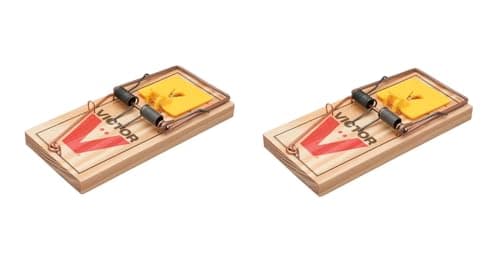 Our pickVictor Easy Set Rat Trap (M205)The rat-sized version of the trap that defined the category. Enough spring force to be lethal instantly, which matters more with rats than with mice. | Most rat jobs | Spring bar, expanded trigger pedal | $9.02$9.808% offView on Amazon Price as of October 30, 2026 |
| 2 | 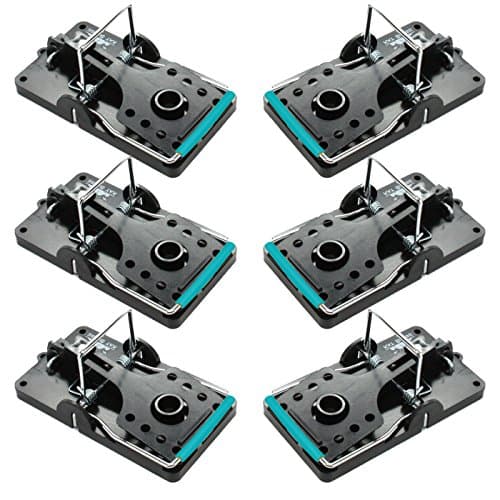 Kat Sense Large Rat TrapsPlastic jaw traps sold in packs. Individually less forceful than a Victor; collectively they let you cover every runway at once, which is how rat trapping actually succeeds. | Buying traps in quantity | Plastic jaw, serrated bite | $19.97View on Amazon Price as of October 30, 2026 |
| 3 | 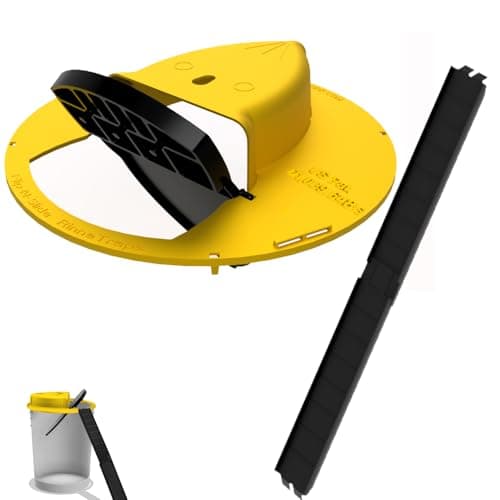 Flip N Slide Bucket Lid Mouse TrapA lid that turns any five-gallon bucket into a multi-catch trap. The one design here that keeps working after the first mouse, which is why it suits a shed you visit weekly. | Catching several mice unattended | Flipping ramp over a bucket | $19.98View on Amazon Price as of October 30, 2026 |
| 4 | 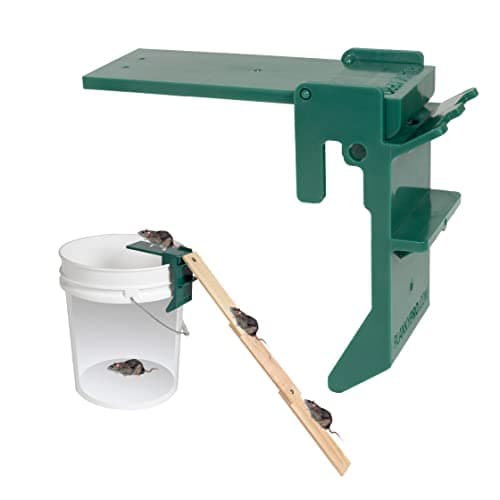 Walk the Plank Bucket Mouse TrapA see-saw plank that clamps to the rim of a bucket and tips the mouse in. Simpler than the lid designs and easier to store between seasons. | A bucket trap that packs flat | Counterweighted tipping plank | $16.99View on Amazon Price as of October 30, 2026 |
#ad — every price link goes to Amazon and Swat & Snap earns a commission on qualifying purchases. Prices are pulled live from the retailer; where one is not available the button reads “Check price on Amazon” rather than showing a stale number.
Victor Easy Set Rat Trap (M205)
Victor · Most rat jobs
The rat-sized version of the trap that defined the category. Enough spring force to be lethal instantly, which matters more with rats than with mice.
- Kills instantly when placed square to a runway, which cheap traps often do not
- Wide pedal fires even on a cautious approach
- Genuinely dangerous to set in a home with pets — it must be boxed
- Rats are neophobic: expect to leave it unset for several days first
Kat Sense Large Rat Traps
Kat Sense · Buying traps in quantity
Plastic jaw traps sold in packs. Individually less forceful than a Victor; collectively they let you cover every runway at once, which is how rat trapping actually succeeds.
- Quantity is the strategy with rats, and these make quantity affordable
- Foot-press arming means you never put a hand near the jaw
- Less spring force than a metal-bar trap on a big Norway rat
- Jaws weaken after repeated cycles
Flip N Slide Bucket Lid Mouse Trap
RinneTraps · Catching several mice unattended
A lid that turns any five-gallon bucket into a multi-catch trap. The one design here that keeps working after the first mouse, which is why it suits a shed you visit weekly.
- Resets itself, so one set covers a week in a shed or a barn
- Works as a live trap with a dry bucket, or a kill trap with water — you decide
- Nothing to arm, so there is no spring to fire on a finger
- A bucket in the middle of a room is not a subtle piece of furniture
- Used with water it drowns the mouse, which is a slow death — dry-bucket use needs twice-daily checks
Walk the Plank Bucket Mouse Trap
Walk the Plank · A bucket trap that packs flat
A see-saw plank that clamps to the rim of a bucket and tips the mouse in. Simpler than the lid designs and easier to store between seasons.
- Clamps on and off in seconds, and stores flat in a drawer
- Self-resetting, so the trap is still working on night five
- Waterproof ABS, so it survives a wet bucket and a winter in the garage
- The plank in the box is calibrated for smaller mice — a bigger plank is a separate purchase
- Needs the plank balanced correctly or it stops tipping
- Same welfare question as any bucket trap — see our note on water
The setup that does work on rats
If the problem is adult rats, this is where the money goes:
- Rat-rated snap traps, in quantity. Two per confirmed runway, six minimum for a single-location problem. How many rat traps do I need has the counts.
- Pre-bait for three to five days. Place everything unset with food on it, let the colony learn the objects are harmless, then arm them all on the same night. This converts your traps from suspicious to familiar and is the difference between several catches in one night and one a week.
- Flat against a vertical surface, trigger end toward the wall, on a runway confirmed by droppings, smear marks or flattened grass.
- Inside a locked box for anything outdoors or near a pet. A rat trap has enough force to break a dog's toe. Best rat traps for gardens covers the boxed setup.
- Cut the water, the food and the cover at the same time, or the property refills. What attracts rats is the list.
- Seal anything bigger than a quarter with hardware cloth, sheet metal or mortar — not foam alone.
Then, when a catch happens, what to do with a rat in a trap covers the handling.
What to skip
- Listings whose only rat credential is the word "rat" in the title. The search results for bucket rat traps are dominated by generic units with keyword-stuffed names and no stated weight range.
- Water in the bucket. Covered above.
- A bucket trap as your only measure against an adult colony. It will catch juveniles and leave the breeders.
- Setting a bucket trap on day one and judging it on day three. Without a habituation period you are testing rat neophobia, not the trap.
- Glue boards as the "simpler" alternative. Slow, indiscriminate and a worse welfare outcome than anything on this page.
- Poison. A poisoned rat dies somewhere you cannot reach and poisons whatever eats the carcass. Rat trap vs poison.
The short version
Bucket lid traps are a mouse product. The mechanism is calibrated for about an ounce, an adult Norway rat is ten to eighteen, and rats avoid large unfamiliar objects in open floor for days — so the design fights the animal twice. They do take juvenile rats and sometimes roof rats, which makes them worth running in a barn alongside rat-rated snap traps. Run the bucket dry, check it twice a day, and never fill it with water. For the adult rats actually causing the problem, buy rat-rated snap traps in quantity, pre-bait them for three to five days, and set them all on the same night.
Frequently asked
Do bucket traps work on rats?
Is there a bucket trap made for rats?
Should I put water in a bucket trap?
Why won't rats go in my bucket trap?
What size bucket do I need for a rat trap?
What works better than a bucket trap for rats?
More on rats
Rats are cautious, strong and much harder to trap than mice. Everything here assumes you only get one good attempt at a wary animal.
Not sure yet? Read how we pick.
Ryder M.
Ryder M. is the hands-on owner behind Magoo Media Group. He writes Swat & Snap because he got tired of pest-control advice that was either a sales pitch or a scare story.
Related on Swat & Snap
- The best bucket mouse trapsSelf-resetting lid and plank designs for sheds and barns, plus the honest verdict on the water question.
- The best rat traps, by situationSnap, electronic, self-resetting and live traps compared — plus the pre-baiting step that decides success.
- Trap-shy ratsWhy a survivor stops feeding, and the reset that gets a stalled campaign working again.
- What to do with a rat in a trapHandling a dead rat, a live one and an injured one safely — plus the traps that make the disposal a one-movement job.
- How many rat traps do I need?How many rat traps to set per runway, room and yard, with the honest arithmetic and when to stop buying.
- Humane rat controlWhy live-trapping rats is harder than it looks, the honest welfare ranking, and prevention as the kindest method.