What to do with a rat in a trap
A rat in a trap is a bigger job than a mouse in one, in every sense — the animal, the disease profile, the smell and the legal picture around releasing it. Here is the whole sequence, including the part nobody wants to read.
By Ryder M.Published Updated

Swat & Snap earns a commission from qualifying purchases made through the links on this page, at no extra cost to you. It does not change which products we pick — see how we pick and our affiliate disclosure.
Before you touch anything
Gloves. Rubber, latex, vinyl or nitrile, disposable. Not gardening gloves, not a bag over your hand. Rats carry more that matters to people than mice do, and a dead rat's fleas and mites start looking for a new host within hours.
An N95, if the trap is anywhere enclosed. A loft, a crawl space, a cellar, a shed that has been shut up, or any area with a lot of droppings. The hazard in those spaces is inhaling disturbed dried material, which is a respiratory exposure rather than a contact one.
Do not sweep or vacuum anything around the trap. This is the rule that matters most and it is the one people break first. A broom or a vacuum aerosolizes dried droppings and urine. Everything gets sprayed wet before it is touched. Cleaning up rat droppings is the full CDC-aligned method and it is worth five minutes before you clean the area properly.
Eye protection if the trap is above head height, which in a loft it usually is.
If you are pregnant, immunocompromised, or looking at a heavy infestation in a confined space, the honest advice is to have someone else do this or bring in a professional.
A dead rat in a snap trap, step by step
- Gloves and respirator on, before you enter the space.
- Spray the rat, the trap and the floor around it with a household disinfectant or a fresh 1:10 bleach solution. Soak it rather than misting it. Fresh bleach — diluted bleach loses strength, so do not use last month's mix.
- Wait five minutes. This is the disinfection dwell time and the step most people cut short.
- Decide whether the trap is going in the bin. With rats we usually bin the trap along with the animal. A rat-rated snap trap costs very little, releasing a bar over a ten-ounce carcass is a genuinely awkward movement, and the trap has blood on it.
- Lift the whole thing into a plastic bag. If you are keeping the trap, hold it over the open bag and release the bar so the animal drops in without being touched.
- Seal that bag, put it inside a second, seal that too. Double bagging is not optional with a rat — a single bag in a warm bin is a smell problem within a day and an animal-attractant problem within two.
- Straight to an outdoor bin. Not the kitchen bin, not the garage, not a pile to deal with later.
- Disinfect the spot the trap was on, and let it air-dry.
- Wash your gloved hands with soap and water, then peel the gloves off and wash your hands again properly.
- Reset in the same place tonight. See below.
Do not flush it — a rat will not clear a trap or a toilet, and this is a plumbing bill. Do not bury it where a dog digs, or where a fox will dig it up. Do not put it in a compost heap, which is both a smell problem and the thing that attracted rats in the first place.
What rats carry, briefly
Enough to take the gloves seriously, not enough to panic about.
- Leptospirosis, spread in rat urine and contracted through broken skin, the eyes, nose or mouth. This is the one most specifically associated with rats and the main reason for gloves and proper hand washing.
- Salmonella, from droppings on surfaces where food is handled.
- Rat-bite fever, from a bite or scratch, or from contaminated food or water. A live rat in a trap can and will bite through a gap.
- Fleas and mites, which leave the carcass looking for a new host.
- Allergens in rodent dust, a recognized asthma trigger.
Wet clean-up, gloves, an N95 in enclosed spaces and proper hand washing cover almost all of it.
A live rat in a cage trap
Live-trapping rats is harder and more fraught than live-trapping mice, and we would rather you knew that before the trap is occupied.
Check it twice a day, without exception. A rat left overnight in a cage trap in a cold shed dies of stress, cold or thirst — the outcome the trap was bought to avoid. If you will not check it twice a day, do not use a live trap. The same obligation applies to a dry bucket trap, which is a live trap whatever the listing calls it — do bucket traps work on rats.
Approach it calmly and cover the trap with a towel. A covered trap settles the animal immediately, which makes everything that follows safer for both of you.
Do not open it to look. A cornered rat is fast and will bite. Handle the trap, never the animal.
Check your state's law before you relocate anything. This is the part people skip. Relocating rodents is restricted or prohibited in many US states — they are a non-native commensal species, and moving them spreads disease and the problem. Your state wildlife agency is the place to check, and it takes one phone call or one web search.
If relocation is legal where you are: at least two miles, ideally further, into cover rather than open ground, in the morning so the animal has daylight to find shelter, and nowhere near another house. Be honest with yourself that a city rat released into woodland in January has poor odds.
If it is not legal, or you decide against it: the humane answer is a quick dispatch, covered below, or a vet. Do not release it in a park, an alley or a neighbor's yard — that is not a solution, it is a transfer.
Humane rat control goes through this properly, including why we are lukewarm about live-trapping rats at all.
An injured rat — the part nobody wants
It happens, and it means something: a trap that injures rather than kills is the wrong size, worn out, or badly placed.
Deal with it immediately rather than walking away. The humane answer is a fast, decisive blow to the head with a heavy object, with the animal still under the trap and gloves on. It is unpleasant. Bagging an injured animal and letting it die slowly in a bin is worse, and leaving it is worse still.
Do not drown it. Drowning is classified as an unacceptable method of euthanasia in the AVMA Guidelines — inhumane under any condition — and the animal stays conscious for minutes.
If you genuinely cannot do it, put the trap and animal in a covered box somewhere quiet, cold and dark and call a vet or a wildlife rescue for advice.
Then fix the cause. Repeat injuries come from four things:
- A mouse trap on a rat. The commonest and the worst. A mouse trap does not have the force to kill a rat; it injures it, and the survivor teaches the colony to avoid your traps. What size rat trap do I need and mouse traps vs rat traps.
- A worn trap. Springs weaken with cycles. Bin it.
- Bad placement. A trap set away from the wall catches the animal side-on. Trigger end to the wall, flat against it.
- Loose or excessive bait. Rats are strong and dexterous enough to strip a loose bait without triggering. Tie it on and keep it small — best rat trap bait.
What to look for if the handling is the obstacle
For a lot of households this is the actual bottleneck: traps go unset for a week because nobody wants to deal with what will be in them. An unset trap catches nothing, so the specification worth paying for is how little of the animal you have to see or handle.
Electronic tunnel traps. The plates sit inside a closed tunnel, a light on the lid tells you there has been a catch, and you tip it into a bin in one movement without opening anything or releasing a bar. In a loft or crawl space — where most rat trapping happens and where nobody wants to go twice — this is worth real money.
Rat-rated snap traps, binned whole. Not a worse answer. Cheap enough that disposal is one movement, and quantity is what actually clears a colony. You just see the result.
A cage trap, only with the twice-daily check and a legal release plan.
And a locked station for anything outdoors, which keeps the mechanism away from birds, hedgehogs, cats and dogs and means you service it from above rather than on your knees. Best rat traps for gardens.
Enough traps to matter, in every case. How many rat traps do I need has the arithmetic, and the honest answer is more than most people buy.
Quick picks
| # | Product | Best for | Mechanism | Price |
|---|---|---|---|---|
| 1 | 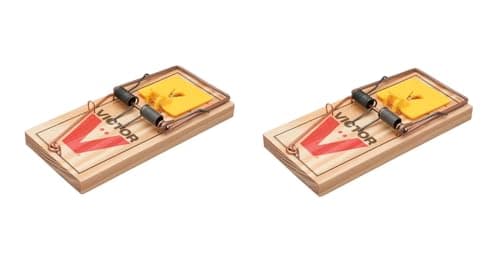 Our pickVictor Easy Set Rat Trap (M205)The rat-sized version of the trap that defined the category. Enough spring force to be lethal instantly, which matters more with rats than with mice. | Most rat jobs | Spring bar, expanded trigger pedal | $9.02$9.808% offView on Amazon Price as of October 30, 2026 |
| 2 | 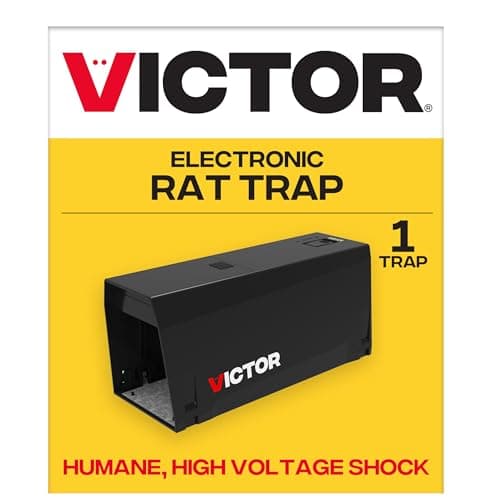 Victor Electronic Rat Trap (M241B)A large shock tunnel that handles rat-sized animals. The no-touch disposal is worth more in an attic than anywhere else in the house. | Attics and crawl spaces | High-voltage shock tunnel | $34.27View on Amazon Price as of October 30, 2026 |
| 3 | 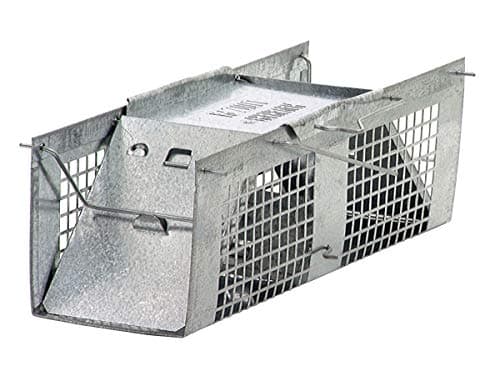 Havahart 1020 Two-Door Mouse & Rat TrapA proper two-door cage trap. Live-trapping rats is legally restricted in many places and practically hard — read the humane page before committing to it. | Live catch, rat-sized | Two gravity-action doors | $21.36View on Amazon Price as of October 30, 2026 |
#ad — every price link goes to Amazon and Swat & Snap earns a commission on qualifying purchases. Prices are pulled live from the retailer; where one is not available the button reads “Check price on Amazon” rather than showing a stale number.
Victor Easy Set Rat Trap (M205)
Victor · Most rat jobs
The rat-sized version of the trap that defined the category. Enough spring force to be lethal instantly, which matters more with rats than with mice.
- Kills instantly when placed square to a runway, which cheap traps often do not
- Wide pedal fires even on a cautious approach
- Genuinely dangerous to set in a home with pets — it must be boxed
- Rats are neophobic: expect to leave it unset for several days first
Victor Electronic Rat Trap (M241B)
Victor · Attics and crawl spaces
A large shock tunnel that handles rat-sized animals. The no-touch disposal is worth more in an attic than anywhere else in the house.
- Tunnel shape keeps the plates away from paws
- You tip it out — no bar to release over a dead rat
- D cells, and it drains them faster than the box suggests
- Damp crawl spaces corrode the contacts
Havahart 1020 Two-Door Mouse & Rat Trap
Havahart · Live catch, rat-sized
A proper two-door cage trap. Live-trapping rats is legally restricted in many places and practically hard — read the humane page before committing to it.
- Two entrances roughly double the catch rate over a single-door cage
- Galvanized mesh survives being left outdoors
- Relocating rats is illegal in many states and cruel in most climates
- Wire mesh is visible and rats avoid new objects for days
Reset it tonight, in the same spot
This is the part that changes the outcome.
A trap that caught a rat is sitting on a confirmed runway, and with a neophobic animal that information is worth more than it is with mice. The colony already walks that route and already accepts that object. Moving the trap throws that away and restarts the habituation clock.
So: disinfect, rebait, and put a trap back in exactly the same place the same night. Add more traps nearby rather than relocating the one that worked.
Expect the catches to come in a cluster if you pre-baited properly, then tail off. Keep everything set for a full week after the last catch. Then leave two permanently as monitors on the main runway — a set trap in a loft costs nothing to leave and tells you the month something new arrives.
Steady catches into week three mean an open route in rather than an endless colony. Rats in the walls and what attracts rats are where to look.
Finish the job while you are there
Cut the water. Unlike mice, rats must drink daily — the dripping outside tap, the uncovered water butt, the pet bowl left out, the blocked gutter. This is the lever people never pull.
Cut the food. Compost with no cooked waste in a bin with a solid base, catch trays under bird feeders, latching bin lids, feed into metal bins, windfall fruit picked up.
Cut the cover. A clear strip along the fence line, timber up off the ground, ivy off the wall.
Seal. Hardware cloth, sheet metal or mortar over anything bigger than a quarter — after the catching has slowed, not before, or you shut animals in.
Clean up properly. Wet, never dry. Cleaning up rat droppings.
The short version
Gloves and an N95. Spray the rat, the trap and the floor, wait five minutes, lift the lot into a bag, double-bag it and put it in an outdoor bin — then disinfect the spot and wash your hands properly. For a live catch, cover the trap, check twice daily, and check your state's relocation rules before you move anything. For an injured animal, end it quickly, never by drowning, then fix the trap size or placement that caused it. Then reset in the same spot the same night, because with a neophobic animal a proven runway is the most valuable thing you own.
Frequently asked
What do you do with a dead rat in a trap?
Can you flush a rat down the toilet?
Should I throw the rat trap away with the rat?
Can I release a live rat somewhere else?
How do you humanely kill a rat caught in a trap?
Should I move the trap after catching a rat?
Is handling a rat caught in a trap dangerous?
More on rats
Rats are cautious, strong and much harder to trap than mice. Everything here assumes you only get one good attempt at a wary animal.
Not sure yet? Read how we pick.
Ryder M.
Ryder M. is the hands-on owner behind Magoo Media Group. He writes Swat & Snap because he got tired of pest-control advice that was either a sales pitch or a scare story.
Related on Swat & Snap
- What to do with a mouse in a trapHandling a dead mouse, a live one and the trap that only injured it — plus the traps that remove this problem entirely.
- How to clean up rat droppings safelyThe CDC-aligned wet method for rat droppings, nests and urine, what to wear, and what rats actually carry.
- The best rat traps, by situationSnap, electronic, self-resetting and live traps compared — plus the pre-baiting step that decides success.
- Humane rat controlWhy live-trapping rats is harder than it looks, the honest welfare ranking, and prevention as the kindest method.
- Do bucket traps work on rats?What bucket lid traps are actually built for, the weight and welfare problems with rats, and the setup that does work.
- What size rat trap do I need?Size by droppings and species, not by guesswork — plus why a mouse trap on a rat is the worst outcome of all.