What to do with a mouse in a trap
You set the trap, it worked, and now you are standing in the kitchen at 7am looking at the result. This is the part nobody plans for, and it is worth getting right — both for your health and because the next few hours decide whether the rest of them get caught.
By Ryder M.Published Updated
Swat & Snap earns a commission from qualifying purchases made through the links on this page, at no extra cost to you. It does not change which products we pick — see how we pick and our affiliate disclosure.
First: gloves, and do not sweep
Two rules before anything else, because they cover most of the risk.
Wear disposable gloves. Rubber, latex, vinyl or nitrile — not gardening gloves, not a dish towel, not a plastic bag over your hand. The animal itself carries bacteria, mites and fleas, and a dead rodent's fleas start looking for a new host within hours.
Do not sweep or vacuum around the trap. The droppings and dried urine on the floor near a trap are a bigger health consideration than the mouse in it, and a broom or a vacuum aerosolizes them — which is exactly the exposure route the public-health guidance exists to prevent. Everything gets wet first. Cleaning up mouse droppings has the full method and it is worth reading before you clean anything properly.
If you are pregnant, immunocompromised, or the trap is in a loft, crawl space or any enclosed space with heavy droppings, add an N95 and let someone else do it if you can.
A dead mouse in a snap trap, step by step
- Gloves on, before you enter the space.
- Spray the mouse, the trap and the floor around it with a household disinfectant or a fresh 1:10 bleach solution. Soak it rather than misting it. Leave it five minutes.
- Decide whether the trap is going in the bin or being reused. A cheap wooden snap trap is usually binned with the mouse still in it — that is the fastest and cleanest option and the trap costs very little. Are mouse traps reusable covers when it is worth keeping one.
- Lift the whole thing into a plastic bag. Trap and all, if you are binning it. If you are keeping the trap, hold it over the open bag and release the bar so the mouse drops in without you touching it.
- Seal that bag, put it inside a second bag, seal that too. Double bagging is the point — a single bag in a warm bin is a smell problem within a day.
- Put it in an outdoor bin, not the kitchen bin. Straight outside.
- Disinfect the spot the trap was sitting on, and let it air-dry.
- Wash your gloved hands with soap and water, then peel the gloves off and wash your hands again properly.
- Reset a trap in the same place tonight. More on why below.
Do not flush it. A mouse will not reliably clear a trap, and this is a plumbing problem waiting to happen. Do not bury it anywhere a dog digs. Do not put it in a compost heap, which is both a smell problem and a rat attractant.
A live mouse in a live-catch trap
A catch-and-release trap only counts as humane if you actually check it. A mouse left overnight in a sealed live trap dies of stress, cold or thirst, which is the outcome the trap was bought to avoid.
Check it twice a day, minimum. Morning and evening. If you are not going to, buy a kill trap instead and be honest about it — best humane mouse traps is frank about this trade.
Release it at least two miles away, and ideally further. A house mouse released nearby walks back — they navigate well over short distances, and a release at the end of the garden is simply re-entry with extra steps.
Release somewhere it can survive. Hedgerow, woodland edge, rough ground with cover. Not a bare field in January, and not someone else's yard or an apartment corridor, which just moves the problem to a neighbor.
Release in the morning, so the animal has daylight to find cover.
Check local rules before you relocate anything. Moving wildlife is restricted in some states, and house mice are a non-native species in North America, which changes the legal picture in places. A quick check with your state wildlife agency is the honest step here.
Do not open the trap indoors, and do not tip it out at arm's length over a hedge from a car window — put it down, open the door, and stand back.
A mouse that is injured but not dead
This happens, and it is the part of the job people are least prepared for. It is also a signal: a trap that injures rather than kills is set wrong, worn out, or too weak for the animal.
Deal with it quickly rather than walking away. The humane answer is a fast, decisive end. For most people that means a sharp blow to the head with a heavy object, with the animal still in or under the trap and gloves on. It is unpleasant, and leaving an injured animal to die slowly in a bin bag is worse.
If you genuinely cannot, place the trap and animal in a sealed box somewhere quiet, cold and dark, and contact a vet or a wildlife rescue for advice. Do not drown it — that is a slow death, not a quick one.
Then fix the cause. Repeat injuries usually mean one of four things:
- A worn-out trap. The spring weakens with cycles. Bin it.
- The wrong size. A mouse trap on a juvenile rat will injure. Mouse traps vs rat traps covers the sizing.
- Bad placement. A trap set away from the wall catches the animal side-on rather than square. The trigger end goes against the wall. Where to place mouse traps.
- Too much bait. A big blob lets the mouse feed from the side and triggers the bar late. A pea-sized smear worked into the pedal is right — best mouse trap bait.
Do mouse traps kill mice instantly goes into which mechanisms are genuinely fast and which are not.
What to look for if this is the part you dread
For a lot of households, the handling is the actual obstacle — traps sit unset for a week because nobody wants to deal with what is in them, and an unset trap catches nothing. If that is you, the specification to buy on is how little of the animal you have to see or touch, and it is worth paying for.
Sealed single-use traps. The kill happens inside a closed chamber, the unit seals afterwards so there is no smell and nothing to look at, and the whole thing goes in the bin without being opened. Highest cost per catch, and the one that gets the job finished in households that would otherwise stall.
Electronic tunnel traps. The plates are inside a tunnel, a light on the lid tells you there is a catch, and you tip it out into a bin in one movement without opening anything or touching a bar. Reusable, battery-powered, and the pick for a loft or a basement you do not want to visit twice.
Live-catch traps, but only with the twice-daily check and a release plan. The mouse is visible through the body, which some people find easier and others find harder.
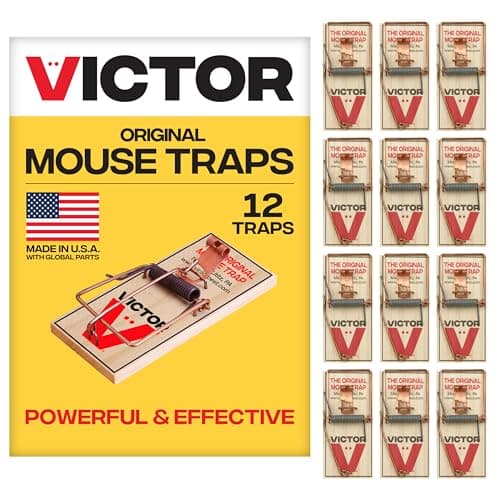
A plain wooden snap trap, binned whole. Not a worse answer — it is cheap enough that disposal is a one-movement job, and quantity is what actually clears a house. It just means seeing the result.
And in every case, enough traps to matter. How many mouse traps do I need has the arithmetic, and the honest answer is more than most people buy.
Quick picks
| # | Product | Best for | Mechanism | Price |
|---|---|---|---|---|
| 1 | 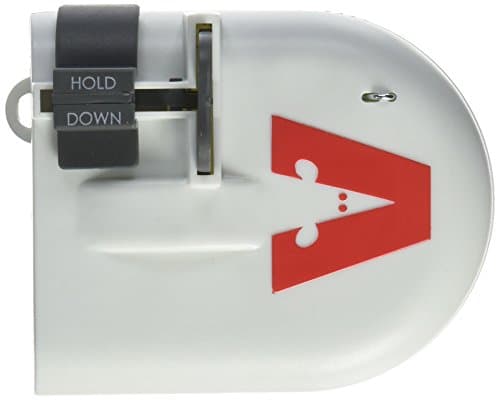 Our pickVictor Kill Vault Mouse Trap (M267)A snap trap sealed inside a plastic vault. The kill happens out of sight and out of reach, and you never touch the mouse. | Homes with a dog or a toddler | Enclosed snap bar in a sealed chamber | $12.43View on Amazon Price as of October 23, 2026 |
| 2 | 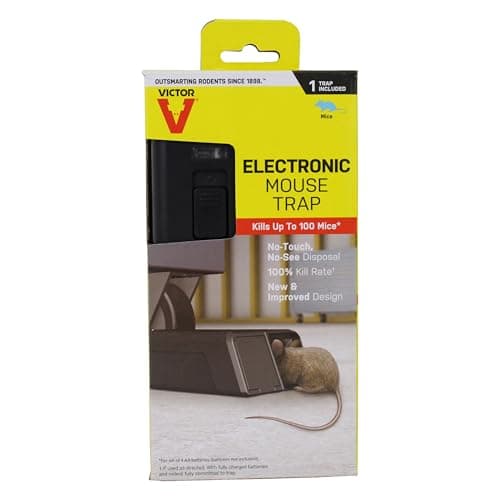 Victor Electronic Mouse Trap (M250S)A battery tunnel that delivers a high-voltage shock. You tip the mouse out without seeing or touching it, which is the whole appeal. | No-touch disposal indoors | High-voltage shock inside a tunnel | $24.99$28.9014% offView on Amazon Price as of October 23, 2026 |
| 3 | 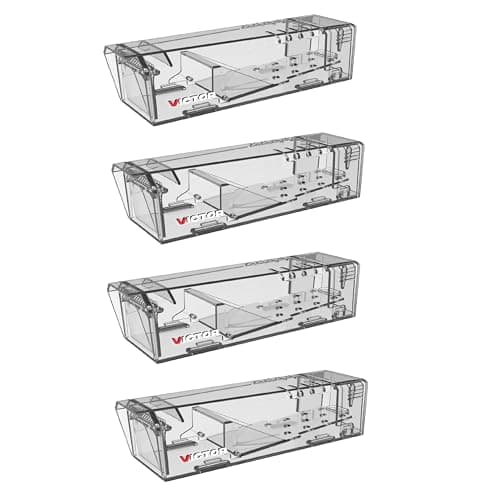 Victor Live Catch Mouse Trap (M337SR)A clear chamber that holds the mouse alive, with a rear door to let it out. Works, provided you commit to checking it twice a day — a live trap left overnight is not humane. | Catch and release | Baited chamber, no spring | $18.69View on Amazon Price as of October 23, 2026 |
#ad — every price link goes to Amazon and Swat & Snap earns a commission on qualifying purchases. Prices are pulled live from the retailer; where one is not available the button reads “Check price on Amazon” rather than showing a stale number.
Victor Kill Vault Mouse Trap (M267)
Victor · Homes with a dog or a toddler
A snap trap sealed inside a plastic vault. The kill happens out of sight and out of reach, and you never touch the mouse.
- The enclosure is the reason to buy it: a dog cannot get to the bar
- Seals after firing, so there is no smell and nothing to see
- Sets by pressing the lid, not by arming a bar with your fingers
- Single-use, so a real infestation gets expensive
- Bulkier than a bare snap trap in a tight wall run
Victor Electronic Mouse Trap (M250S)
Victor · No-touch disposal indoors
A battery tunnel that delivers a high-voltage shock. You tip the mouse out without seeing or touching it, which is the whole appeal.
- The tunnel is the safety feature — a dog's nose does not fit the plates
- Indicator light means you are not checking traps blind
- Tip-out disposal, no handling
- Batteries die, usually unnoticed, and a dead trap catches nothing
- Has to sit flat against a wall run or mice walk past it
Victor Live Catch Mouse Trap (M337SR)
Victor · Catch and release
A clear chamber that holds the mouse alive, with a rear door to let it out. Works, provided you commit to checking it twice a day — a live trap left overnight is not humane.
- No kill mechanism at all, so nothing can snap on a pet
- Transparent body means you can see a catch without opening it
- A rear release door, so the mouse goes out without being handled
- Only humane if you actually check it — a mouse dies of stress and thirst in a day
- Release under two miles away and it walks back
Reset it tonight, in the same spot
This is the part that changes the outcome and the part most people get wrong.
A trap that caught a mouse is sitting on a confirmed runway. That is information you paid for. Mice travel the same routes, with a shoulder against a vertical surface, and the spot that worked once is your single best location in the house.
So: disinfect it, rebait it, and put a trap back in exactly the same place the same night. Add more traps nearby rather than moving the one that worked.
Keep going for a full week after your last catch. The commonest failure is pulling the traps the morning after the last one. Then leave two permanently as monitors — under the sink and behind the refrigerator are the usual spots — because a set trap costs nothing to leave there and tells you the week something new gets in.
Expect most of the catches in the first three nights. How long does it take to get rid of mice has the day-by-day timeline and what a slow start actually means.
Do the rest of the job while you are there
Catching one mouse is a checkpoint, not a conclusion. Three things to do in the same week:
Lock the food up. A mouse eats about three grams a day, so a spilled handful of rice behind the toaster outcompetes your bait indefinitely. Everything open goes into glass, metal or rigid plastic; pet food goes into a lidded bin; clean under and behind the appliances properly. What attracts mice is the full list.
Find and seal the gap. A mouse fits through a quarter-inch opening. Stainless steel wool packed into pipe penetrations and sealed over, hardware cloth on vents, a door sweep where you can see daylight. Do this after the catching has slowed, not before — seal first and you shut animals inside with a nest.
Clean up properly. Wet, never dry. Spray, wait five minutes, lift with damp paper towels, double-bag, disinfect again.
The short version
Gloves on. Spray the mouse, the trap and the floor, wait five minutes, lift the lot into a bag, double-bag it, and put it in an outdoor bin — then disinfect the spot and wash your hands properly. For a live catch, check twice daily and release at least two miles away in cover, in the morning, after checking your local rules. For an injured animal, end it quickly and then fix the trap, the size, the placement or the bait that caused it. Then reset in the same spot the same night, because a trap that caught one mouse is the best-located trap you own.
Frequently asked
What should I do with a dead mouse in a trap?
Can you flush a mouse down the toilet?
Do I have to throw away the mouse trap too?
How far away should I release a mouse from a live trap?
What do I do if the mouse in the trap is still alive but injured?
Should I move the trap after catching a mouse?
Is it dangerous to handle a mouse caught in a trap?
More on mice
One mouse is rarely one mouse. This hub covers what kills them, what only looks like it does, and where to put the thing you buy.
Not sure yet? Read how we pick.
Ryder M.
Ryder M. is the hands-on owner behind Magoo Media Group. He writes Swat & Snap because he got tired of pest-control advice that was either a sales pitch or a scare story.
Related on Swat & Snap
- How to clean up mouse droppings safelyThe CDC method: ventilate, wet with disinfectant, wipe, bag and wash — never sweep or vacuum dry.
- Are mouse traps reusable?Snap and electronic traps reuse well with a wash; sealed and glue traps are single-use by design. How to clean without ruining the catch rate.
- How long does it take to get rid of mice?A realistic day-by-day timeline for clearing mice with traps, the four things that stretch it, and how to confirm it is finished.
- Where to place mouse trapsHow to read a runway, how to orient a trap, and the three rooms people forget to cover.
- The best humane mouse trapsCatch-and-release traps that actually hold a mouse, and the twice-a-day obligation that makes them humane.
- Pet-safe mouse trapsEnclosed and tunnel traps that are safe because of their geometry, plus a free way to make any trap safer.