How long does it take to get rid of mice?
Nobody wants a range, everybody gets one. The useful answer is a timeline with checkpoints, so you can tell on day four whether you are on track or doing something wrong.
By Ryder M.Published Updated

Swat & Snap earns a commission from qualifying purchases made through the links on this page, at no extra cost to you. It does not change which products we pick — see how we pick and our affiliate disclosure.
The honest answer, with a timeline
There is no fixed number, because "getting rid of mice" is really three jobs running on different clocks: killing the animals currently inside, cutting off the route they used, and removing the reason they came. Do all three and the typical house is quiet inside two weeks. Do only the first and you will be trapping forever.
Here is what a normal, competently-run job looks like.
| When | What should be happening | What it means if it is not |
|---|---|---|
| Night 1-3 | Most of your catches — often the majority of the total | No catches at all usually means placement, not absence |
| Night 4-7 | Fewer catches, the warier animals | Still catching heavily? The population is bigger than you thought |
| Day 7 | Food locked up, obvious gaps sealed, traps still set | Skipping these is why week three happens |
| Night 8-14 | Catches tail off to zero | Steady catches here point to an open route in |
| Day 14-21 | Nothing caught, no fresh droppings | Fresh droppings with no catches means trap-shy animals |
| Day 21+ | Two monitor traps stay set permanently | New activity after a quiet month is a new entry, not a survivor |
Why the first three nights do the heavy lifting
Mice are curious about new objects in a way rats are not. Drop a baited trap on an active runway tonight and there is a good chance it fires before morning. That is the single biggest practical difference between mouse work and rat work, where you have to leave traps unset for days to beat the animal's suspicion.
So a slow start is almost never a quiet house. It is usually one of four things:
- Too few traps. This is the common one. One trap tests whether you have mice; it does not reduce them. How many mouse traps do I need has the arithmetic, and the honest answer is more than you planned to buy.
- Wrong places. A trap in the middle of the floor catches nothing. Mice run with one shoulder against a vertical surface, so the trap goes flat against the wall with the trigger end toward it. See where to place mouse traps.
- Too much bait. A blob of peanut butter lets the animal lick from the side without triggering anything. A pea-sized smear worked into the pedal is right — best mouse trap bait covers the rest.
- Competing food. A spilled bag of rice behind the toaster or an open sack of dog food is a better meal than your bait, and will outcompete it every night.
What to look for
If you are buying now with a two-week timeline in mind, the specification that matters is not sensitivity or kill speed. It is how quickly you will actually re-set the thing.
Buy for quantity, not for cleverness. Twelve cheap snap traps clear a house faster than two expensive ones, because coverage is what shortens the timeline. Mouse control is arithmetic before it is anything else.
Buy something you will empty. A trap you dread dealing with sits full for two days, and a full trap catches nothing. If handling the result is the part you will avoid, pay for a sealed or enclosed trap and keep the cycle moving.
Match the trap to the room, not the catalogue. Exposed bar traps go in a sealed cupboard or inside a box; enclosed or electronic traps anywhere a dog or a child goes. Pet-safe mouse traps covers that constraint properly.
Skip anything with a multi-week promise. Ultrasonic plug-ins and most repellents do not shorten this timeline, and the testing does not support them. Do ultrasonic repellers work sets out the evidence.
Quick picks
| # | Product | Best for | Mechanism | Price |
|---|---|---|---|---|
| 1 |  Our pickVictor Metal Pedal Mouse Trap (M150)The wooden snap trap everything else is measured against. Cheap enough to set a dozen, which is how mouse trapping actually works. | Most homes, in quantity | Spring-loaded bar, metal pedal | $10.69$12.3914% offView on Amazon Price as of October 17, 2026 |
| 2 | 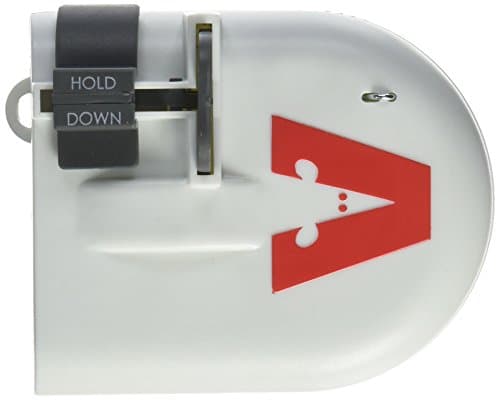 Victor Kill Vault Mouse Trap (M267)A snap trap sealed inside a plastic vault. The kill happens out of sight and out of reach, and you never touch the mouse. | Homes with a dog or a toddler | Enclosed snap bar in a sealed chamber | $12.43View on Amazon Price as of October 17, 2026 |
| 3 | 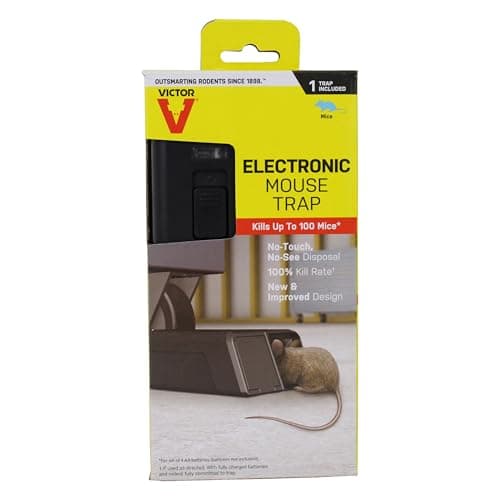 Victor Electronic Mouse Trap (M250S)A battery tunnel that delivers a high-voltage shock. You tip the mouse out without seeing or touching it, which is the whole appeal. | No-touch disposal indoors | High-voltage shock inside a tunnel | $24.99$29.9817% offView on Amazon Price as of October 17, 2026 |
#ad — every price link goes to Amazon and Swat & Snap earns a commission on qualifying purchases. Prices are pulled live from the retailer; where one is not available the button reads “Check price on Amazon” rather than showing a stale number.
Victor Metal Pedal Mouse Trap (M150)
Victor · Most homes, in quantity
The wooden snap trap everything else is measured against. Cheap enough to set a dozen, which is how mouse trapping actually works.
- Costs little enough that quantity stops being a decision
- The metal pedal fires on weight, so a mouse cannot lick the bait off
- Nothing to charge, nothing to refill
- You see the result, and you have to handle it
- Exposed bar is a genuine hazard to a dog's nose or a toddler's fingers
Victor Kill Vault Mouse Trap (M267)
Victor · Homes with a dog or a toddler
A snap trap sealed inside a plastic vault. The kill happens out of sight and out of reach, and you never touch the mouse.
- The enclosure is the reason to buy it: a dog cannot get to the bar
- Seals after firing, so there is no smell and nothing to see
- Sets by pressing the lid, not by arming a bar with your fingers
- Single-use, so a real infestation gets expensive
- Bulkier than a bare snap trap in a tight wall run
Victor Electronic Mouse Trap (M250S)
Victor · No-touch disposal indoors
A battery tunnel that delivers a high-voltage shock. You tip the mouse out without seeing or touching it, which is the whole appeal.
- The tunnel is the safety feature — a dog's nose does not fit the plates
- Indicator light means you are not checking traps blind
- Tip-out disposal, no handling
- Batteries die, usually unnoticed, and a dead trap catches nothing
- Has to sit flat against a wall run or mice walk past it
The four things that actually stretch the timeline
1. A breeding population rather than a visitor. A female house mouse can produce a litter roughly every three weeks, and the young are weaned and breeding themselves inside two months. One mouse in October is a problem for a week. Five mice in October, left alone until December, is a different job entirely. This is the whole reason speed matters: every week you wait, the arithmetic gets worse.
2. An open route you have not found. A mouse fits through a gap the width of a pencil. If the structural hole is still open — around a service pipe, under a garage door, behind a dryer vent, through a gap in a soffit — then you are not clearing a population, you are intercepting a supply. Catches that keep coming at the same rate into week three nearly always mean this. Mice in walls and where do mice hide in a house are the places to look first.
3. Poison instead of traps. Anticoagulant bait takes several days to kill after the animal has eaten a lethal dose, and it gives you no information: you do not know how many died, or where. What you often get instead is a smell in a wall cavity two weeks later and no idea whether it is over. Traps give you a body and a count, which is why we prefer them — mouse trap vs poison is the full comparison.
4. Stopping too early. The most common failure is pulling the traps the day after the last catch. Leave everything set and baited for a full week of nothing, then leave two permanent monitors in the highest-traffic spots.
How to tell when it is actually over
Catches going to zero is necessary but not sufficient — a trap-shy animal produces exactly the same reading as an empty house. Use evidence that does not depend on the traps:
- Fresh droppings. Sweep an area completely clean, then check it daily. New droppings are dark and slightly soft; old ones are gray, dry and crumble. Anything new means an animal is still active.
- A flour or talc patch. Dust a thin patch of flour across a suspected runway and look for prints and tail drags in the morning. It is the cheapest monitoring there is.
- Noise at night. Scratching in a wall or ceiling after dark, consistently, is an animal you have not caught.
- Gnaw marks on food packaging that you know were not there yesterday.
- A smell. A persistent stale, ammonia-like smell near a cupboard means urine and an active nest. How to get rid of mouse smell deals with the aftermath.
Seven to ten days of clean sweeps, an undisturbed flour patch and no night noise is as close to confirmation as a homeowner gets.
The jobs that run on a longer clock
Two parts of this are not finished in two weeks, and they are the parts that decide whether you do it again next autumn.
Sealing takes an afternoon and lasts years. Stainless steel wool packed into pipe penetrations then sealed over, hardware cloth over vents, a door sweep where you can see daylight. This is the only permanent fix, and it is the step most people skip because the traps made the problem invisible.
Cleaning up comes last and matters for health, not for trapping. Never sweep or vacuum dry droppings — spray with disinfectant, wait five minutes, wipe up with paper towels and bag them. Cleaning up mouse droppings is the full CDC-aligned method, and it is worth reading before you start wiping anything.
The short version
Set a lot of traps tonight, flat against the walls, baited small. Expect most of your catches in the first three nights and near-silence by day ten. Lock the food up and seal the gaps during that first week, because those are what stop week three turning into next season. Then leave everything set for a full week of nothing, keep two traps as permanent monitors, and call it done when the flour patch stays clean.
Frequently asked
How long does it take to get rid of mice with traps?
How long does it take to get rid of a mouse infestation?
Why am I still catching mice after two weeks?
How do I know when all the mice are gone?
Is it faster to use poison than traps?
How long should I leave mouse traps out?
More on mice
One mouse is rarely one mouse. This hub covers what kills them, what only looks like it does, and where to put the thing you buy.
Not sure yet? Read how we pick.
Ryder M.
Ryder M. is the hands-on owner behind Magoo Media Group. He writes Swat & Snap because he got tired of pest-control advice that was either a sales pitch or a scare story.
Related on Swat & Snap
- How many mouse traps do I need?The trap count that actually ends an infestation, broken down by room and by house size.
- Where to place mouse trapsHow to read a runway, how to orient a trap, and the three rooms people forget to cover.
- How to get rid of miceThe full sequence: find the runs, trap in quantity, bait small, seal the gaps. Timeline and what to skip.
- What attracts mice to your house?The food, warmth and shelter that actually pull mice indoors, ranked by how much difference removing each one makes.
- The best mouse traps, by situationSix traps chosen by situation — cheap and plentiful, pet-safe by design, no-touch, or live catch.
- How to clean up mouse droppings safelyThe CDC method: ventilate, wet with disinfectant, wipe, bag and wash — never sweep or vacuum dry.