Where do mice hide in a house?
Mice are not hiding from you in any deliberate sense. They are using the voids your house already has — and those voids are predictable enough that you can find them in an hour.
By Ryder M.Published Updated
Swat & Snap earns a commission from qualifying purchases made through the links on this page, at no extra cost to you. It does not change which products we pick — see how we pick and our affiliate disclosure.
How a mouse chooses a spot
Three criteria, in this order, and they explain everything else on this page.
Within easy reach of food. A house mouse typically forages within about ten to thirty feet of its nest. That short range is the single most useful diagnostic fact on this page: if you have droppings in a kitchen cupboard, the nest is almost certainly in that room or the wall behind it, not in the loft.
Dark, enclosed and tight. A mouse feels safe with its body in contact with surfaces on several sides. An open shelf is not a nest site; the gap behind the shelf unit is. This is also why mice travel with one shoulder against a wall and almost never cross open floor.
Warm and undisturbed. A boiler cupboard, a hot water pipe run, the warm void behind a refrigerator's compressor, an engine bay that was warm a few hours ago. Warmth is also why autumn brings them indoors in the first place.
Add in the entry requirement — a mouse gets through a quarter-inch gap, about the width of a pencil — and the list below writes itself.
The twelve places, in the order worth checking
1. The kick space under kitchen cabinets. The void behind the toe-kick board is usually open to the wall cavity and sits directly under the food. This is the most common house mouse nest site in an American home, and it is also why traps along the cabinet base work so well. Mice in the kitchen is the full room-by-room treatment.
2. Behind and underneath the refrigerator. Warm from the compressor, dark, never cleaned, and there are crumbs. Pull it out and look at the floor and the back of the unit.
3. The cabinet under the sink. Where the water and waste pipes pass through the wall or floor is the most common entry point in the whole house, and there is usually a nest within a few feet of it.
4. Underneath and behind the stove. The gas line penetration, plus the warmest floor space in the room.
5. Inside wall cavities. Especially near pipe and cable penetrations, and in the vertical runs between floors. If you hear scratching behind plaster at night, that is this. Mice in walls covers it properly.
6. Loft and attic insulation. Tunnelled runs through the insulation, often near a water tank or where the pipes come up. Shredded insulation is the tell. Best mouse traps for attic is the right category up there.
7. Stored cardboard boxes. A box of papers or clothes in a garage, basement or spare room is a nest with building material included. Mice shred cardboard and paper into exactly the material they want.
8. Behind the washing machine and dryer. Warm, enclosed, undisturbed and rarely moved. The dryer vent run is also a frequent entry path from outside.
9. Inside upholstered furniture and mattresses. A sofa in a garage, a mattress in storage, a car seat. Foam is ideal nesting material and the cavity is already dark.
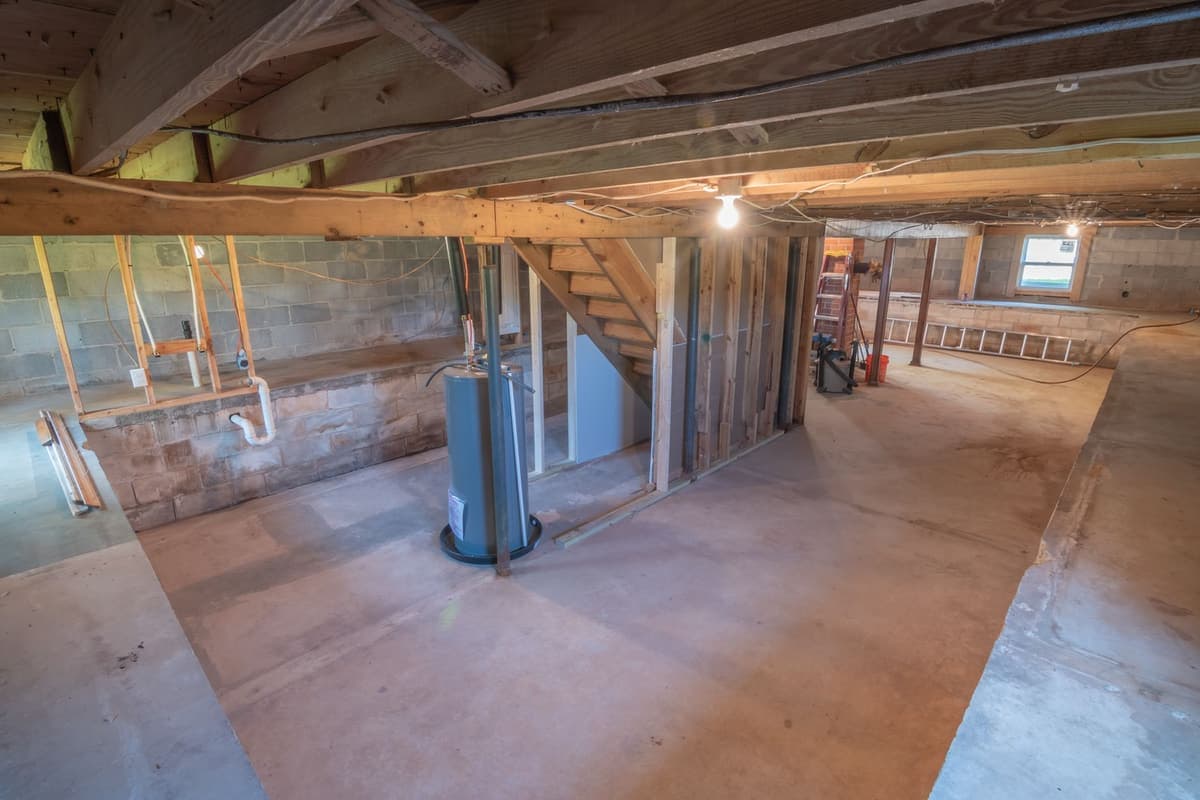
10. Garage and basement corners, especially behind shelving, inside stacked plant pots, in a stored barbecue cover or under a pile of timber. Mice in the garage and best mouse traps for basement deal with these.
11. Near a boiler, water heater or pipe run. The warmest enclosed space in the building, and the one mice choose first in a cold snap.
12. A vehicle engine bay or cabin. Particularly a car parked in a garage and not driven daily. Shredded cabin filter, nesting material on the airbox, chewed wiring insulation. Best rodent repellents for cars is the prevention page.
Where they are not
Worth saying, because it saves you time:
- The middle of a room. Mice travel on edges. An open floor is a threat.
- A bright, busy, frequently-used space. They will cross one at night to reach food, but they will not nest there.
- Deep inside a chest freezer or a cold room. Too cold.
- A sealed, hard-sided container. They chew through cardboard and bags, not glass or metal — which is the whole argument for moving food into hard containers.
Confirming a nest rather than guessing
Four signs, in rough order of reliability:
Droppings, concentrated. Dark, rice-grain sized, pointed at the ends. Scattered droppings mean a travel route; a dense pile in one spot means you are at or near the nest.
Nesting material. Shredded paper, insulation, fabric, cardboard or foam packed into a void. This is the definitive sign.
Rub marks and runways. Greasy dark smears along a skirting board or around a hole, from oil in the fur. They build up on routes used nightly.
Noise at night. Scratching or scurrying in a wall or ceiling between dusk and the small hours. Mice are mostly nocturnal, so a 2 a.m. noise is normal and a daytime sighting usually means a larger population.
And a smell. A persistent musky ammonia smell in a confined space means accumulated urine and nesting material. How to get rid of mouse smell deals with that, and signs of mice in the house covers the full checklist.
A flour or talc trick is useful if you are unsure: dust a thin layer along a suspected run overnight and look for footprints and tail drags in the morning.
Quick picks
| # | Product | Best for | Mechanism | Price |
|---|---|---|---|---|
| 1 |  Our pickVictor Metal Pedal Mouse Trap (M150)The wooden snap trap everything else is measured against. Cheap enough to set a dozen, which is how mouse trapping actually works. | Most homes, in quantity | Spring-loaded bar, metal pedal | |
| 2 |  Victor Kill Vault Mouse Trap (M267)A snap trap sealed inside a plastic vault. The kill happens out of sight and out of reach, and you never touch the mouse. | Homes with a dog or a toddler | Enclosed snap bar in a sealed chamber | |
| 3 |  Victor Electronic Mouse Trap (M250S)A battery tunnel that delivers a high-voltage shock. You tip the mouse out without seeing or touching it, which is the whole appeal. | No-touch disposal indoors | High-voltage shock inside a tunnel |
#ad — every price link goes to Amazon and Swat & Snap earns a commission on qualifying purchases. No price is shown until it can be pulled live from the retailer.
Victor Metal Pedal Mouse Trap (M150)
Victor · Most homes, in quantity
The wooden snap trap everything else is measured against. Cheap enough to set a dozen, which is how mouse trapping actually works.
- Costs little enough that quantity stops being a decision
- The metal pedal fires on weight, so a mouse cannot lick the bait off
- Nothing to charge, nothing to refill
- You see the result, and you have to handle it
- Exposed bar is a genuine hazard to a dog's nose or a toddler's fingers
Check price on Amazon
Victor Kill Vault Mouse Trap (M267)
Victor · Homes with a dog or a toddler
A snap trap sealed inside a plastic vault. The kill happens out of sight and out of reach, and you never touch the mouse.
- The enclosure is the reason to buy it: a dog cannot get to the bar
- Seals after firing, so there is no smell and nothing to see
- Sets by pressing the lid, not by arming a bar with your fingers
- Single-use, so a real infestation gets expensive
- Bulkier than a bare snap trap in a tight wall run
Check price on Amazon
Victor Electronic Mouse Trap (M250S)
Victor · No-touch disposal indoors
A battery tunnel that delivers a high-voltage shock. You tip the mouse out without seeing or touching it, which is the whole appeal.
- The tunnel is the safety feature — a dog's nose does not fit the plates
- Indicator light means you are not checking traps blind
- Tip-out disposal, no handling
- Batteries die, usually unnoticed, and a dead trap catches nothing
- Has to sit flat against a wall run or mice walk past it
Check price on Amazon
What to do once you have found the spot
Do not simply clear the nest out and hope. The sequence that works:
Trap first, along the route, not at the nest. Set traps flat against the wall between the nest and the food, with the trigger end toward the wall. Several of them. The runway is a far better trap location than the nest itself. Where to place mouse traps and how to set mouse traps have the technique.
Then clean, wet. Spray the nest and droppings with disinfectant, wait five minutes, pick everything up with paper towels and bag it. Never sweep or vacuum dry rodent material — see cleaning up mouse droppings.
Then seal. Trace back from the nest to the gap it came in through — under the sink, behind the stove, the dryer vent, a utility penetration on the outside wall. Pack with stainless steel wool or quarter-inch hardware cloth and seal over.
Then remove the reason. Food into hard containers, pet food in a bin with a lid, clutter and cardboard out of the garage. A nest site with no food nearby does not get reoccupied.
Keep two traps set as permanent monitors afterwards. How to get rid of mice is the complete sequence if you are starting from scratch.
The short version
Look for dark enclosed voids within thirty feet of food, near warmth, along walls rather than in the open: the cabinet toe-kick, behind the refrigerator and stove, under the sink, the wall cavity, the loft insulation, stored boxes, behind the washer, inside stored furniture and the engine bay of a car that does not move. Confirm with concentrated droppings and shredded nesting material, trap on the runway rather than at the nest, clean wet, and seal the hole.
Frequently asked
Where do mice hide in a house during the day?
How far do mice travel from their nest?
How do I know if mice are nesting in my walls?
What does a mouse nest look like?
Should I remove a mouse nest or trap first?
Do mice hide in furniture?
More on mice
One mouse is rarely one mouse. This hub covers what kills them, what only looks like it does, and where to put the thing you buy.
Not sure yet? Read how we pick.
Ryder M.
Ryder M. is the hands-on owner behind Magoo Media Group. He writes Swat & Snap because he got tired of pest-control advice that was either a sales pitch or a scare story.
Related on Swat & Snap
- Signs of mice in the houseConfirm mice from droppings, smears, sounds and gnaw marks — and read how many you are dealing with.

- Where to place mouse trapsHow to read a runway, how to orient a trap, and the three rooms people forget to cover.

- Mice in wallsWhy you trap outside the cavity, how to find the exit points, and what to do about the smell.
- How to get rid of mice in the kitchenFood into hard containers, traps on the runways behind the appliances, and the cleanup method the CDC actually recommends.
- How to get rid of miceThe full sequence: find the runs, trap in quantity, bait small, seal the gaps. Timeline and what to skip.
- How to clean up mouse droppings safelyThe CDC method: ventilate, wet with disinfectant, wipe, bag and wash — never sweep or vacuum dry.