Mice in the garage
For most houses, the garage is not a separate mouse problem. It is where the mouse problem begins.
By Ryder M.Published Updated

Swat & Snap earns a commission from qualifying purchases made through the links on this page, at no extra cost to you. It does not change which products we pick — see how we pick and our affiliate disclosure.
Why the garage is the entry point
An attached garage has everything a mouse is looking for in the fall: it is warmer than outside, it is quiet, it is full of cardboard and insulation, and it very often contains food — birdseed, dry pet food, grass seed, a bag of something in a paper sack.
It also has the two worst gaps in the building envelope. The garage door seal is a rubber strip that hardens and tears, leaving gaps far wider than the 6 mm a mouse needs. And the wall between garage and house is usually pierced by cables, pipes and ducting, none of which was sealed with rodents in mind.
The practical consequence: if you have mice in the kitchen and an attached garage, the garage is where you should be looking first. Clearing the kitchen without fixing the garage means doing it again next fall.
Where to trap in a garage
- Along the wall shared with the house, which is both the warmest wall and the route inside.
- Behind and beneath shelving on the back wall, where the floor is undisturbed for months.
- Immediately beside any stored food — birdseed, pet food, grass seed. If droppings are anywhere, they are here.
- Along the base of the garage door, on the inside, either side of the center.
- Behind stacked cardboard boxes, which are nesting material with a roof.
Perpendicular to the wall, trigger end touching it, six feet apart, as covered in where to place mouse traps. A garage is easier than a kitchen in one respect: there is more wall and less furniture in the way, so you can set a proper line of traps.
Cold matters here. In an unheated garage in the fall, nesting material — a wisp of cotton wool tied to the trigger — often out-catches peanut butter, because mice arriving in October are building a nest as urgently as they are feeding. Best mouse trap bait has the detail.
Quick picks
| # | Product | Best for | Mechanism | Price |
|---|---|---|---|---|
| 1 |  Our pickVictor Metal Pedal Mouse Trap (M150)The wooden snap trap everything else is measured against. Cheap enough to set a dozen, which is how mouse trapping actually works. | Most homes, in quantity | Spring-loaded bar, metal pedal | |
| 2 |  Victor Electronic Mouse Trap (M250S)A battery tunnel that delivers a high-voltage shock. You tip the mouse out without seeing or touching it, which is the whole appeal. | No-touch disposal indoors | High-voltage shock inside a tunnel | |
| 3 | 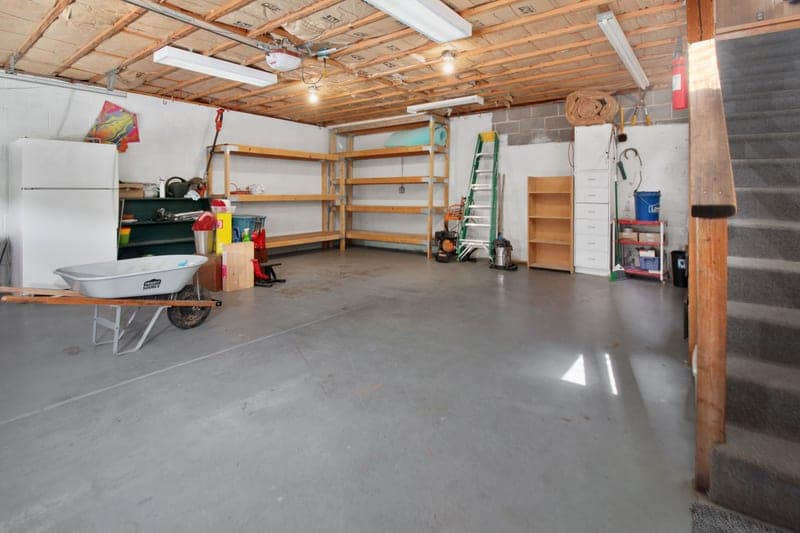 Fresh Cab Botanical Rodent RepellentBalsam fir pouches, EPA minimum-risk registered. Useful for keeping mice out of a space nobody is using; not a solution for an active infestation. | Stored vehicles and cabins | Balsam fir oil |
#ad — every price link goes to Amazon and Swat & Snap earns a commission on qualifying purchases. No price is shown until it can be pulled live from the retailer.
Victor Metal Pedal Mouse Trap (M150)
Victor · Most homes, in quantity
The wooden snap trap everything else is measured against. Cheap enough to set a dozen, which is how mouse trapping actually works.
- Costs little enough that quantity stops being a decision
- The metal pedal fires on weight, so a mouse cannot lick the bait off
- Nothing to charge, nothing to refill
- You see the result, and you have to handle it
- Exposed bar is a genuine hazard to a dog's nose or a toddler's fingers
Check price on Amazon
Victor Electronic Mouse Trap (M250S)
Victor · No-touch disposal indoors
A battery tunnel that delivers a high-voltage shock. You tip the mouse out without seeing or touching it, which is the whole appeal.
- The tunnel is the safety feature — a dog's nose does not fit the plates
- Indicator light means you are not checking traps blind
- Tip-out disposal, no handling
- Batteries die, usually unnoticed, and a dead trap catches nothing
- Has to sit flat against a wall run or mice walk past it
Check price on Amazon
Fresh Cab Botanical Rodent Repellent
Earth-Kind · Stored vehicles and cabins
Balsam fir pouches, EPA minimum-risk registered. Useful for keeping mice out of a space nobody is using; not a solution for an active infestation.
- The one repellent category with a real use case: sealed, unoccupied storage
- No mechanism to fail, nothing to reset
- A mouse already nesting in your wall will not leave because of a pouch
- Strong pine smell in a lived-in room
Check price on Amazon
Sealing a garage properly
The door bottom seal. This is the single highest-value repair in this article. Stand inside with the door closed, lights off, and look along the bottom edge. Daylight is a mouse-sized gap. Replacement seals are inexpensive, sold by length, and fit most residential doors in under an hour. Check the two bottom corners in particular, where wear is worst and where the seal often lifts even when the middle looks fine.
The side jamb seals are worth the same look. They perish at the bottom first.
The wall into the house. Find every penetration: the cable into the ceiling, the pipe to the outside tap, the conduit into the utility room, the gap around the door frame. Steel wool or copper mesh packed in, then sealed over the top. Mice chew straight through expanding foam alone.
The eaves and the roof line, if the garage has an open soffit — that is a route into the roof space and from there into the house.
Keeping mice out of a stored car
A mouse in an engine bay is an expensive problem, because modern wiring insulation is soy-based on many vehicles and rodents will chew it. If a car, a camper or a bike sits for weeks at a time:
- Leave the hood up if the car is inside a secure garage. It makes the bay bright, exposed and much less attractive as a nest site.
- Do not leave food in the car. Not a wrapper, not a dog treat under a seat.
- Put repellent pouches in the engine bay and the cabin, and change them monthly. This is the one situation where botanical repellents have a genuinely defensible use — a small, enclosed volume, unoccupied, where the concentration stays high. They are not a substitute for trapping an active infestation; natural mouse repellents is clear about the difference.
- Set traps around the car, not in it. A trap under the vehicle on the concrete catches what is coming for it.
- Check the cabin air filter housing, which is a favorite nest site and is easy to open on most cars.
Storage that stops feeding them
- Birdseed, grass seed and pet food into metal bins or thick, hard-sided plastic with a sealing lid. Paper sacks and thin plastic are not storage.
- Cardboard boxes off the floor and onto shelving. Plastic totes with lids if the contents matter.
- Soft goods — camping bedding, cushions, old clothes — in sealed containers, not in open boxes.
- Sweep up spilled seed. A tablespoon of birdseed behind a bin is a food source.
The seasonal pattern to expect
Garage mouse pressure follows the temperature. It climbs sharply from late September as nights get cold, peaks through the winter, and drops away in spring when outdoor food returns and the garage stops being the warmest option.
That means two things. The best time to seal a garage is late summer, before the pressure arrives. And catching a few mice in October is normal, not a crisis — as long as the sealing gets done, because otherwise the same route delivers the same number next year.
If the problem is in the house rather than the garage by the time you read this, how to get rid of mice is the full sequence.
Frequently asked
How are mice getting into my garage?
How do I keep mice out of my car's engine bay?
Do mice in the garage mean mice in the house?
What attracts mice to a garage?
More on mice
One mouse is rarely one mouse. This hub covers what kills them, what only looks like it does, and where to put the thing you buy.
Not sure yet? Read how we pick.
Ryder M.
Ryder M. is the hands-on owner behind Magoo Media Group. He writes Swat & Snap because he got tired of pest-control advice that was either a sales pitch or a scare story.
Related on Swat & Snap
- The best mouse traps, by situationSix traps chosen by situation — cheap and plentiful, pet-safe by design, no-touch, or live catch.

- Where to place mouse trapsHow to read a runway, how to orient a trap, and the three rooms people forget to cover.

- Natural mouse repellentsThe narrow case where botanical pouches work — stored vehicles, cabins, closed drawers — and where they do not.

- How to get rid of miceThe full sequence: find the runs, trap in quantity, bait small, seal the gaps. Timeline and what to skip.

- Rats in the yardThe food and harborage audit that actually ends it, plus where outdoor stations go.