How to get rid of mouse smell
There are two completely different mouse smells with two completely different fixes. Working out which one you have is the first five minutes of this job.
By Ryder M.Published Updated

Swat & Snap earns a commission from qualifying purchases made through the links on this page, at no extra cost to you. It does not change which products we pick — see how we pick and our affiliate disclosure.
First: which smell is it
They are not the same problem, and treating one as the other wastes weeks.
Dead mouse. Sweet, thick, greasy, unmistakably decomposition. It arrives suddenly — often three or four days after you set traps or put down poison, or after a cold snap drove mice into a wall. It builds, peaks, and then declines. If you have recently been dealing with mice and a new heavy smell appeared, this is almost certainly it.
Live mice. Musky, ammonia-sharp, closer to a hamster cage than to decay. It does not arrive suddenly; it creeps up, and it is strongest in a confined space — a cupboard, a drawer, a closed room, a car interior. This is urine and accumulated nesting material, and it means you still have animals. Our signs of mice in the house page covers the other things to look for alongside it.
Both at once is common after a successful trapping campaign that missed one animal.
The rest of this page handles them separately.
Finding a dead mouse
Removing it is the only real fix, so it is worth half an hour of looking.
Follow the smell on a cold morning. Odor is strongest when the house is closed up and the heating has just come on. Walk every room with your nose at different heights — at floor level, at waist height, at the top of a cupboard.
Check the obvious voids first. Behind and under the refrigerator and stove, under the dishwasher, inside base cabinets, the back of the airing cupboard, behind a washing machine, inside a disused chimney, in the loft insulation near a water tank, in a wall cavity near where you were trapping.
Look for flies. A small cluster of blowflies at a window, or a line of tiny flies around a skirting board, is a reliable pointer. Their larvae are where the body is.
Check the car if the smell is in the car. Cabin air filter, glovebox, under the seats, inside the HVAC ducting — see best rodent repellents for cars for the prevention side.
Think about where you set traps. A poisoned or injured mouse travels toward water and warmth before it dies. Behind a boiler, near a hot water pipe, next to a pipe run.
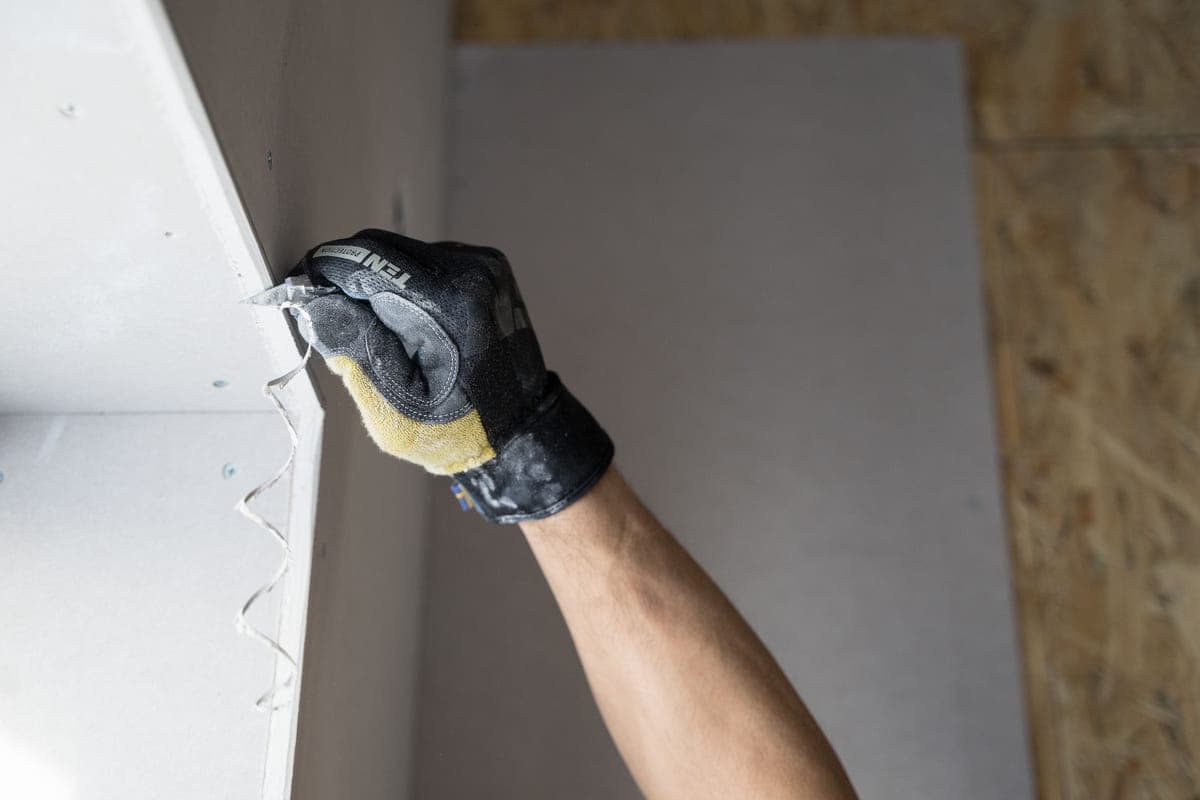
If it is in a wall, you have a decision: cut a small inspection hole in the plasterboard at the smell's strongest point and patch it afterwards, or wait it out. In a small single-story cavity, cutting is often quicker than three weeks of smell. Call in a professional if the wall is load-bearing, tiled, or carrying services you cannot see.
Removing it safely
Gloves on, disposable, and a mask if the space is enclosed.
Ventilate the room first and leave it open while you work.
Double bag it. The body plus any nesting material, in two sealed bags, into the outside bin.
Spray the spot, do not wipe it dry. Disinfectant or a bleach solution, soaked, left five minutes, then picked up with paper towel. The CDC's method for rodent cleanup exists precisely because dry material can aerosolize — never sweep or vacuum. Cleaning up mouse droppings is the full protocol.
Then treat the surface with an enzymatic cleaner. This is the step that matters for the residual smell. Decomposition leaves fats and proteins soaked into timber, plaster, insulation or carpet backing, and a disinfectant kills bacteria without removing them. Enzymatic cleaners break those compounds down. Soak the area, leave it wet for as long as the label says, and repeat if needed.
Replace what cannot be cleaned. A patch of loft insulation, a section of carpet underlay, a cardboard box. Cheaper than living with it.
If you genuinely cannot reach it
Honest expectations, because this is what most people on this page actually need.
Timeline. The smell peaks around the first week and generally fades over two to four weeks. Warmth and humidity speed decomposition and intensify the smell; cold slows both, so a mouse that dies in a loft in January can smell faintly for much longer than one that dies in a kitchen wall in July.
Ventilate aggressively. Windows open on both sides of the house, interior doors open, a fan in the window of the affected room pointing OUT. Moving air is the most effective thing you can do.
Absorb, do not mask. Activated charcoal, a commercial odor absorber, or a few bowls of baking soda placed near the source. Coffee grounds and vinegar bowls have their advocates and do very little. What they all have in common is that they are gentler than the alternative below.
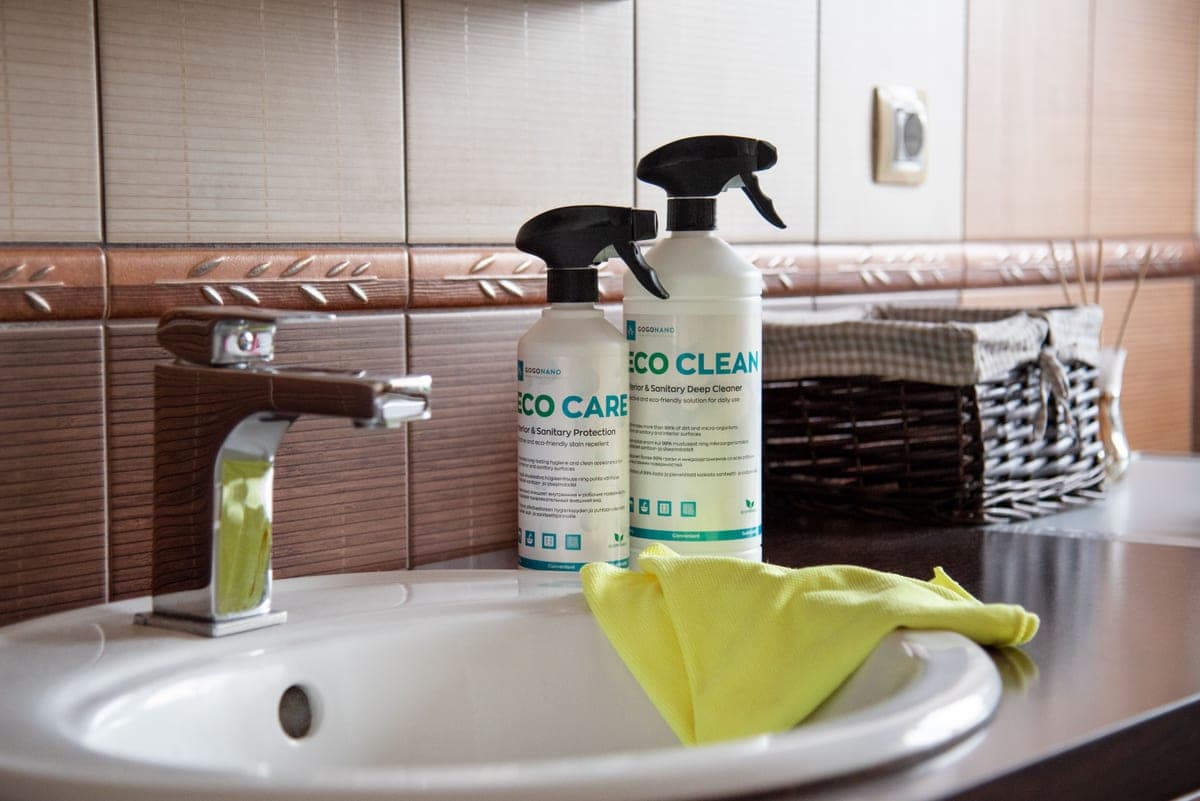
Do not use a plug-in air freshener or a scented spray. The combination of a heavy floral fragrance and decomposition is worse than decomposition alone, and it trains you to notice the smell rather than letting you forget it. This is the single most common mistake people make here.
Do not pour bleach or disinfectant into a wall cavity. You will not reach the body, and you will add a damp chemical smell to a cavity that then has to dry out.
Ozone generators are sometimes suggested. Ozone is a lung irritant, the room must be unoccupied during use and ventilated afterwards, and it does nothing about the source. We would ventilate instead.
The other smell: live mice and urine
If the smell is musky rather than sweet, the animals are still there and it will not fade on its own.
Find the nest. Shredded paper, insulation, fabric and cardboard, packed into a void — the back of a drawer, under a sofa, inside a stored box, in a cupboard you rarely open, inside an appliance housing. Droppings concentrate near it.
Clean it with the same wet method, bag everything, and follow with an enzymatic cleaner. Mouse urine marks are a navigation system — they are deposited deliberately along routes, which is why the smell is strongest along walls and in corners rather than spread evenly.
Then trap, because cleaning a nest from a house that still has mice gets you a new nest. Set several traps along the wall runs near where the nest was, and keep them going for a week after the last catch. How to set mouse traps and where to place mouse traps cover the method, and best enclosed mouse traps is the right category if you would rather not handle the result.
And seal the entry, or the smell comes back with the next cold snap. How to get rid of mice is the full sequence.
Quick picks
| # | Product | Best for | Mechanism | Price |
|---|---|---|---|---|
| 1 |  Our pickVictor Kill Vault Mouse Trap (M267)A snap trap sealed inside a plastic vault. The kill happens out of sight and out of reach, and you never touch the mouse. | Homes with a dog or a toddler | Enclosed snap bar in a sealed chamber | |
| 2 |  Victor Electronic Mouse Trap (M250S)A battery tunnel that delivers a high-voltage shock. You tip the mouse out without seeing or touching it, which is the whole appeal. | No-touch disposal indoors | High-voltage shock inside a tunnel | |
| 3 |  Fresh Cab Botanical Rodent RepellentBalsam fir pouches, EPA minimum-risk registered. Useful for keeping mice out of a space nobody is using; not a solution for an active infestation. | Stored vehicles and cabins | Balsam fir oil |
#ad — every price link goes to Amazon and Swat & Snap earns a commission on qualifying purchases. No price is shown until it can be pulled live from the retailer.
Victor Kill Vault Mouse Trap (M267)
Victor · Homes with a dog or a toddler
A snap trap sealed inside a plastic vault. The kill happens out of sight and out of reach, and you never touch the mouse.
- The enclosure is the reason to buy it: a dog cannot get to the bar
- Seals after firing, so there is no smell and nothing to see
- Sets by pressing the lid, not by arming a bar with your fingers
- Single-use, so a real infestation gets expensive
- Bulkier than a bare snap trap in a tight wall run
Check price on Amazon
Victor Electronic Mouse Trap (M250S)
Victor · No-touch disposal indoors
A battery tunnel that delivers a high-voltage shock. You tip the mouse out without seeing or touching it, which is the whole appeal.
- The tunnel is the safety feature — a dog's nose does not fit the plates
- Indicator light means you are not checking traps blind
- Tip-out disposal, no handling
- Batteries die, usually unnoticed, and a dead trap catches nothing
- Has to sit flat against a wall run or mice walk past it
Check price on Amazon
Fresh Cab Botanical Rodent Repellent
Earth-Kind · Stored vehicles and cabins
Balsam fir pouches, EPA minimum-risk registered. Useful for keeping mice out of a space nobody is using; not a solution for an active infestation.
- The one repellent category with a real use case: sealed, unoccupied storage
- No mechanism to fail, nothing to reset
- A mouse already nesting in your wall will not leave because of a pouch
- Strong pine smell in a lived-in room
Check price on Amazon
In a stored vehicle, RV or shed
The same two smells, in a much smaller volume, which makes both worse and the fix easier.
Pull the cabin filter and check it. Pull out the drawers and the seat cushions. Vacuum only after the wet clean, never before. Then, once it is clean and empty, this is the one environment where botanical repellent pouches genuinely earn their place, because a closed vehicle or shed is a small sealed volume — see best mouse repellents for sheds and best mouse traps for RVs.
The short version
Sweet and sudden means a body: find it, bag it, clean wet, finish with an enzymatic cleaner, and if you cannot reach it, ventilate hard and wait two to four weeks without reaching for an air freshener. Musky and persistent means live mice: find the nest, clean it the same way, trap the animals and seal the hole. Masking either smell with fragrance is the one approach that reliably makes things worse.
Frequently asked
How long does dead mouse smell last?
How do I find a dead mouse in the wall?
What neutralizes dead mouse smell?
Should I use air freshener for mouse smell?
What does live mouse urine smell like?
Will mouse smell go away on its own?
More on mice
One mouse is rarely one mouse. This hub covers what kills them, what only looks like it does, and where to put the thing you buy.
Not sure yet? Read how we pick.
Ryder M.
Ryder M. is the hands-on owner behind Magoo Media Group. He writes Swat & Snap because he got tired of pest-control advice that was either a sales pitch or a scare story.
Related on Swat & Snap
- How to clean up mouse droppings safelyThe CDC method: ventilate, wet with disinfectant, wipe, bag and wash — never sweep or vacuum dry.

- Signs of mice in the houseConfirm mice from droppings, smears, sounds and gnaw marks — and read how many you are dealing with.
- Mice in wallsWhy you trap outside the cavity, how to find the exit points, and what to do about the smell.
- How to get rid of miceThe full sequence: find the runs, trap in quantity, bait small, seal the gaps. Timeline and what to skip.
- Best enclosed mouse trapsCovered snap, electronic and live traps that hide the catch and keep fingers and paws off the mechanism.
- Mouse trap vs poisonRodenticide works — and then the carcass is in your wall and a cat can be poisoned by eating it. The honest comparison.