How to clean up rat droppings safely
The instinct is to reach for a dustpan or a vacuum. Both are the wrong move: they aerosolize dried droppings and urine, which is exactly the exposure route the health guidance exists to prevent.
By Ryder M.Published Updated
Swat & Snap earns a commission from qualifying purchases made through the links on this page, at no extra cost to you. It does not change which products we pick — see how we pick and our affiliate disclosure.
Why sweeping is the wrong first move
Rodent droppings and dried urine are a respiratory exposure, not a contact one. The hazard is what becomes airborne when the dried material is disturbed. A broom and a vacuum both do exactly that — a vacuum particularly badly, because it blasts fine particles through the exhaust and into the room, and then holds contaminated dust in the bag.
The health guidance is therefore built on one principle: wet it before you touch it. Soaked droppings cannot become dust, and wet material lifts cleanly into a bag.
That single rule is more important than which disinfectant you choose.
What rats carry
Worth knowing so you take the right precautions and skip the wrong panic.
- Leptospirosis is the one most associated with rats, spread in rat urine and contracted through broken skin, the eyes, nose or mouth. It is a reason to wear gloves and to wash properly rather than a reason to avoid the room.
- Salmonella from droppings on surfaces where food is prepared or stored.
- Rat-bite fever, from a bite or scratch, or less commonly from contaminated food or water.
- Hantavirus is primarily associated with deer mice in North America rather than with Norway or roof rats, but the wet clean-up method exists because of it and applies to all rodent clean-up.
- Mites and fleas that leave an abandoned nest looking for a new host, which is why an old nest is still worth removing rather than leaving.
- Allergens. For a lot of households this is the practical daily effect — rodent protein in dust is a recognized asthma trigger.
The CDC's rodent clean-up guidance is the authority here and it is short; the sources at the bottom of this page link straight to it. If you are pregnant, immunocompromised, or dealing with a heavy infestation in a confined space, the honest advice is to have someone else do it or to bring in a professional.
What to wear and have ready
- Disposable gloves — rubber, latex, vinyl or nitrile. Not gardening gloves.
- An N95 respirator, correctly fitted, for anything beyond a few droppings, and always in a loft, crawl space or any enclosed area.
- Eye protection if you are working above head height, which in a loft you will be.
- Long sleeves, and clothes you can wash hot afterwards.
- A spray bottle of disinfectant, or fresh 1:10 household bleach made up on the day. Bleach loses strength once diluted, so do not use last month's bottle.
- Paper towels, not cloths.
- Two bin bags — the whole point is double bagging.
- A dustpan you are prepared to disinfect, only for bulk nest material, never for dry sweeping.
The method, step by step
- Ventilate first. Open the windows and doors in the affected area and leave the room for 30 minutes before you start. In a loft or crawl space, open every hatch and vent you can and give it longer.
- Put the gear on before you re-enter — gloves, respirator, eye protection.
- Spray until soaked. Droppings, the surface under them, any urine staining and any nesting material. Do not be sparing: the goal is wet, not damp.
- Wait five minutes. This is the disinfection dwell time and it is the step people cut short.
- Lift with damp paper towels. Pick droppings up rather than pushing them around. For bulk nest material, scoop it with a dustpan you will disinfect afterwards.
- Double-bag immediately. Towels, droppings, nest material and any dead rodent all go into one bag, sealed, then into a second bag, sealed, then into an outdoor bin. Do not leave the bag in the house.
- Disinfect the whole surface again and let it air-dry.
- Wash your gloved hands with soap and water, then take the gloves off and wash your hands again properly.
- Wash the clothes on a hot cycle, separately.
Rat droppings versus mouse droppings
The method is identical. The scale is not, and knowing which animal you have changes what you buy next.
| Mouse droppings | Rat droppings | |
|---|---|---|
| Length | About 1/8 to 1/4 inch | About 1/2 to 3/4 inch |
| Shape | Thin, pointed at both ends | Thicker; blunt or tapered by species |
| Quantity per night | Often 50-75 | Often 25-50, but much larger |
| Typical location | Along walls, in drawers, inside packaging | Along runways, in lofts, near burrows and decking |
| Trap you need next | Mouse trap | Rat trap — a mouse trap will not kill a rat |
Roof rat droppings tend to be more curved and pointed; Norway rat droppings are blunter and wider. Roof rats vs Norway rats goes into the identification, and mice vs rats is the broader diagnostic if you are not sure which animal you are dealing with at all. If it turns out to be mice, use cleaning up mouse droppings instead — same principles, smaller job.
Soft materials, insulation and cupboards
Loft insulation that has been nested in should be bagged and replaced rather than cleaned. It cannot be disinfected through, and it holds urine.
Cardboard, paper and stored textiles that have been nested in go in a sealed bag. Washable fabrics can be laundered hot if you want to keep them.
Kitchen cupboards and drawers. Empty them completely, bin anything in cardboard or plastic film that has been gnawed or has droppings on it, then wet-wipe with disinfectant — shelves, corners and the underside of the shelf above. Wash crockery and utensils before using them again.
Upholstery and mattresses that have been nested in are a replacement job, not a cleaning job.
What to look for
Once the clean-up is done, the thing to buy is whatever confirms the animals are gone and kills the ones that are not.
A trap sized for a rat, not a mouse. This is the single most common mistake after a droppings discovery. A mouse trap on a Norway rat injures it and teaches the colony, which makes the rest of the job much harder.
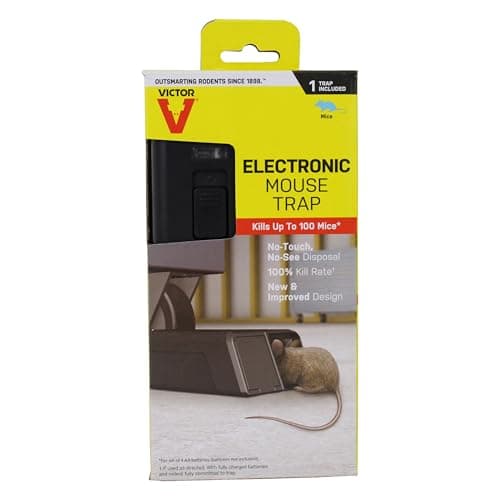
No-touch disposal if the mess is what put you off. An electronic tunnel trap tips out into a bin without you handling anything, which matters in a loft more than anywhere else in the house.
A locked box for anything outdoors or in reach of a pet. A rat trap has enough force to do real damage, so either it is in a sealed space or it is inside a station.
Traps left as permanent monitors. Two set traps in the loft and against the main runway tell you the week something new arrives, which is worth more than the clean-up itself.
Quick picks
| # | Product | Best for | Mechanism | Price |
|---|---|---|---|---|
| 1 | 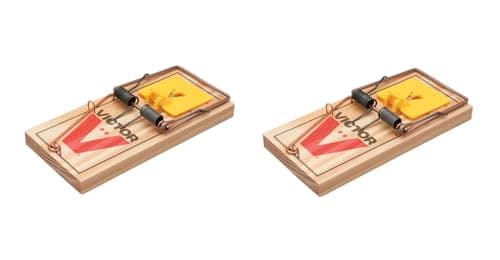 Our pickVictor Easy Set Rat Trap (M205)The rat-sized version of the trap that defined the category. Enough spring force to be lethal instantly, which matters more with rats than with mice. | Most rat jobs | Spring bar, expanded trigger pedal | $13.92View on Amazon Price as of October 17, 2026 |
| 2 | 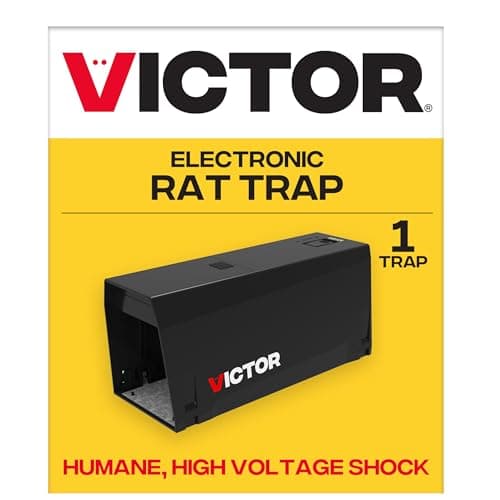 Victor Electronic Rat Trap (M241B)A large shock tunnel that handles rat-sized animals. The no-touch disposal is worth more in an attic than anywhere else in the house. | Attics and crawl spaces | High-voltage shock tunnel | $34.27View on Amazon Price as of October 17, 2026 |
| 3 | 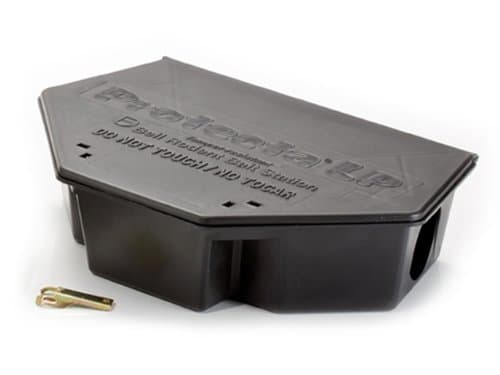 Protecta LP Rat Bait StationThe low-profile station professionals use. Buy it for the lock and the anchoring, and read our poison page before you decide to put bait in it at all. | Locked exterior baiting | Locked tamper-resistant station | $26.99View on Amazon Price as of October 17, 2026 |
#ad — every price link goes to Amazon and Swat & Snap earns a commission on qualifying purchases. Prices are pulled live from the retailer; where one is not available the button reads “Check price on Amazon” rather than showing a stale number.
Victor Easy Set Rat Trap (M205)
Victor · Most rat jobs
The rat-sized version of the trap that defined the category. Enough spring force to be lethal instantly, which matters more with rats than with mice.
- Kills instantly when placed square to a runway, which cheap traps often do not
- Wide pedal fires even on a cautious approach
- Genuinely dangerous to set in a home with pets — it must be boxed
- Rats are neophobic: expect to leave it unset for several days first
Victor Electronic Rat Trap (M241B)
Victor · Attics and crawl spaces
A large shock tunnel that handles rat-sized animals. The no-touch disposal is worth more in an attic than anywhere else in the house.
- Tunnel shape keeps the plates away from paws
- You tip it out — no bar to release over a dead rat
- D cells, and it drains them faster than the box suggests
- Damp crawl spaces corrode the contacts
Protecta LP Rat Bait Station
Bell Labs · Locked exterior baiting
The low-profile station professionals use. Buy it for the lock and the anchoring, and read our poison page before you decide to put bait in it at all.
- Properly tamper-resistant, unlike the unlocked trays sold as stations
- Can be loaded with snap traps instead of bait — which is what we would do
- The station is safe; anticoagulant bait inside it still poisons what eats the rat
- Needs anchoring or it gets dragged
Then stop it happening again
Cleaning up is the aftermath. The sequence that ends it:
- Trap the animals that are there, with rat-sized traps on the runways, left unset with bait for a few days first because rats avoid new objects. Best rat traps and how many rat traps do I need.
- Find the route in. A rat needs a gap about the size of a quarter. Check service penetrations, air bricks, the roof line, soffits, under decking and around drains. Rats in the walls and rats in the attic.
- Seal it with something rats cannot chew — hardware cloth, sheet metal, mortar. Not expanding foam on its own.
- Remove the food. Compost, bins, bird-feeder spill, pet food, chicken feed. What attracts rats is the full list.
- Deal with the smell if there is one, which usually means a carcass in a void rather than residual urine.
The short version
Ventilate for half an hour, wear gloves and an N95, spray everything until it is soaked, wait five minutes, lift it with damp paper towels, double-bag it and put it outside, then disinfect again and wash properly. Never sweep, never vacuum, never dry-brush. Bag contaminated insulation rather than trying to clean it. Then treat the droppings as information: they tell you the animal, the runway and the trap size you need.
Frequently asked
Can you vacuum up rat droppings?
What should I use to clean rat droppings?
Do I need a mask to clean up rat droppings?
How dangerous are rat droppings?
How do you tell rat droppings from mouse droppings?
Should I replace loft insulation with rat droppings in it?
More on rats
Rats are cautious, strong and much harder to trap than mice. Everything here assumes you only get one good attempt at a wary animal.
Not sure yet? Read how we pick.
Ryder M.
Ryder M. is the hands-on owner behind Magoo Media Group. He writes Swat & Snap because he got tired of pest-control advice that was either a sales pitch or a scare story.
Related on Swat & Snap
- How to clean up mouse droppings safelyThe CDC method: ventilate, wet with disinfectant, wipe, bag and wash — never sweep or vacuum dry.
- Rats in the atticRoof rats, joist-run trapping, the branches that let them in, and the honest limits on the clean-up.
- The best rat traps, by situationSnap, electronic, self-resetting and live traps compared — plus the pre-baiting step that decides success.
- What attracts rats to your house and yard?The food, water and harbourage that actually draw rats to a property, ranked by how much removing each one changes.
- Roof rats vs Norway ratsTail, ears, droppings and nest height — which rat you have, and whether to trap high or low.
- Mice vs rats: which one do you actually have?Droppings, sound, gnaw marks and gap size — the fast way to tell mice from rats before you buy a trap.