Fungus gnats in houseplants
Nothing you buy fixes this as reliably as watering differently. The products are there to speed it up and to make the room bearable meanwhile.
By Ryder M.Published Updated
Swat & Snap earns a commission from qualifying purchases made through the links on this page, at no extra cost to you. It does not change which products we pick — see how we pick and our affiliate disclosure.
What lives in the pot
Adult fungus gnats are the visible part and the least important. They live about a week, do not bite, and do almost nothing to the plant.
The larvae are the problem. They live in the top inch or two of potting mix, feeding on fungus, algae and decaying organic matter, and they need that layer to stay damp. In heavy numbers they will also graze fine root hairs — mostly a concern for seedlings, cuttings and young plants rather than an established monstera.
So the fix is aimed at the top inch of soil, not at the insects in the air.
Step 1 — the watering change
This is the treatment. Everything else is acceleration.
Let the top inch dry completely between waterings. Push a finger in to the first knuckle. Damp means wait. A dry surface layer is lethal to larvae and eliminates the egg-laying site in one move.
Water from the bottom. Stand the pot in a tray of water for twenty minutes, then pour the rest away. The roots take up what they need and the surface stays dry. Most houseplants prefer this anyway.
Empty the saucers. A pot standing permanently in water stays saturated no matter what you do on top.
Check drainage. A blocked or absent drainage hole turns a pot into a bog, and no watering discipline fixes that. Repot if you need to.
Be honest about the plants that must stay moist. Ferns, carnivorous plants and a few others genuinely want a damp surface. For those, use a physical barrier instead — see step two.
Step 2 — top-dress the surface
Half an inch of coarse sand, horticultural grit, perlite or fine gravel across the soil surface does two things: it dries out fast, and it gives adults nowhere convenient to lay.
This is the answer for plants you cannot dry out, and a useful accelerator for everything else. It also looks better than bare potting mix, which is not nothing.
Step 3 — BTI for the larvae already in there
Bacillus thuringiensis israelensis is a naturally occurring bacterium lethal to fungus gnat and mosquito larvae and to essentially nothing else — not to plants, pets, people, fish or beneficial insects.
Two ways to use it:
- Sprinkle granules on the soil surface and water in.
- Steep granules in water for half an hour, strain, and use that to water every plant for a fortnight. This reaches every pot evenly, which matters because gnats move between plants.
It is the same product used in rain barrels and ponds for mosquito larvae, which is a genuinely useful piece of cross-over — mosquito dunks vs bits explains the two formats.
On hydrogen peroxide: the widely shared 1:4 solution does kill larvae on contact. It is also indiscriminate, gone within minutes, and hard on soil biology. BTI does the job better and keeps doing it.
Quick picks
| # | Product | Best for | Mechanism | Price |
|---|---|---|---|---|
| 1 | 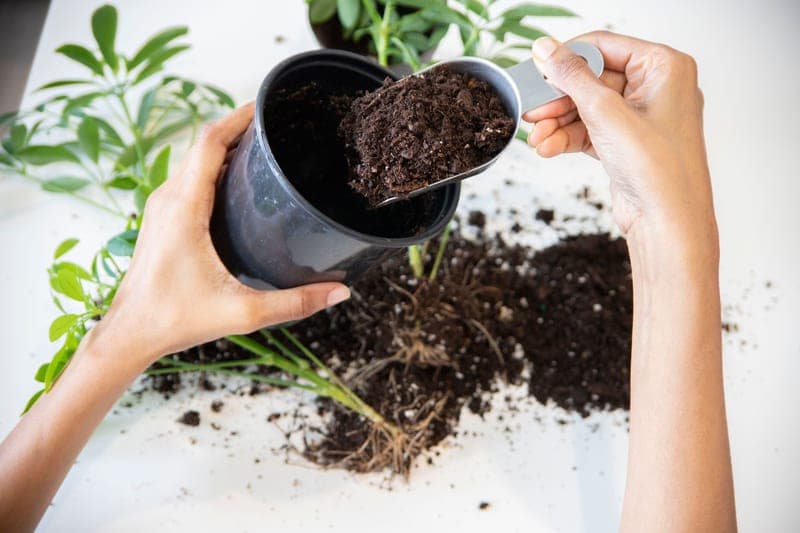 Our pickSafer Brand Houseplant Sticky StakesYellow sticky cards on a stake, pushed into the pot. They catch the adults while you fix the watering, which is the part that actually ends a gnat problem. | Gnats in potting soil | Yellow adhesive card | |
| 2 |  Summit Mosquito BitsThe same BTI in granules. Releases faster than a dunk and doubles as the correct treatment for fungus gnats in houseplant soil. | Fast knockdown and fungus gnats | BTI granules | |
| 3 |  Katchy Indoor Insect TrapUV light, a small fan and a sticky pad. The fan is what makes it work on gnats — they are weak fliers and get pulled in. | Fungus gnats around plants | UV light + suction fan + glue board |
#ad — every price link goes to Amazon and Swat & Snap earns a commission on qualifying purchases. No price is shown until it can be pulled live from the retailer.
Safer Brand Houseplant Sticky Stakes
Safer Brand · Gnats in potting soil
Yellow sticky cards on a stake, pushed into the pot. They catch the adults while you fix the watering, which is the part that actually ends a gnat problem.
- Also a diagnostic: a full card in three days tells you the soil is the source
- No chemistry near a plant you might eat from
- Adults only — larvae in the soil need drying out or a BTI product
- Visible yellow cards in a display pot
Check price on Amazon
Summit Mosquito Bits
Summit · Fast knockdown and fungus gnats
The same BTI in granules. Releases faster than a dunk and doubles as the correct treatment for fungus gnats in houseplant soil.
- Scatterable, so it treats a bog or a tray a dunk cannot sit in
- The one product that solves both a yard problem and a houseplant problem
- Shorter residual than a dunk — reapply more often
- Granules wash away in heavy rain
Check price on Amazon
Katchy Indoor Insect Trap
Katchy · Fungus gnats around plants
UV light, a small fan and a sticky pad. The fan is what makes it work on gnats — they are weak fliers and get pulled in.
- The fan catches fungus gnats that simply ignore a light-only trap
- USB power means it can sit on a plant shelf with no socket nearby
- Needs the room dark to compete with a window
- Glue boards fill quickly in a real gnat bloom
Check price on Amazon
Step 4 — catch the adults
Trapping does not solve it, and it lowers the population while the soil dries, which is worth doing.
Yellow sticky stakes, pushed into the pot an inch above the soil. Yellow is the effective color — fungus gnats are drawn to it specifically. Use these as a diagnostic too: a card covered in three days confirms the soil is the source, and a clean card means look somewhere else.
A light-and-fan trap for the room. The fan matters more than the light with gnats, because they are weak fliers that get pulled in rather than having to land on anything.
A plug-in light trap in a dim corner for passive ongoing control — the options.
Stopping the next outbreak
- Quarantine new plants away from the collection for a fortnight. This is where most infestations come from.
- Store potting mix sealed and dry. An open bag left damp in a garage is a gnat nursery.
- Do not top up with garden soil or unsterilized compost.
- Remove fallen leaves from the soil surface — that is larval food.
- Water less in winter, when plants use far less and the surface stays wet much longer.
What the timeline looks like
- Week 1: adults still around, cards filling, soil beginning to dry.
- Week 2: noticeably fewer adults as larvae die in the dry layer.
- Week 3: clear, if the watering discipline held.
- Still going at week 4: one pot is still wet. Usually a plant in a decorative sleeve with no drainage, or one plant somebody else waters.
When it is not fungus gnats
- Hovering around fruit and bins rather than plants → fruit flies. Here.
- Sitting still on a bathroom wall, fuzzy → drain flies. Here.
- Tiny white things moving on the soil surface, jumping → springtails, which are harmless and also a symptom of soil that is too wet.
Gnats vs fruit flies vs drain flies sorts the first two in a minute.
Frequently asked
How do I get rid of fungus gnats in my houseplants?
Does hydrogen peroxide kill fungus gnat larvae?
Are fungus gnats harmful to plants?
Why do I keep getting fungus gnats?
More on fruit flies & gnats
Tiny flies in the kitchen are almost never one problem. Identify which of the three you have, then treat the source — the trap alone never finishes it.
Not sure yet? Read how we pick.
Ryder M.
Ryder M. is the hands-on owner behind Magoo Media Group. He writes Swat & Snap because he got tired of pest-control advice that was either a sales pitch or a scare story.
Related on Swat & Snap
- How to get rid of gnatsFungus gnats come off wet soil. The watering change, the BTI step, and a realistic timeline.

- Gnats vs fruit flies vs drain fliesBehavior, not anatomy: the one-minute test that tells you which tiny fly you have.
- The best plug-in fly trapsSilent light traps for whole-room fly control — and the running cost nobody mentions.

- Mosquito dunks vs bitsSlow-release dunks or fast-release granules — which BTI format suits which water.

- The best fruit fly trapsLure traps, plug-in lights and sticky stakes, matched to where the flies actually are.