Best rat-proofing materials
Trapping removes the rats that are inside. Proofing is the only part of the job that stops it happening again, and it fails almost entirely for one reason: people reach for a can of foam. A rat chews cured foam in a night. The fix is metal, then foam over the metal.
By Ryder M.Published Updated
Swat & Snap earns a commission from qualifying purchases made through the links on this page, at no extra cost to you. It does not change which products we pick — see how we pick and our affiliate disclosure.
What a rat can get through
A rat's incisors grow continuously and it gnaws to wear them down, which means gnawing is not a means to an end for a rat — it is maintenance. Given a reason, it will chew:
- Expanding foam. Cured polyurethane is soft. A rat goes through it in a night, and often takes the foam away as nesting material.
- Plastic. Vent covers, drain pipe, flexible duct, plastic air bricks.
- Wood. Softwood trim, plywood soffits, the bottom edge of a door.
- Thin aluminum. Soffit panel and flashing of the lightest gauge.
- Grout and poor mortar. Slowly, but it happens.
What it cannot get through is steel in a form it cannot grip: a woven mesh too fine to get a tooth into, or a wire grid too stiff to bend. That is the whole principle of rat proofing. Everything else is cosmetic.
And the gap you are looking for is smaller than people expect. A rat gets through roughly an inch and a half — the width of a soda can — and a young one through considerably less. A mouse needs a quarter of an inch, so if you are proofing to a rat standard and the site also has mice, proof to the mouse standard and you have covered both. The mouse version of this page is best steel wool for mice.
The four materials, and what each is for
Stainless fill fabric is the general-purpose answer. It is a dense stainless wool that you tear off by hand and pack into a void: around a pipe collar, into the gap at the top of a block wall, behind a loose piece of trim. It does not rust, which matters because ordinary steel wool rusts into orange crumbs in a wet gap within a couple of seasons and then the hole is open again. Buy this if you are buying one thing.
Quarter-inch galvanized hardware cloth is the material for anything you cannot pack — openings with a shape. A crawl-space vent, a gable vent, the gap along the top of a foundation wall, a soffit opening, the underside of a shed. You cut it with tin snips, you overlap the opening by a couple of inches on every side, and you fix it with screws and washers or staple it into sound timber. Quarter-inch is the mesh to buy: half-inch excludes rats but admits mice, and insect mesh excludes nothing structurally.
Copper mesh is knitted copper rope on a roll. It behaves like the fill fabric but comes in a long continuous run, which makes it the right thing for a long gap — a weep line, a run of soffit, a series of pipe penetrations — and for anywhere permanently damp, because copper does not rust. It is softer than hardware cloth, so it packs rather than spans.
Pest-rated expanding foam is the finisher. Its jobs are sealing air, keeping the metal in place, and making the repair look tidy. Both foams in our picks are sold for pest blocking and the labels are honest about what that means. Used over mesh it is excellent. Used alone it is a waste of an afternoon, and the one mistake this page exists to prevent.
Quick picks
| # | Product | Best for | Mechanism | Price |
|---|---|---|---|---|
| 1 | 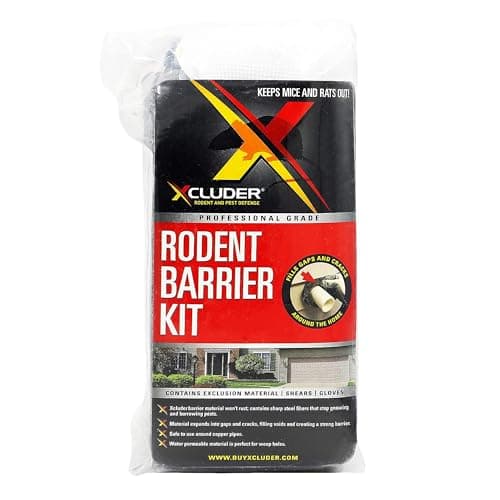 Our pickXcluder Rodent Control Fill Fabric (Large DIY Kit)A stainless-steel wool blend made for this job rather than for scrubbing pans. It does not rust in a damp gap, and the listing states it stops rats as well as mice. | The one to buy if you buy one thing | Stainless steel wool blend | $22.49View on Amazon Price as of November 11, 2026 |
| 2 | 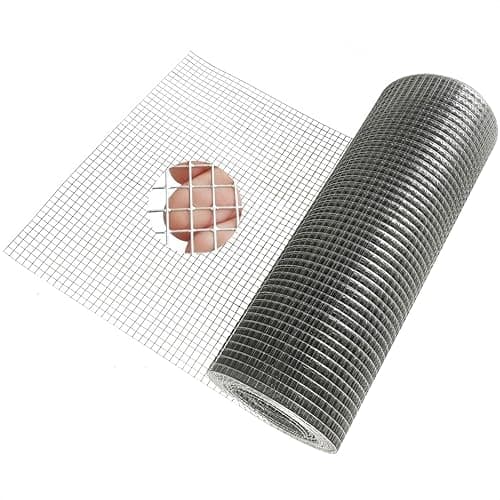 Galvanized Hardware Cloth, 1/4 in Mesh, 23 Gauge (12 in x 35 ft)Once an opening is wider than a thumb, wool of any kind is the wrong material. Welded 1/4-inch mesh is what actually spans a vent, and the quarter-inch aperture is the number that matters. | Vents, crawl-space openings and anything over an inch | 1/4 in — too small for a mouse to pass | $29.99View on Amazon Price as of November 11, 2026 |
| 3 | 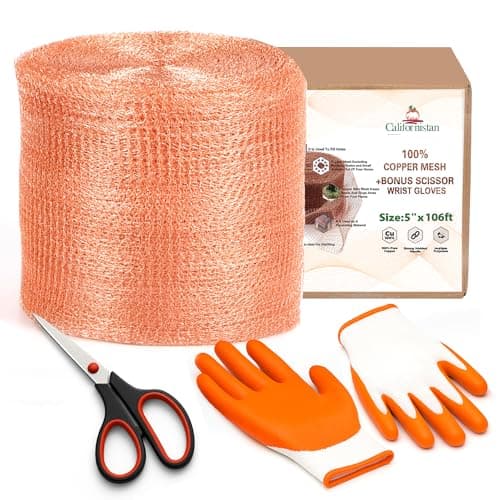 Californistan Copper Mesh Rodent Control Roll (5 in x 106 ft)Copper mesh is the rust-proof answer for gaps that see water. The roll format is what you want when the job is a whole sill plate rather than three holes. | Long runs and anywhere that stays wet | Copper mesh | $29.99$34.9914% offView on Amazon Price as of November 11, 2026 |
| 4 | 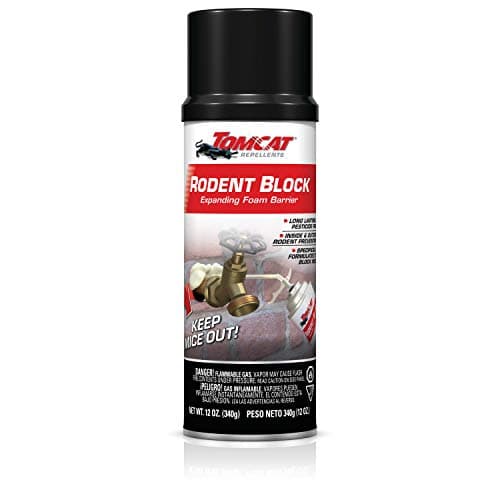 Tomcat Rodent Block Expanding Foam Barrier (12 oz)Tomcat's foam sold specifically for rodent gaps. Same caveat as any foam: it belongs over a metal fill, not instead of one. | A rodent-labeled foam from a brand you know | Expanding foam barrier, 12 oz | $9.97$13.9929% offView on Amazon Price as of November 11, 2026 |
| 5 | 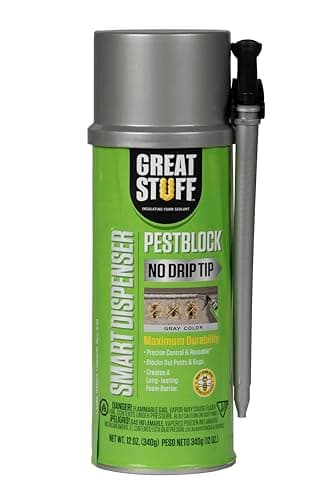 Great Stuff Pestblock Insulating Foam Sealant (Smart Dispenser)The right product for the last step and the wrong product for the only step. Foam seals a gap against drafts and insects; it is not a chew barrier. | Finishing over metal, never on its own | Polyurethane expanding foam sealant | $10.97View on Amazon Price as of November 11, 2026 |
#ad — every price link goes to Amazon and Swat & Snap earns a commission on qualifying purchases. Prices are pulled live from the retailer; where one is not available the button reads “Check price on Amazon” rather than showing a stale number.
Xcluder Rodent Control Fill Fabric (Large DIY Kit)
Xcluder · The one to buy if you buy one thing
A stainless-steel wool blend made for this job rather than for scrubbing pans. It does not rust in a damp gap, and the listing states it stops rats as well as mice.
- Stainless means it survives a gap that gets wet, which is where plain steel wool fails
- Tears and packs by hand into an awkward shape a rigid material cannot follow
- The listing states it is rated for rats, not only mice — most consumer steel wool does not
- Costs several times what a pack of pan steel wool costs for the same bulk
- Wear gloves: the fibers splinter and they will find your fingers
- It fills a gap, it does not seal one — it needs covering or caulking for a finished job
Galvanized Hardware Cloth, 1/4 in Mesh, 23 Gauge (12 in x 35 ft)
LOVEERCT · Vents, crawl-space openings and anything over an inch
Once an opening is wider than a thumb, wool of any kind is the wrong material. Welded 1/4-inch mesh is what actually spans a vent, and the quarter-inch aperture is the number that matters.
- A quarter-inch aperture is below the gap a young mouse can squeeze through; half-inch mesh is not
- Galvanized after welding, so the cut weld points are protected rather than left bare
- Spans an opening rigidly — a soffit vent or a crawl-space grille cannot be done any other way
- Needs snips, fasteners and gloves; this is the pick that turns the job into a project
- Cut edges are genuinely sharp and will find your hands before they stop a mouse
- Still has to be fastened properly — mesh laid loosely over a vent gets pushed aside
Californistan Copper Mesh Rodent Control Roll (5 in x 106 ft)
Californistan · Long runs and anywhere that stays wet
Copper mesh is the rust-proof answer for gaps that see water. The roll format is what you want when the job is a whole sill plate rather than three holes.
- Copper will not rust or stain a painted wall the way wet steel wool does
- A 106-foot roll is cheap per foot once the job is bigger than a few holes
- Soft enough to stuff into a ragged masonry gap and still spring back against the sides
- Softer than stainless steel wool, so a determined rat has a better chance of working it loose
- Oversized for a three-hole job — you will have most of the roll left over
- Commodity category with no model lineage, so the specs matter more than the brand name
Tomcat Rodent Block Expanding Foam Barrier (12 oz)
Tomcat · A rodent-labeled foam from a brand you know
Tomcat's foam sold specifically for rodent gaps. Same caveat as any foam: it belongs over a metal fill, not instead of one.
- Sold and labeled for this exact job, which makes the hardware aisle easier to navigate
- Cheapest route to closing the draft and insect gap once the metal is packed in
- A 12 oz can covers a surprising number of small gaps around a foundation
- It is still foam — do not rely on it as the barrier a rodent meets first
- Single can, single session: part-used foam sets hard in the straw
- Sticks to brick, paint and hands, and is difficult to remove once cured
Great Stuff Pestblock Insulating Foam Sealant (Smart Dispenser)
Great Stuff · Finishing over metal, never on its own
The right product for the last step and the wrong product for the only step. Foam seals a gap against drafts and insects; it is not a chew barrier.
- Expands into the shape of an irregular gap better than any solid material
- The Smart Dispenser can be stopped and restarted, which a one-shot straw cannot
- Closes the draft and the insect route that bare wool leaves wide open
- A mouse will chew through cured foam — used alone this is a cosmetic fix, and it is the commonest mistake in this job
- Expands more than you expect and sticks to everything it touches, skin included
- Cures to a surface that needs trimming and painting if the gap is anywhere visible
The order of work
1. Find the holes properly. Outside, at dusk, with a flashlight held low and angled along the wall so shadows show gaps. Inside, look for rub marks — rats leave a greasy dark smear on a well-used route — plus droppings, gnawed edges and a distinct ammoniac smell. Check every pipe and cable entry, the rim joist, under the doors, air bricks, the dryer vent, the gap where the roof meets the wall, and the garage door seal. Rats in the attic and rats in the walls list the usual sites by location.
2. Trap first, seal second — with one exception. If rats are living inside, sealing every hole before you have trapped them leaves animals shut in with no exit, which produces a smell problem and some very determined gnawing. Trap until the catches stop, then seal. The exception is a hole you can see is the entry while the colony is outside: close that one at once.
3. Pack or span with metal. Small voids get packed with stainless fill fabric or copper mesh, pushed in firmly with a screwdriver so the whole depth of the gap is filled rather than plugged at the mouth. Shaped openings get hardware cloth, overlapped and screwed.
4. Foam over the metal. A bead to lock the mesh and seal the air gap, cut back flush when cured.
5. Fix the materials problem, not just the hole. If a rat chewed through a plastic air brick, replace it with a metal one. If it got in under a wooden door, fit a metal kick plate. Sealing the hole in a chewable material gets you the same hole next year.
Doors, vents and drains
Three sites that defeat ordinary proofing and have specific answers.
Under a door. The gap under a garage or outbuilding door is the most common rat entry on a property. A metal threshold strip or kick plate, or a brush seal with a metal spine, lasts. Rubber alone does not.
Vents. Never block a vent solid — you will cause condensation or a combustion-air problem. Screen it with quarter-inch hardware cloth on the outside face, overlapped and screwed, which lets the air through and stops the animal.
Drains and sumps. Rats use sewers and come up through broken drain lines, open floor drains and uncapped vent stacks. A drain cover with no grille, a dry trap or a cracked clay line is a route that proofing the walls will never fix. If you are catching rats indoors with no visible exterior entry, get the drains surveyed.
What proofing cannot do
It cannot make the property unattractive. A rat on a property with food and cover will keep testing the shell, and the shell only has to fail in one place. Proofing goes with housekeeping: bins with lids that latch, no pet food left out, fruit picked up, wood stacks off the ground, vegetation cut back from the walls. What attracts rats and rats in the yard cover the exterior side.
And it is not a one-afternoon job you never revisit. Walk the perimeter twice a year with the flashlight. New holes appear — frost moves mortar, a contractor drills a cable entry and leaves it open, a soffit panel lifts in a gale. Twenty minutes of looking is cheaper than the whole job again.
Frequently asked
Can rats chew through expanding foam?
What is the best material to block a rat hole?
What size gap can a rat get through?
Should I use steel wool to block rat holes?
Should I seal the holes before or after trapping?
Can I block a vent to keep rats out?
More on rats
Rats are cautious, strong and much harder to trap than mice. Everything here assumes you only get one good attempt at a wary animal.
Not sure yet? Read how we pick.
Ryder M.
Ryder M. is the hands-on owner behind Magoo Media Group. He writes Swat & Snap because he got tired of pest-control advice that was either a sales pitch or a scare story.
Related on Swat & Snap
- How to get rid of ratsPre-bait, set everything at once, then exclude. Timeline, the harborage audit, and when to call someone.
- Best steel wool and copper mesh for mouse holesStainless fill fabric, copper mesh, 1/4-inch hardware cloth and pest-block foam — which gap each one is for, and the mistake that undoes the whole job.
- Rats in the wallsConfirm it is rats, trap at the exits rather than opening the cavity, and seal the climb that got them in.
- Rats in the atticRoof rats, joist-run trapping, the branches that let them in, and the honest limits on the clean-up.
- Best rat traps for a basementRat traps chosen for a basement: no-touch electronic for a dry one, heavy snap traps in quantity for a damp one, and a locked housing where the dog goes.
- What attracts rats to your house and yard?The food, water and harbourage that actually draw rats to a property, ranked by how much removing each one changes.