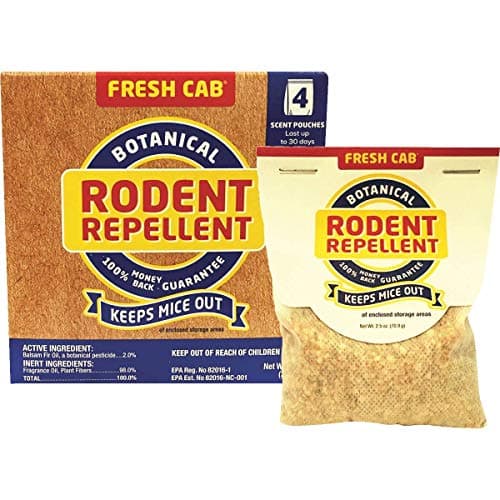
Best steel wool and copper mesh for mouse holes
Trapping removes the mice that are already inside. Sealing is the part that stops the next ones, and it is the step most people either skip or do with the wrong material. Four materials do this job properly; one very popular one does not.
By Ryder M.Published Updated
Swat & Snap earns a commission from qualifying purchases made through the links on this page, at no extra cost to you. It does not change which products we pick — see how we pick and our affiliate disclosure.
Why this is the step that actually ends it
A mouse problem has two halves. The traps deal with the mice that are already in the building. The sealing deals with the fact that a house which let mice in once will let them in again, every autumn, for as long as the hole exists.
Skip the second half and you are not solving a mouse problem — you are running a subscription. People who set traps every October for five years in a row are almost always people with an unsealed gap behind a kitchen cabinet.
The constraint that makes this harder than it sounds is the size of the animal. A house mouse can pass through a gap around a quarter of an inch — roughly the diameter of a pencil — because the skull is the limiting dimension and the rest of the body follows. The CDC's own rodent-exclusion guidance uses that quarter-inch figure and tells you to seal with steel wool and caulk. It is why "there is no hole big enough" is almost always wrong, and why the materials below are the ones that work: they survive being gnawed at, and they pack into gaps far too small to notice from across a room.
The criteria, before the picks
Four things separate a fill material that holds from one that looks fine for a season and then fails.
It has to be something a rodent will not chew through. Mouse incisors handle the plastic, wood, foam and fiberglass batt they meet in a typical wall. Metal is where they stop. That single fact eliminates most of what gets sold for "sealing gaps".
It has to survive being damp. This is the criterion people miss, and it is why the cheapest option is usually a false economy. Gaps around a sill plate, a hose bib, a dryer vent or a basement window get wet. Ordinary steel wool — the kind sold for scouring pans — rusts, and rusted steel wool becomes orange dust you can push a finger through. Stainless and copper do not do this.
It has to match the shape of the opening. Wool fills an irregular hole and springs back against the sides. Rigid mesh spans a big opening. Use them the wrong way round and both fail: wool packed across a four-inch vent is simply pushed out, and hardware cloth cannot follow the ragged edge of a masonry gap.
It has to be finishable. Bare metal wool in a visible gap is ugly, it leaves an air and insect route wide open, and in a doorway it snags. The job is properly done when the metal is in and something seals over the top of it.
Those four criteria produce four picks and one explicit demotion.
Quick picks
| # | Product | Best for | Mechanism | Price |
|---|---|---|---|---|
| 1 | 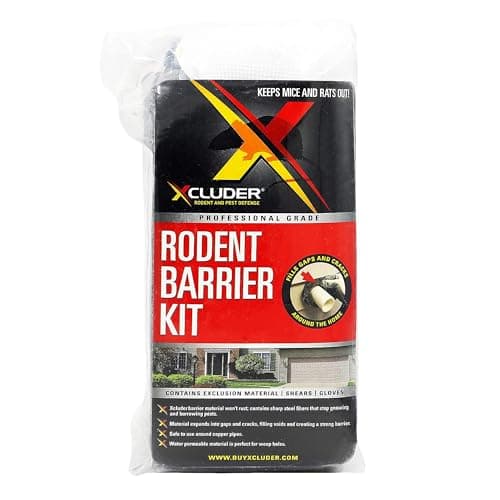 Our pickXcluder Rodent Control Fill Fabric (Large DIY Kit)A stainless-steel wool blend made for this job rather than for scrubbing pans. It does not rust in a damp gap, and the listing states it stops rats as well as mice. | The one to buy if you buy one thing | Stainless steel wool blend | $22.49View on Amazon Price as of November 11, 2026 |
| 2 | 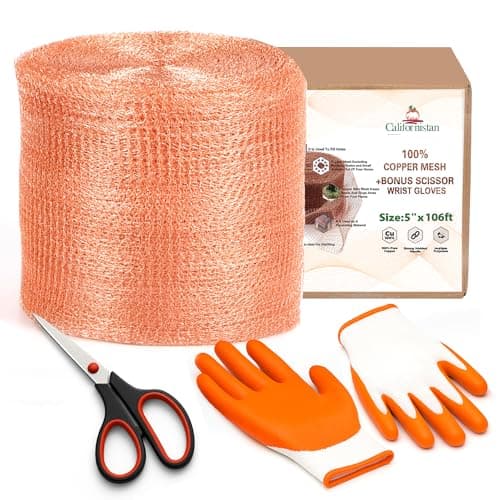 Californistan Copper Mesh Rodent Control Roll (5 in x 106 ft)Copper mesh is the rust-proof answer for gaps that see water. The roll format is what you want when the job is a whole sill plate rather than three holes. | Long runs and anywhere that stays wet | Copper mesh | $29.99$34.9914% offView on Amazon Price as of November 11, 2026 |
| 3 | 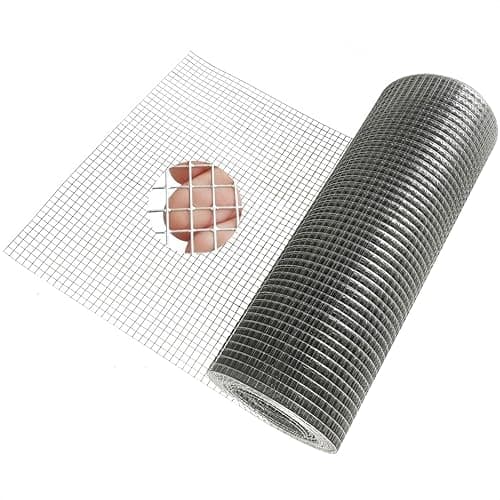 Galvanized Hardware Cloth, 1/4 in Mesh, 23 Gauge (12 in x 35 ft)Once an opening is wider than a thumb, wool of any kind is the wrong material. Welded 1/4-inch mesh is what actually spans a vent, and the quarter-inch aperture is the number that matters. | Vents, crawl-space openings and anything over an inch | 1/4 in — too small for a mouse to pass | $29.99View on Amazon Price as of November 11, 2026 |
| 4 | 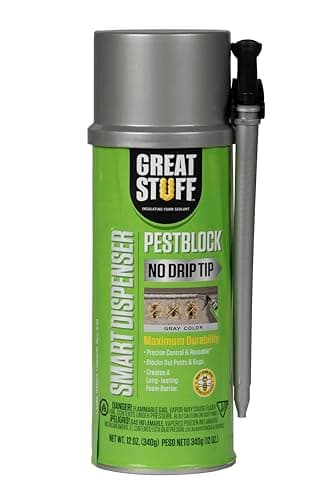 Great Stuff Pestblock Insulating Foam Sealant (Smart Dispenser)The right product for the last step and the wrong product for the only step. Foam seals a gap against drafts and insects; it is not a chew barrier. | Finishing over metal, never on its own | Polyurethane expanding foam sealant | $10.97View on Amazon Price as of November 11, 2026 |
| 5 | 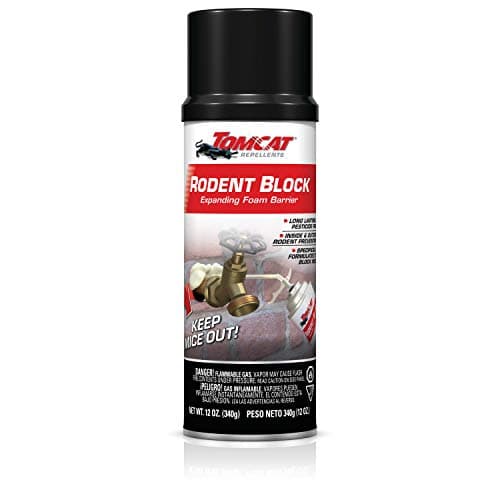 Tomcat Rodent Block Expanding Foam Barrier (12 oz)Tomcat's foam sold specifically for rodent gaps. Same caveat as any foam: it belongs over a metal fill, not instead of one. | A rodent-labeled foam from a brand you know | Expanding foam barrier, 12 oz | $9.97$13.9929% offView on Amazon Price as of November 11, 2026 |
#ad — every price link goes to Amazon and Swat & Snap earns a commission on qualifying purchases. Prices are pulled live from the retailer; where one is not available the button reads “Check price on Amazon” rather than showing a stale number.
Xcluder Rodent Control Fill Fabric (Large DIY Kit)
Xcluder · The one to buy if you buy one thing
A stainless-steel wool blend made for this job rather than for scrubbing pans. It does not rust in a damp gap, and the listing states it stops rats as well as mice.
- Stainless means it survives a gap that gets wet, which is where plain steel wool fails
- Tears and packs by hand into an awkward shape a rigid material cannot follow
- The listing states it is rated for rats, not only mice — most consumer steel wool does not
- Costs several times what a pack of pan steel wool costs for the same bulk
- Wear gloves: the fibers splinter and they will find your fingers
- It fills a gap, it does not seal one — it needs covering or caulking for a finished job
Californistan Copper Mesh Rodent Control Roll (5 in x 106 ft)
Californistan · Long runs and anywhere that stays wet
Copper mesh is the rust-proof answer for gaps that see water. The roll format is what you want when the job is a whole sill plate rather than three holes.
- Copper will not rust or stain a painted wall the way wet steel wool does
- A 106-foot roll is cheap per foot once the job is bigger than a few holes
- Soft enough to stuff into a ragged masonry gap and still spring back against the sides
- Softer than stainless steel wool, so a determined rat has a better chance of working it loose
- Oversized for a three-hole job — you will have most of the roll left over
- Commodity category with no model lineage, so the specs matter more than the brand name
Galvanized Hardware Cloth, 1/4 in Mesh, 23 Gauge (12 in x 35 ft)
LOVEERCT · Vents, crawl-space openings and anything over an inch
Once an opening is wider than a thumb, wool of any kind is the wrong material. Welded 1/4-inch mesh is what actually spans a vent, and the quarter-inch aperture is the number that matters.
- A quarter-inch aperture is below the gap a young mouse can squeeze through; half-inch mesh is not
- Galvanized after welding, so the cut weld points are protected rather than left bare
- Spans an opening rigidly — a soffit vent or a crawl-space grille cannot be done any other way
- Needs snips, fasteners and gloves; this is the pick that turns the job into a project
- Cut edges are genuinely sharp and will find your hands before they stop a mouse
- Still has to be fastened properly — mesh laid loosely over a vent gets pushed aside
Great Stuff Pestblock Insulating Foam Sealant (Smart Dispenser)
Great Stuff · Finishing over metal, never on its own
The right product for the last step and the wrong product for the only step. Foam seals a gap against drafts and insects; it is not a chew barrier.
- Expands into the shape of an irregular gap better than any solid material
- The Smart Dispenser can be stopped and restarted, which a one-shot straw cannot
- Closes the draft and the insect route that bare wool leaves wide open
- A mouse will chew through cured foam — used alone this is a cosmetic fix, and it is the commonest mistake in this job
- Expands more than you expect and sticks to everything it touches, skin included
- Cures to a surface that needs trimming and painting if the gap is anywhere visible
Tomcat Rodent Block Expanding Foam Barrier (12 oz)
Tomcat · A rodent-labeled foam from a brand you know
Tomcat's foam sold specifically for rodent gaps. Same caveat as any foam: it belongs over a metal fill, not instead of one.
- Sold and labeled for this exact job, which makes the hardware aisle easier to navigate
- Cheapest route to closing the draft and insect gap once the metal is packed in
- A 12 oz can covers a surprising number of small gaps around a foundation
- It is still foam — do not rely on it as the barrier a rodent meets first
- Single can, single session: part-used foam sets hard in the straw
- Sticks to brick, paint and hands, and is difficult to remove once cured
How to choose between them in ten seconds
| Your gap | Buy |
|---|---|
| Pencil-width to thumb-width, dry | Stainless fill fabric |
| Pencil-width to thumb-width, damp or outdoors | Copper mesh |
| A long run — a whole sill plate, a row of gaps | Copper mesh, by the roll |
| Wider than a thumb, or a vent or grille | 1/4-inch hardware cloth |
| Any of the above, once the metal is packed in | Pest-block foam over the top |
| A gap you can see from the sofa | Metal, then foam, then caulk and paint |
The grade question, answered
"Which grade of steel wool for mice" is the most-asked version of this question and the answer is short: coarse, not fine.
Fine grades — the 0000 and 000 you buy for polishing — compress to almost nothing and pull apart in the hand. They are made to be soft. A mouse works that out quickly.
Coarse grades, typically sold as #1, #2 or #3, or as a purpose-made fill fabric like the Xcluder pick, have strands thick enough to bind against each other when packed. Pushed into a gap under pressure, coarse wool becomes a springy plug that pushes outward against the sides, and that is what makes it hold when a mouse leans on it.
Two practical notes matter more than the grade number:
- Pack it tight. Loosely stuffed wool gets pulled out. It should take effort and a blunt tool — a putty knife, a screwdriver shaft — to get the last of it in.
- Stainless or copper, not plain steel, anywhere that gets damp. A plain steel wool plug in an exterior gap is a one-season fix that rusts into a hole and stains the wall on its way out.
Why foam alone is the commonest mistake in this job
Walk the aisle and the expanding foams look designed for exactly this. They say pest and rodent on the can. They fill an awkward gap better than anything else. They are cheap.
They are also, by themselves, not a barrier. Cured polyurethane foam is soft enough for a mouse to chew, and a mouse that has used a route before will chew to get back to it. A foam-only seal routinely survives one winter and is reopened by spring, usually at the lowest point of the gap where nobody is looking.
That does not make foam a bad product. It makes it the second product. Foam over a packed metal fill is the right finish: it closes the draft, blocks the insects and ants that walk straight through bare wool, and locks the metal in place so it cannot be dragged out. Foam instead of a packed metal fill is decoration.
The same goes for every other soft filler people reach for. Caulk on its own, fiberglass insulation, duct tape, a wine cork, foil — none of them is a chew barrier. Metal first, every time.
The sequence that matters more than the shopping
Buying the right material and using it in the wrong order creates a worse problem than the one you started with.
1. Trap first, and finish trapping. Seal an active infestation and you shut mice inside the structure with no exit. They do not politely leave; they die in a wall cavity, and the smell is a genuinely difficult problem to fix afterwards. Work through how to get rid of mice, pick a trap type with electronic vs snap mouse traps, and run traps until you have had several consecutive empty nights. How long it takes sets honest expectations — usually a week or two, not an evening.
2. Find the holes properly. This is tedious and it is the whole job. Go around the outside of the building at ground level with a bright light held low and close to the wall, so that gaps throw shadows. Then do the inside: under the sink, behind the washer and dryer, where any pipe or cable enters, around the dryer vent, the gap behind the bottom kick-board of kitchen cabinets, the corners of the garage. Where mice hide in a house is the checklist version, and signs of mice tells you which gaps are the live ones — grease marks, droppings and gnawed edges concentrate at the route actually in use.
3. Match the material to the opening. Per the table above.
4. Pack the metal tight, then foam over it.
5. Finish the visible ones. Caulk and paint over the foam where anyone will see it.
6. Go back in six months. Buildings move, foam shrinks slightly, and new gaps open where a deck rail is bolted on. A ten-minute walk around the foundation twice a year is what keeps the result.
The gaps people miss
Almost every re-infestation comes through one of these, because none of them look like a hole:
- The gap under a garage door, particularly at the two bottom corners where the seal curls. This is the most common entry point into an attached house, and it is covered in mice in the garage.
- The dryer vent. The flap is held shut by air pressure, not by anything a mouse respects.
- Where an AC line set or a gas pipe enters the wall, which is almost always a drilled hole with a generous margin around it.
- The weep holes in brick veneer, which are deliberate and must stay open — a stainless-wool or mesh job specifically, because you cannot simply fill them.
- Soffit and gable vents with torn screen.
- The gap behind the bottom kick-board of kitchen cabinets, which is often open straight into the floor void.
- Under a threshold where a door has been rehung and the sweep no longer meets the sill.
What this does not fix
Three honest limits, because sealing is the permanent fix and not a universal one.
It does not remove the mice already inside. Covered above, and worth repeating because it is the mistake with the worst outcome.
It does not fix a garage, shed or barn you cannot close. A building with a door open for half of every day is not sealable, and the honest answer there is permanent trapping rather than exclusion — outdoor mouse traps and mouse repellents for sheds cover that case.
It does not make repellents work. Sealing is the thing that makes a pouch or a spray irrelevant rather than the thing that makes it effective. We are blunt about that on natural mouse repellents and do ultrasonic repellers work.
One safety note: if you are opening up an area with droppings, do not sweep or vacuum it first. Dried rodent droppings and nesting material should be dampened with disinfectant and wiped, for the reasons set out in cleaning up mouse droppings.
Rats, while you are up a ladder
The same materials work for rats, with one change: a rat is stronger and more persistent, so the quarter-inch rule becomes roughly half an inch for what they can pass through, and the fill has to be packed harder and backed by mesh wherever the opening is large. Stainless fill fabric is the material to use rather than copper mesh, because copper is softer and a rat has the jaw strength to work it loose over time. Rats in the walls and how to get rid of rats cover the trapping half.
The bottom line
Buy coarse stainless fill fabric for most gaps and a can of pest-block foam to finish over it. Add a roll of copper mesh if your problem is a long damp run rather than three discrete holes, and a roll of quarter-inch hardware cloth if any opening is wider than your thumb. Spend your time on finding the gaps rather than on choosing between brands — the material is the easy part of this job and the flashlight is the hard part.
Then trap until it is quiet, seal, and check again in six months. That is the whole of it, and it is the only version of mouse control that does not come back next October.
Frequently asked
What grade of steel wool is best for mice?
Can mice chew through steel wool?
Is copper mesh better than steel wool for mouse holes?
Will expanding foam alone keep mice out?
How small a hole can a mouse get through?
Should I seal the holes before or after trapping?
What size hardware cloth stops mice?
More on mice
One mouse is rarely one mouse. This hub covers what kills them, what only looks like it does, and where to put the thing you buy.
Not sure yet? Read how we pick.
Ryder M.
Ryder M. is the hands-on owner behind Magoo Media Group. He writes Swat & Snap because he got tired of pest-control advice that was either a sales pitch or a scare story.
Related on Swat & Snap
- How to get rid of miceThe full sequence: find the runs, trap in quantity, bait small, seal the gaps. Timeline and what to skip.
- Where do mice hide in a house?The twelve voids mice actually nest in, why they are always near food and warmth, and how to confirm a nest before you trap.
- Signs of mice in the houseConfirm mice from droppings, smears, sounds and gnaw marks — and read how many you are dealing with.
- Mice in the garageThe entry point for most household infestations — where to trap, what to seal, and protecting a stored car.
- The best mouse traps, by situationSix traps chosen by situation — cheap and plentiful, pet-safe by design, no-touch, or live catch.
- Natural mouse repellentsThe narrow case where botanical pouches work — stored vehicles, cabins, closed drawers — and where they do not.