Electronic vs snap mouse traps
This is the real decision in the mouse-trap aisle, and it is not a question of which trap is better at killing mice. Both kill mice. The difference is cost per trap, what you have to look at afterwards, and whether anything in the house has paws.
By Ryder M.Published Updated

Swat & Snap earns a commission from qualifying purchases made through the links on this page, at no extra cost to you. It does not change which products we pick — see how we pick and our affiliate disclosure.
The two mechanisms, briefly
A snap trap is a spring-loaded bar on a wooden or plastic base. Weight on the pedal releases the bar, which comes down across the neck or skull. The mechanism is over a century old, it has no batteries, and it does not care how cold the garage is.
An electronic trap is a battery-powered plastic tunnel with metal plates in the floor. A mouse walks in to reach the bait, completes a circuit across the plates, and takes a high-voltage shock for several seconds. A light on the outside tells you there is something inside. You tip it into the bin and reset it.
Both kill quickly when they work properly. Neither is a humane-catch device — if that is what you want, humane mouse traps is the page you want instead, with its obligations stated honestly.
The comparison that matters
| Snap trap | Electronic trap | |
|---|---|---|
| Cost per trap | About a dollar, bought by the dozen | Roughly twenty to forty |
| How many you can afford | A dozen without thinking | One or two |
| Do you see the mouse | Yes, every time | No — tip and look away |
| Do you touch the mouse | Usually, or you bin the trap too | No |
| Power | None | Batteries, which go flat |
| Cold garage, damp crawl space | Fine | Battery life drops; damp is a risk |
| Catch indicator | Walk over and look | Light on the unit |
| Reusable | Yes, though most people bin them | Yes, dozens of times |
| Bare pet risk | Real — exposed bar | Low — plates are deep in a tunnel |
| Multiple mice in a night | Yes, if you set enough traps | One per reset |
Read that table and the shape of the answer appears. Snap traps win on scale. Electronic traps win on the part you dread.
Why quantity is the whole argument for snap traps
The single most useful fact about mouse trapping is that failure is almost never about the trap. It is about the number of traps.
Mice run established routes along walls and behind objects, and they are neophobic — wary of new things in a familiar space. A mouse may ignore a trap for several nights simply because it is new furniture. Set one trap and you are betting the entire campaign on guessing the right eight inches of baseboard. Set twelve and you are covering every run in the room, which turns a guess into a sweep.
At a dollar a trap that is an easy decision. At twenty to forty dollars a trap it is not a decision anybody makes. This is why the standard advice is a dozen snap traps rather than one of anything, and it is laid out properly in how many mouse traps do I need and where to place mouse traps.
The corollary is the honest case against electronic traps: a single electronic trap in a house with six mice is a slow instrument. It catches one, then needs resetting before it can catch another, and in the meantime the other five are breeding.
Why people buy electronic traps anyway
Because the snap trap's weakness is not catching mice. It is the thirty seconds afterwards.
A sprung snap trap presents you with a dead mouse, in the open, usually not perfectly killed in the way the box implies, sometimes in the morning before coffee. Plenty of people find this genuinely unpleasant, and "unpleasant enough that I did not reset the trap" is how infestations continue. A trap you will not re-arm has an effective catch rate of zero.
An electronic trap removes exactly that. The mouse dies inside an opaque tunnel, a light tells you so, and you tip the contents into a bin without seeing or touching anything. If that is the barrier between you and dealing with this, the extra twenty or thirty dollars is not a premium for a better trap — it is the price of a trap you will actually keep using.
Two other real advantages:
- The indicator light. You can see from the doorway whether anything happened, which matters in an attic or a crawl space you do not want to crawl into daily.
- It is genuinely reusable. A snap trap is nominally reusable too, but most people bin a used one — are mouse traps reusable goes through why. An electronic unit is designed to be wiped out and reset dozens of times, which closes some of the cost gap over a long campaign.
The pet and child question, which overrides both
If there is a dog, a cat or a small child in the house, the choice is not snap versus electronic. It is enclosed versus not enclosed.
A bare snap trap on a dog's nose or a cat's paw is painful and occasionally causes a fracture in a small animal. This is a real veterinary presentation, not a theoretical risk, and it tends to happen with the trap that was "only there for one night" behind the sofa.
Both types have an enclosed answer:
- An enclosed snap trap — a snap bar sealed inside a plastic vault — keeps the mechanism where a paw cannot reach it and disposes of the whole unit closed, so nobody sees anything either. It is the single best-fitting product for a household that wants snap-trap economics and no exposed bar.
- An electronic tunnel trap is inherently enclosed. The plates sit several inches inside a narrow passage that a dog's nose and a cat's paw will not fit into. This is its quiet second advantage, and the reason it often wins in homes with animals regardless of cost.
Full treatment of the trade-offs is on pet-safe mouse traps. The one thing to avoid entirely in a home with animals is glue boards, for reasons set out in snap trap vs glue trap.
Quick picks
| # | Product | Best for | Mechanism | Price |
|---|---|---|---|---|
| 1 | 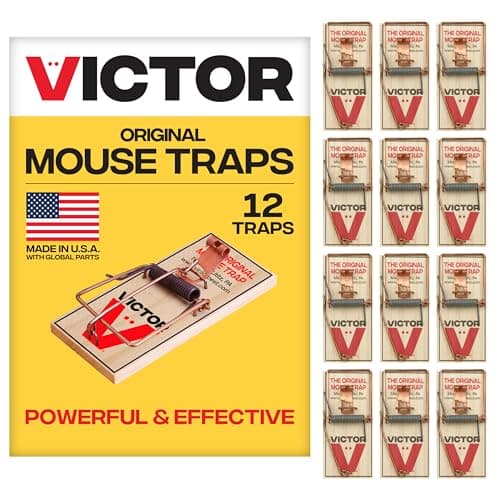 Our pickVictor Metal Pedal Mouse Trap (M150)The wooden snap trap everything else is measured against. Cheap enough to set a dozen, which is how mouse trapping actually works. | Most homes, in quantity | Spring-loaded bar, metal pedal | $12.39View on Amazon Price as of November 11, 2026 |
| 2 | 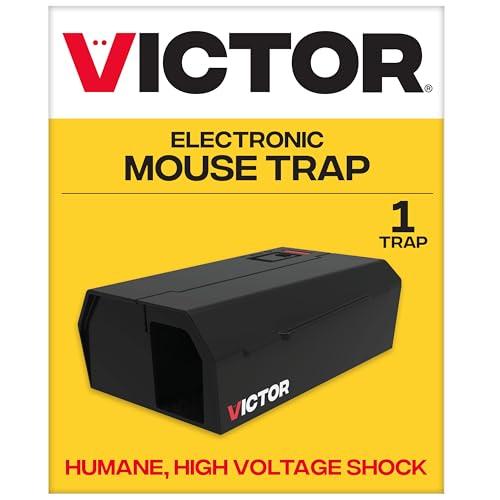 Victor Electronic Mouse TrapA battery tunnel that delivers a high-voltage shock. You tip the mouse out without seeing or touching it, which is the whole appeal. | No-touch disposal indoors | High-voltage shock inside a tunnel | $19.97$31.7137% offView on Amazon Price as of November 11, 2026 |
| 3 | 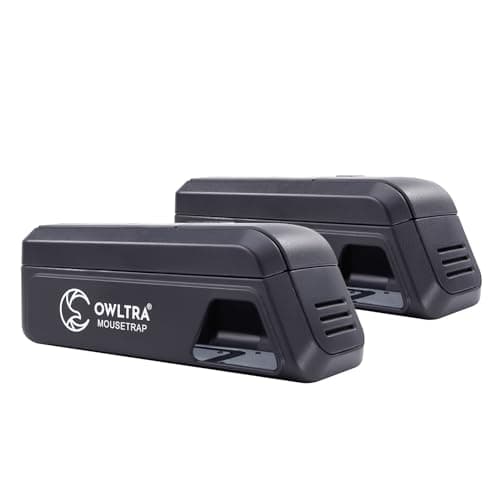 OWLTRA OW-2 Indoor Electric Mouse TrapA shock chamber with an infrared sensor at each end, so it fires only with a rodent fully inside. The magnetic lid means the mouse goes in the bin without being seen or touched. | No-touch disposal, sold in pairs | High-voltage shock chamber | $37.99View on Amazon Price as of November 11, 2026 |
| 4 | 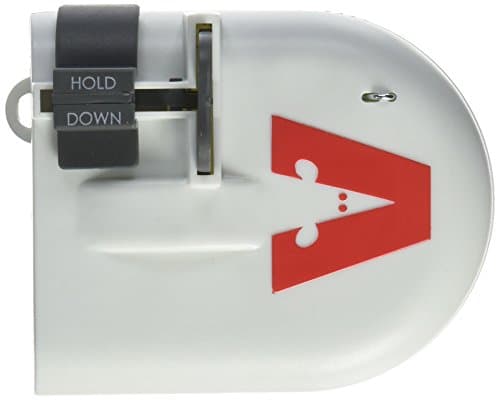 Victor Kill Vault Mouse Trap (M267)A snap trap sealed inside a plastic vault. The kill happens out of sight and out of reach, and you never touch the mouse. | Homes with a dog or a toddler | Enclosed snap bar in a sealed chamber | $6.57View on Amazon Price as of November 11, 2026 |
#ad — every price link goes to Amazon and Swat & Snap earns a commission on qualifying purchases. Prices are pulled live from the retailer; where one is not available the button reads “Check price on Amazon” rather than showing a stale number.
Victor Metal Pedal Mouse Trap (M150)
Victor · Most homes, in quantity
The wooden snap trap everything else is measured against. Cheap enough to set a dozen, which is how mouse trapping actually works.
- Costs little enough that quantity stops being a decision
- The metal pedal fires on weight, so a mouse cannot lick the bait off
- Nothing to charge, nothing to refill
- You see the result, and you have to handle it
- Exposed bar is a genuine hazard to a dog's nose or a toddler's fingers
Victor Electronic Mouse Trap
Victor · No-touch disposal indoors
A battery tunnel that delivers a high-voltage shock. You tip the mouse out without seeing or touching it, which is the whole appeal.
- The tunnel is the safety feature — a dog's nose does not fit the plates
- Indicator light means you are not checking traps blind
- Tip-out disposal, no handling
- Batteries die, usually unnoticed, and a dead trap catches nothing
- Has to sit flat against a wall run or mice walk past it
OWLTRA OW-2 Indoor Electric Mouse Trap
OWLTRA · No-touch disposal, sold in pairs
A shock chamber with an infrared sensor at each end, so it fires only with a rodent fully inside. The magnetic lid means the mouse goes in the bin without being seen or touched.
- Two infrared sensors mean it triggers on a rodent inside the chamber, not on a paw at the entrance
- The lid lifts off magnetically and the trap deactivates, so emptying it is genuinely no-touch
- Sold as a pair, so you can cover two runs at once
- Indoor use only — the manufacturer warns against putting it outside
- Bigger footprint than a snap trap, so it is awkward behind an appliance
- Costs several snap traps, and mouse control wants numbers
Victor Kill Vault Mouse Trap (M267)
Victor · Homes with a dog or a toddler
A snap trap sealed inside a plastic vault. The kill happens out of sight and out of reach, and you never touch the mouse.
- The enclosure is the reason to buy it: a dog cannot get to the bar
- Seals after firing, so there is no smell and nothing to see
- Sets by pressing the lid, not by arming a bar with your fingers
- Single-use, so a real infestation gets expensive
- Bulkier than a bare snap trap in a tight wall run
Where each one is clearly the wrong buy
Do not buy electronic traps for an active, multi-mouse infestation and nothing else. One unit, one catch per reset, a wait between each. You will be at this for weeks. Run snap traps in quantity to break the back of it, then keep the electronic trap as the long-term monitor.
Do not buy electronic traps for an unheated garage or a damp crawl space. Cold shortens battery life and damp is an enemy of any battery-powered electronics left out for months. A snap trap does not care. This is why mouse traps for the garage and outdoor mouse traps lean mechanical.
Do not buy bare snap traps if a pet or a toddler can reach where they go. Use the enclosed version instead; the economics barely change and the risk goes away.
Do not buy either if the mice are very small. Young mice and some species can trip a trap without weighing enough to fire it properly. Mouse traps for small mice covers the sensitivity problem, and a metal-pedal snap trap is usually the fix because it fires on weight rather than on a nibble.
Do not buy either as a substitute for sealing. Traps clear the mice that are inside. They do nothing about the gap that let them in, which is a separate job with separate materials — steel wool and copper mesh for mouse holes is the one that stops this repeating next autumn.
What it actually costs to finish the job
The sticker price on one trap is a bad guide, because nobody clears an infestation with one trap. Cost the campaign instead.
The snap-trap campaign. A pack of a dozen metal-pedal traps costs roughly what a single electronic unit does. You set all twelve on night one across every run you can find, you lose two or three to false fires and bait theft without caring, and the catching is usually finished inside two weeks. If you dispose of each sprung trap with the mouse still in it — which is what most people do — the whole campaign has still cost you about the price of one electronic trap and a jar of peanut butter.
The electronic campaign. One unit, reset after every catch. It will keep working for years, so over a long horizon the per-catch cost falls below a disposable snap trap. But the clock on an active infestation is not years, it is nights, and a single unit covers a single runway. Buying four to get real coverage costs several times what the snap-trap route costs, which is exactly why almost nobody does it.
Where the money actually leaks. Not into traps. It leaks into repeat seasons — buying traps again every autumn because the gap that let the mice in is still open. The materials to close it cost less than either campaign and only have to be bought once. That is the comparison nobody runs, and it is the one that matters most.
So the honest cost framing is: snap traps are cheap enough that coverage is free, electronic traps are cheap enough over years but expensive at the moment you need coverage, and sealing is the only spend that stops you doing this again.
Bait and placement decide the result more than the type
Whichever you buy, the same two things decide whether it works, and neither is the trap.
Bait small, bait sticky. A pea-sized smear of peanut butter worked into the pedal is the standard, because the mouse has to work at it and cannot lift it off cleanly. The commonest baiting error is too much — a generous blob lets the mouse feed from the edge without ever putting weight where it matters. Nesting material works too, and in some seasons better. Best mouse trap bait has the full list.
Place against the wall, perpendicular, trigger end touching. Mice run with a flank against a vertical surface and rarely cross open floor. A trap in the middle of a room is decoration. Set traps in pairs a few inches apart on a known run — droppings and grease marks tell you where that is — and the catch rate changes more than any upgrade in trap type will. How to set mouse traps covers the mechanics, including arming one without catching your own finger.
What most households should actually buy
If this is an active problem and you want it finished: a dozen metal-pedal snap traps. The cost of twelve is still less than one electronic trap, the coverage is what ends infestations, and you can lose a few to false fires without caring.
If you have a dog, a cat or a toddler: enclosed snap traps for the quantity, or an electronic tunnel if you would rather one good unit and no exposed mechanism anywhere.
If what is stopping you is the dead mouse: an electronic trap, without apology. A trap you will keep resetting beats a cheaper trap you will not.
If the trapping is in an attic or a crawl space you hate entering: an electronic trap with an indicator light, checked from the hatch.
Realistically, for most people with a real infestation: both. Snap traps in quantity to clear it, one electronic trap left running afterwards as the early-warning system that tells you whether it is back. That combination costs less than two electronic traps and works considerably better than either on its own.
Then seal the gaps, because none of this is permanent until you do. The full sequence is in how to get rid of mice, and the model-level picks are in best mouse traps and best electronic mouse traps.
Frequently asked
Are electronic mouse traps better than snap traps?
Which is safer around pets, an electronic or a snap trap?
How many electronic mouse traps do I need?
Do electronic mouse traps work in a cold garage?
Are electronic mouse traps reusable?
Why is my trap not catching anything?
Should I use snap traps or electronic traps for a big infestation?
More on mice
One mouse is rarely one mouse. This hub covers what kills them, what only looks like it does, and where to put the thing you buy.
Not sure yet? Read how we pick.
Ryder M.
Ryder M. is the hands-on owner behind Magoo Media Group. He writes Swat & Snap because he got tired of pest-control advice that was either a sales pitch or a scare story.
Related on Swat & Snap
- The best mouse traps, by situationSix traps chosen by situation — cheap and plentiful, pet-safe by design, no-touch, or live catch.
- The best electronic mouse trapsNo-touch disposal and a tunnel a dog's nose will not fit. Which models survive real use.
- Best enclosed mouse trapsCovered snap, electronic and live traps that hide the catch and keep fingers and paws off the mechanism.
- How many mouse traps do I need?The trap count that actually ends an infestation, broken down by room and by house size.
- Where to place mouse trapsHow to read a runway, how to orient a trap, and the three rooms people forget to cover.
- Pet-safe mouse trapsEnclosed and tunnel traps that are safe because of their geometry, plus a free way to make any trap safer.