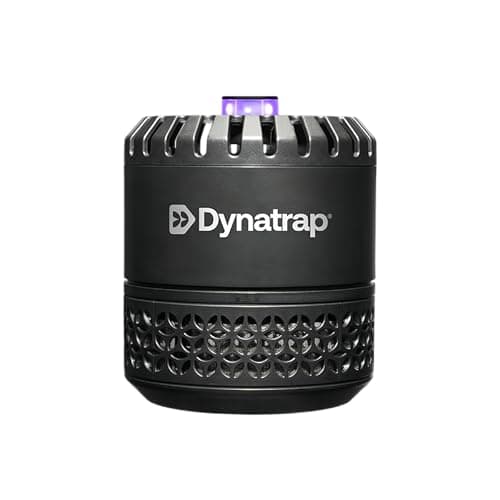
Best fly traps for a kitchen
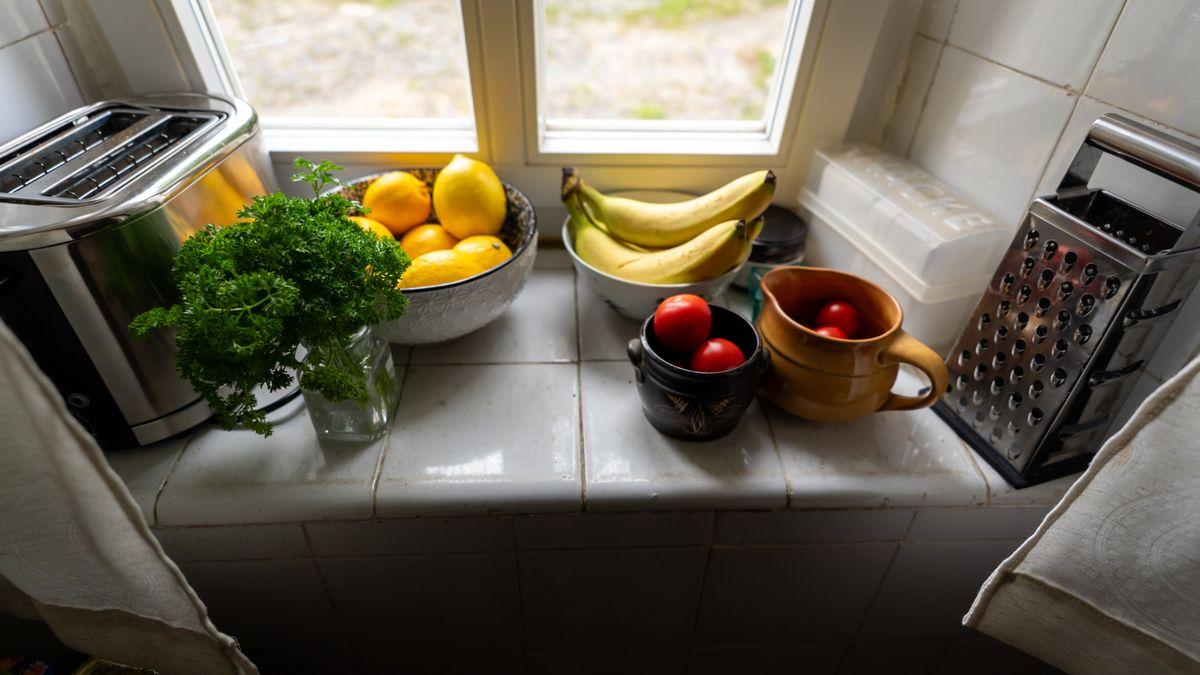
A kitchen is the hardest room in the house to put a fly trap in. It has to work within a few feet of food, it cannot shatter insects over a worktop, and you have to be willing to look at it every day. That rules out most of the aisle and leaves three good answers.
By Ryder M.Published Updated
Swat & Snap earns a commission from qualifying purchases made through the links on this page, at no extra cost to you. It does not change which products we pick — see how we pick and our affiliate disclosure.
First, work out which fly you have
This is not pedantry — buying the wrong trap is the most common reason a kitchen fly trap "does not work", because the two main offenders respond to completely different attractants.
House flies are big, fast, land on surfaces and buzz around the window. They come in from outside, they navigate partly by light, and they are drawn to protein and waste. A light-based trap works on them. A fermentation lure largely does not.
Fruit flies are tiny, slow, hover around the fruit bowl, the bin and the sink. They are drawn to fermenting sugar — ripe fruit, a splash of wine, cider vinegar, the slime in a drain. A cheap vinegar-type lure trap works on them extremely well. A light trap barely touches them.
Fungus gnats are tiny, dark and drift up from houseplant soil when you water. Neither of the above. They want a sticky card at soil level and less watering.
Drain flies are small, furry, moth-like and sit on walls near the sink. They breed in the biofilm inside a drain, and no trap of any kind fixes them — cleaning the drain does.
Three minutes with gnats vs fruit flies vs drain flies will tell you which you are dealing with, and it is the highest-value three minutes on this page.
Why a kitchen rules out most traps
No grids. An electrified zapper shatters the insect and the fragments travel. Over a worktop, a hob or an open pan, that is a contamination route, which is exactly why commercial kitchens use glue-board light traps rather than grids. Are bug zappers safe covers the wider point; in a kitchen it is not a close call.
No open bait pots. A jar of vinegar with cling film over it works, and it is also an open jar of vinegar on your counter with flies in it. Sealed lure traps exist for this reason, and they cost a few dollars.
It has to be discreet. The honest constraint nobody states: a kitchen gadget you find ugly gets unplugged and put in a drawer, and an unplugged trap catches nothing. A low-profile plug-in at baseboard level survives in a kitchen; a large white box on the counter does not.
Low-level placement beats high. House flies in a kitchen cruise at mid height but rest low and are drawn to a light source near the floor at night when the room lights are off. A socket-level unit in a corner, out of the main light, works better than a device on a shelf.
Quick picks
| # | Product | Best for | Mechanism | Price |
|---|---|---|---|---|
| 1 | 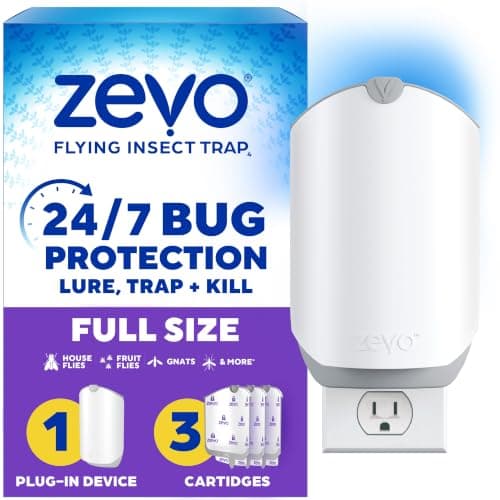 Our pickZevo Flying Insect TrapA plug-in that pairs blue and UV light with a sticky cartridge. It runs quietly in the background, which is exactly what people want from a fly problem. | Rooms you want handled passively | Blue + UV light, sticky cartridge | $25.96View on Amazon Price as of November 11, 2026 |
| 2 | 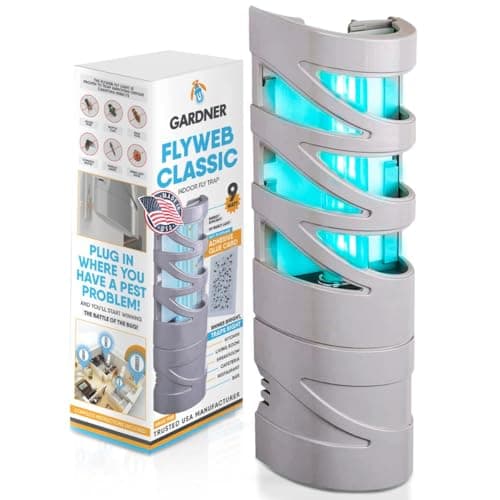 Gardner FlyWeb Indoor Fly LightA plug-in UV light over a glue card. No zap, no smell, and it works on house flies that ignore a fruit fly lure. | Quiet indoor fly control | UV light + glue card | $54.95View on Amazon Price as of November 11, 2026 |
| 3 | 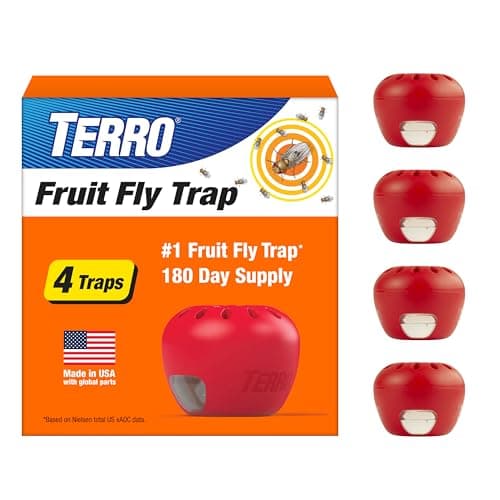 TERRO Fruit Fly Trap, 4-Pack (T2503SR)An apple-shaped lure trap that works because the liquid inside is a real fermentation attractant, not because of the shape. | Kitchen counters | Liquid food-based lure | $12.19$15.9924% offView on Amazon Price as of November 11, 2026 |
| 4 | 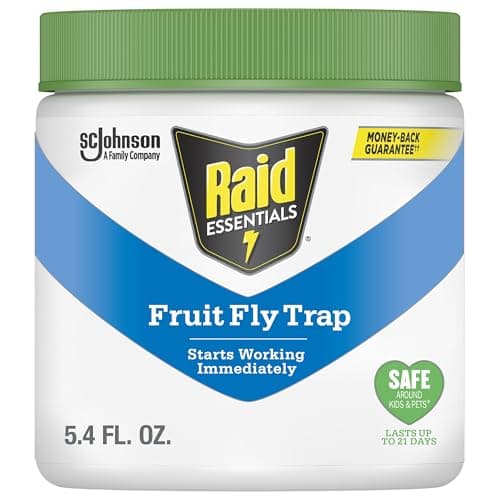 Raid Essentials Fruit Fly TrapA sealed liquid lure trap that does the same job as the better-known apple-shaped one, usually for less. The lure is the product; the housing is just a housing. | A cheaper sealed lure trap | Liquid food-based lure | $6.99View on Amazon Price as of November 11, 2026 |
| 5 | 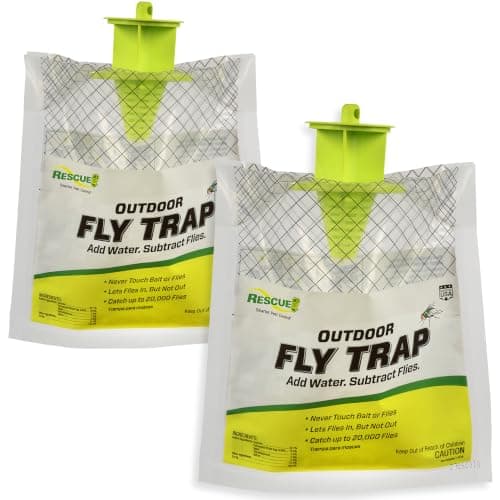 RESCUE! Non-Toxic Disposable Fly TrapA hanging bag with a powerful bait. Effective, genuinely foul-smelling, and therefore a product you hang well away from the door you use. | Outdoor house flies | Water-activated attractant bag | $11.92$14.9920% offView on Amazon Price as of November 11, 2026 |
#ad — every price link goes to Amazon and Swat & Snap earns a commission on qualifying purchases. Prices are pulled live from the retailer; where one is not available the button reads “Check price on Amazon” rather than showing a stale number.
Zevo Flying Insect Trap
Zevo · Rooms you want handled passively
A plug-in that pairs blue and UV light with a sticky cartridge. It runs quietly in the background, which is exactly what people want from a fly problem.
- No zapping noise and no insect debris — it is a sticky pad behind a light
- Catches gnats and small flies that a vinegar trap ignores
- Cartridges are an ongoing cost that outruns the unit price fast
- Needs a dark room to compete with daylight
Gardner FlyWeb Indoor Fly Light
Gardner · Quiet indoor fly control
A plug-in UV light over a glue card. No zap, no smell, and it works on house flies that ignore a fruit fly lure.
- Silent and debris-free, which a zapper indoors is not
- Card hides the catch, so it is not a display of dead flies
- Only pulls flies within a room, and only in low light
- Glue cards need replacing more often than the box implies
TERRO Fruit Fly Trap, 4-Pack (T2503SR)
Terro · Kitchen counters
An apple-shaped lure trap that works because the liquid inside is a real fermentation attractant, not because of the shape.
- The lure outperforms homemade vinegar in a side-by-side on the same counter
- Sealed, so there is no open dish of vinegar to knock over
- Catches flies; does nothing about the drain or bin that is breeding them
- Thirty days and it is done — no refill
Raid Essentials Fruit Fly Trap
Raid · A cheaper sealed lure trap
A sealed liquid lure trap that does the same job as the better-known apple-shaped one, usually for less. The lure is the product; the housing is just a housing.
- Sealed, so there is no open dish of vinegar to knock over on a worktop
- Widely stocked, which matters when you want it today rather than Thursday
- Catches adults only — the drain or bin breeding them is untouched
- Thirty days and it is spent, with no refill option
RESCUE! Non-Toxic Disposable Fly Trap
RESCUE! · Outdoor house flies
A hanging bag with a powerful bait. Effective, genuinely foul-smelling, and therefore a product you hang well away from the door you use.
- Pulls flies away from a patio better than anything else at the price
- Nothing to plug in, nothing to refill
- The smell is the mechanism — hang it close and you have made things worse
- Full bags are unpleasant to take down
Where to put it
Away from the window and away from the main light. A light-based trap competes with every other light in the room. It needs a dim corner — behind the bin, beside the fridge, in the gap under a wall cabinet — to be the brightest thing an insect can see.
At socket height, not on the worktop. Lower is better and it keeps the device out of the food zone entirely.
Near the source, not near where you see them. Flies accumulate where you notice them and breed somewhere else. The bin, the recycling, the fruit bowl, the bottom of the vegetable rack, the sink overflow, the crack behind the bin cupboard.
Not next to the back door. This is the one everybody gets wrong. A trap by an open door draws flies in from the garden. Put the indoor trap deep in the room and put a disposable outdoor trap well away from the door, downwind — ten to fifteen feet is enough. Keeping flies off food outdoors has the outside version.
Leave it running. A trap switched on when you see a fly is a trap doing nothing. These are passive devices; their job is to be on.
The part that makes the trap unnecessary
Flies in a kitchen are a symptom of a food source, and a trap catches the symptom. Twenty minutes removes the cause.
The bin. A lid that actually seals, a liner changed before it needs changing, and a rinse of the bin itself — the residue at the bottom is where the breeding happens. In a warm kitchen, a fruit fly goes from egg to adult in about a week, so a bin emptied weekly can sustain a continuous population.
The fruit bowl. Overripe fruit, especially split or bruised, is the prime breeding site. Refrigerate what is turning and bin the rest.
The drain and overflow. Run hot water, brush the overflow with a bottle brush and an enzyme or a biological cleaner. Bleach poured down a drain does little to the biofilm, which is what the larvae live in. Drain flies in the sink is the dedicated page.
The forgotten liquid. Half a glass of wine, a splash in the recycling, the cat's water bowl, a mop bucket, the drip tray under the fridge.
The bag of potatoes or onions at the back of the cupboard. A single rotting potato will out-produce every trap in this list.
Do that first, then let the trap mop up what is already flying. The full sequences are how to get rid of fruit flies and how to get rid of house flies, and what attracts fruit flies is the shortest useful read if you want to know why they picked your kitchen.
Which one to buy
House flies, normal domestic kitchen: the discreet plug-in light trap at socket level in a dim corner.
House flies, busy or commercial kitchen: the sticky-board light trap. Bigger lamp, replaceable board, nothing shattered, and it is what food-safety inspectors expect to see. Best fruit fly traps for restaurants covers the commercial context.
Fruit flies: a sealed fermentation lure trap, two of them — one by the fruit bowl, one by the bin. A few dollars, and far more effective on fruit flies than anything that glows. Best fruit fly traps and best fruit fly traps under $25.
Fungus gnats from houseplants: sticky stakes in the soil and water less often. Best gnat traps.
Flies coming in the back door: a disposable outdoor trap hung ten to fifteen feet away from the door, and a fly screen if you want the real fix. Best fly traps for patios.
Frequently asked
What is the best fly trap for a kitchen?
Can I use a bug zapper in a kitchen?
Why is my kitchen fly trap not catching anything?
Where should a kitchen fly trap go?
Do I need a trap at all?
How long does it take to clear kitchen flies?
More on fruit flies & gnats
Tiny flies in the kitchen are almost never one problem. Identify which of the three you have, then treat the source — the trap alone never finishes it.
Not sure yet? Read how we pick.
Ryder M.
Ryder M. is the hands-on owner behind Magoo Media Group. He writes Swat & Snap because he got tired of pest-control advice that was either a sales pitch or a scare story.
Related on Swat & Snap
- The best fruit fly trapsLure traps, plug-in lights and sticky stakes, matched to where the flies actually are.
- The best plug-in fly trapsSilent light traps for whole-room fly control — and the running cost nobody mentions.
- How to get rid of house fliesWhere they breed outside, how they get in, and the traps that work on flies this size.
- Gnats vs fruit flies vs drain fliesBehavior, not anatomy: the one-minute test that tells you which tiny fly you have.
- Best fruit fly traps under $25Five fruit fly and gnat traps that each sat under $25 at the last price check, including the cheapest sealed lure trap and the sticky stakes for houseplants.
- Alternatives to ZevoWhat the Zevo trap does well, and five picks that match it with no sticky refills, a cheaper board, or a better fit for fruit flies and gnats.