Best mouse traps for sheds
The problem with trapping mice in a shed is not the mice. It is that you open the door on a Saturday, find one sprung trap and eleven empty ones, and the next ten mice came and went while the trap sat there used. A shed needs devices that keep catching between visits.
By Ryder M.Published Updated

Swat & Snap earns a commission from qualifying purchases made through the links on this page, at no extra cost to you. It does not change which products we pick — see how we pick and our affiliate disclosure.
The shed problem: nobody is watching
A kitchen gets looked at twenty times a day. A shed gets looked at once a week, and in winter once a month. Everything about choosing a trap for a shed follows from that single fact.
A standard snap trap is a one-shot device. It catches the first mouse, then it is a used trap — and it stays a used trap for six days while the rest of the population walks past it. In a house that barely matters because you reset it the same evening. In a shed it is most of the reason people conclude "my traps do not work".
So the shed hierarchy is:
- A device that resets itself and keeps catching unattended.
- Enough one-shot traps that running out of live traps takes a while.
- Something that makes the shed less attractive while you are not there.
Why a bucket trap is the right first buy here
A flip-lid bucket trap works on a simple principle: the mouse walks out along a pivoting lid to reach the bait, the lid tips, the mouse drops into the bucket, and the lid swings back level and armed. Nothing has to be re-set by hand, and the device is live again seconds after a catch.
That is exactly the property a shed needs. One bucket trap by the door or under the bench can account for several mice over a week, which no snap trap can do.
Two things to get right. Give the mice a ramp — a plank, an offcut, a sack leaned on the rim — because a bucket they cannot climb is a bucket. And run it dry, not with water in it: in a shed it will freeze, a frozen bucket catches nothing, and we are not going to recommend drowning. Dry means you will find live mice in it, which means deciding in advance what you are going to do with them. What to do with a mouse in a trap covers that honestly, and bucket mouse traps goes deeper on the mechanism.
Damp and cold rule out the electronics
A shed is an unheated, humid, dusty building. That is a hostile environment for anything with a battery and a circuit board.
Cold shortens battery life substantially, and a flat battery in an electronic trap is a dead trap you will not discover until your next visit. Condensation on plates and contacts is a second failure mode. Electronic traps are genuinely good products in a heated house — see best electronic mouse traps — and a shed is the wrong building for them.
The same logic applies to anything mains-powered or ultrasonic. An ultrasonic plug-in does not work well anywhere, and a shed full of shelves, tools and stacked pots is the worst case for it, because the sound does not pass through objects. Do ultrasonic repellers work sets out what the evidence actually supports.
Mechanical traps have no power source, do not mind the damp, and cost little enough that you can write off a season's worth. In a shed, that is the whole argument.
Quick picks
| # | Product | Best for | Mechanism | Price |
|---|---|---|---|---|
| 1 | 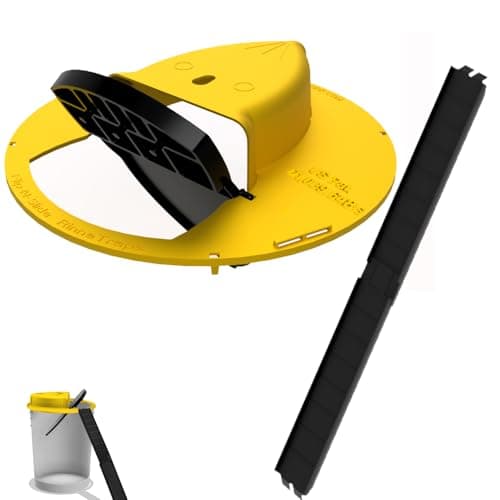 Our pickFlip N Slide Bucket Lid Mouse TrapA lid that turns any five-gallon bucket into a multi-catch trap. The one design here that keeps working after the first mouse, which is why it suits a shed you visit weekly. | Catching several mice unattended | Flipping ramp over a bucket | $19.98View on Amazon Price as of November 11, 2026 |
| 2 | 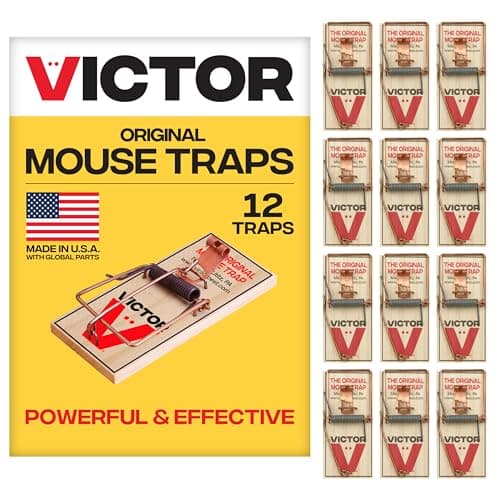 Victor Metal Pedal Mouse Trap (M150)The wooden snap trap everything else is measured against. Cheap enough to set a dozen, which is how mouse trapping actually works. | Most homes, in quantity | Spring-loaded bar, metal pedal | $12.39View on Amazon Price as of November 11, 2026 |
| 3 | 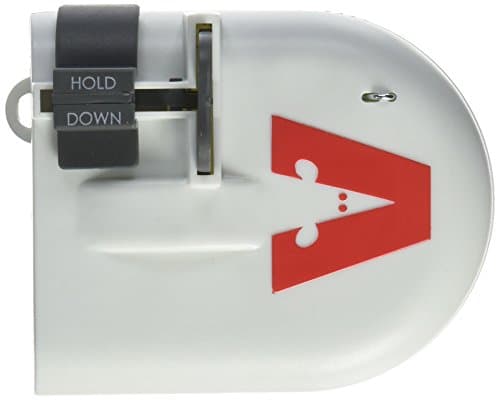 Victor Kill Vault Mouse Trap (M267)A snap trap sealed inside a plastic vault. The kill happens out of sight and out of reach, and you never touch the mouse. | Homes with a dog or a toddler | Enclosed snap bar in a sealed chamber | $6.57View on Amazon Price as of November 11, 2026 |
| 4 |  Fresh Cab Botanical Rodent RepellentBalsam fir pouches, EPA minimum-risk registered. Useful for keeping mice out of a space nobody is using; not a solution for an active infestation. | Stored vehicles and cabins | Balsam fir oil | $25.00View on Amazon Price as of November 11, 2026 |
#ad — every price link goes to Amazon and Swat & Snap earns a commission on qualifying purchases. Prices are pulled live from the retailer; where one is not available the button reads “Check price on Amazon” rather than showing a stale number.
Flip N Slide Bucket Lid Mouse Trap
RinneTraps · Catching several mice unattended
A lid that turns any five-gallon bucket into a multi-catch trap. The one design here that keeps working after the first mouse, which is why it suits a shed you visit weekly.
- Resets itself, so one set covers a week in a shed or a barn
- Works as a live trap with a dry bucket, or a kill trap with water — you decide
- Nothing to arm, so there is no spring to fire on a finger
- A bucket in the middle of a room is not a subtle piece of furniture
- Used with water it drowns the mouse, which is a slow death — dry-bucket use needs twice-daily checks
Victor Metal Pedal Mouse Trap (M150)
Victor · Most homes, in quantity
The wooden snap trap everything else is measured against. Cheap enough to set a dozen, which is how mouse trapping actually works.
- Costs little enough that quantity stops being a decision
- The metal pedal fires on weight, so a mouse cannot lick the bait off
- Nothing to charge, nothing to refill
- You see the result, and you have to handle it
- Exposed bar is a genuine hazard to a dog's nose or a toddler's fingers
Victor Kill Vault Mouse Trap (M267)
Victor · Homes with a dog or a toddler
A snap trap sealed inside a plastic vault. The kill happens out of sight and out of reach, and you never touch the mouse.
- The enclosure is the reason to buy it: a dog cannot get to the bar
- Seals after firing, so there is no smell and nothing to see
- Sets by pressing the lid, not by arming a bar with your fingers
- Single-use, so a real infestation gets expensive
- Bulkier than a bare snap trap in a tight wall run
Fresh Cab Botanical Rodent Repellent
Earth-Kind · Stored vehicles and cabins
Balsam fir pouches, EPA minimum-risk registered. Useful for keeping mice out of a space nobody is using; not a solution for an active infestation.
- The one repellent category with a real use case: sealed, unoccupied storage
- No mechanism to fail, nothing to reset
- A mouse already nesting in your wall will not leave because of a pouch
- Strong pine smell in a lived-in room
Where to put them
A shed is small enough to cover properly, which is a luxury.
- The wall line behind everything. Pull the mower and the stack of pots out a few inches and run traps along the base of the wall behind them. That is the route.
- The door threshold. Most sheds have a gap under the door and that is the main entrance.
- Under the bench and behind the shelf uprights, where the droppings are.
- Inside anything soft. Stored cushions, a rolled tent, a bag of bird seed, the mower's engine housing. Those are nest sites, not travel routes, and they want a repellent rather than a trap.
Look before you place. Droppings, shredded insulation or fabric, chewed seed packets, and a smell. Signs of mice in the house applies to a shed without modification.
What mice are doing in your shed in the first place
Three things, usually, and all three are fixable:
Seed and feed. Bird seed, grass seed, bulbs, pet food, fertilizer with fish meal in it. Put every one of them in a lidded metal or hard plastic container. This is the single highest-value change you can make.
Soft nesting material. Cushions, fleece, cardboard, insulation, a rolled-up tarp. Get fabric into sealed boxes and cardboard off the floor.
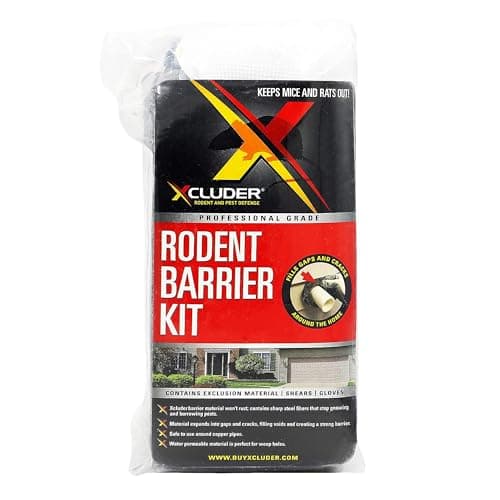
A gap. Under the door, around the cable entry, at the corner where the floor meets the wall, or a knot hole in a plank. A mouse needs about a quarter of an inch. Stuff it with stainless or copper mesh and cap it — steel wool and copper mesh for mouse holes has the materials, and a shed is far easier to seal than a house because you can see all four walls.
Fix those three and the trapping becomes a mopping-up operation rather than a permanent subscription.
The winter play
Most sheds get shut in November and opened in March, and that is precisely when mice move in. Traps you cannot check for four months are not a plan, and a mouse dead in a closed shed in February is a smell problem by April.
What works over winter is making the contents unattractive rather than lethal. A botanical pouch repellent in the mower housing, inside the stored cushions, in the drawer of the workbench and in the seed box is low-effort maintenance that needs replacing every month or two rather than checking weekly. It is not a substitute for sealing and it will not clear an existing infestation, but as a winter holding action in a building nobody enters, it is the right tool. The honest limits are in best mouse repellents for sheds and best mouse repellent pouches.
Then in spring: open up, check, set the bucket trap and half a dozen snap traps for a fortnight, and seal whatever gap the winter revealed. How to get rid of mice is the full sequence for the house, and a shed is the easy version of it.
Frequently asked
What is the best mouse trap for a shed?
Should I use an electronic mouse trap in a shed?
Do mouse repellents work in a shed?
How do mice get into a shed?
What attracts mice to a shed?
Can I leave traps in a shed over winter?
More on mice
One mouse is rarely one mouse. This hub covers what kills them, what only looks like it does, and where to put the thing you buy.
Not sure yet? Read how we pick.
Ryder M.
Ryder M. is the hands-on owner behind Magoo Media Group. He writes Swat & Snap because he got tired of pest-control advice that was either a sales pitch or a scare story.
Related on Swat & Snap
- Best mouse repellents for shedsBalsam fir pouches for a closed shed, peppermint for drawers and engines, spray for surfaces, and an enclosed trap for when mice are already in.
- The best bucket mouse trapsSelf-resetting lid and plank designs for sheds and barns, plus the honest verdict on the water question.
- The best mouse traps for outdoorsWeatherproof boxed sets and the traps to put in them, plus where mice actually run outdoors.
- The best mouse traps for the garageTraps for the room mice actually enter through — cold-weather baiting, quantity, and the stored-car problem.
- Best mouse traps for barnsVolume trapping for a building with feed in it: cheap snap traps by the dozen, two bucket traps for unattended catching, and locked housings where livestock can reach.
- Best steel wool and copper mesh for mouse holesStainless fill fabric, copper mesh, 1/4-inch hardware cloth and pest-block foam — which gap each one is for, and the mistake that undoes the whole job.