Best mouse traps for barns
A barn gives mice everything they want at once: spilled grain, deep bedding, a hundred feet of undisturbed wall line and a roof. Trapping one is a volume job, not a one-trap job, and every device you put down has to be safe around animals that investigate with their mouths.
By Ryder M.Published Updated

Swat & Snap earns a commission from qualifying purchases made through the links on this page, at no extra cost to you. It does not change which products we pick — see how we pick and our affiliate disclosure.
Why a barn is a different problem from a house
In a house, mice are visitors exploiting a gap. In a barn they are residents, and the building is doing everything it can to keep them.
There is food on the floor. Spilled grain, sweet feed, cracked corn, dropped hay. A barn feed room is the richest calorie source on the property and no amount of trapping changes that.
There is nesting material everywhere. Straw, shavings, loose twine, insulation. You are not going to remove it.
You cannot seal the building. A barn has a dirt floor, a gap under every door, vents you need open and a hundred yards of siding. Exclusion, which is the permanent fix in a house, is mostly unavailable here. Steel wool and copper mesh still has a place around the feed room door and the grain bin, and that is where to spend the effort.
And there are animals. Everything you put down is reachable by something with a nose. That is the constraint that eliminates most of the aisle.
What this adds up to is simple: in a barn, you manage the population rather than eliminate it, and you manage it with cheap devices in large numbers, placed where livestock cannot get them.
Volume beats cleverness
The feed room wall line is the whole game. Mice travel with a flank against a vertical surface, so the inside perimeter of a feed room is a mouse highway, and twenty cheap traps along it will out-catch two expensive traps anywhere else by a wide margin.
A practical layout:
- Feed room: traps every three to four feet along the full inside perimeter, pedal end to the wall, concentrated behind and under the bins where droppings accumulate.
- Tack room: the same, plus the corners of any cupboard with leather or feed supplements in it.
- Open bay and stalls: along the base of the wall behind stacked bales, not out in the aisle where a hoof or a paw finds them.
- Grain bin base: a bucket trap, because that is where traffic is heaviest and where a multi-catch device earns its keep.
Set the whole lot on the same evening. Mice are wary of new objects for a few nights, and putting everything down at once means the wariness expires everywhere simultaneously instead of you chasing the problem round the building for a month. How many mouse traps do I need makes the same argument for a house, and a barn is the amplified version.
The livestock rule
This is the part worth getting right, because a bare snap trap is a genuine injury risk to a curious muzzle or paw, and a barn cat will investigate anything.
Anywhere an animal can reach, the mechanism goes in a housing. A locked bait station with a snap trap bolted inside, or an enclosed snap trap, or a bucket trap with its lid in place. The entrance is mouse-sized; nothing bigger gets in.
Bare traps only behind a barrier. Behind the feed bin, inside a closed cupboard, in the gap behind stacked bales where a horse cannot get a nose in. If you cannot describe the barrier, use a housing instead.
Poison is a bad fit for a barn, and worse than usual. A barn is where the cats, the dogs, the owls and the hawks hunt, and a poisoned rodent is the easiest meal on the property. That is the definition of secondary exposure. If you keep working cats, poison and cats are not compatible on the same site. Mouse trap vs poison has the full case, and is there pet-safe rat poison answers the question people usually ask next.
Quick picks
| # | Product | Best for | Mechanism | Price |
|---|---|---|---|---|
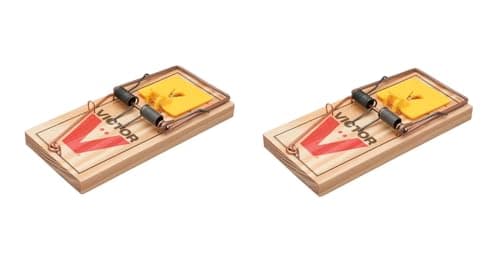
| 1 | 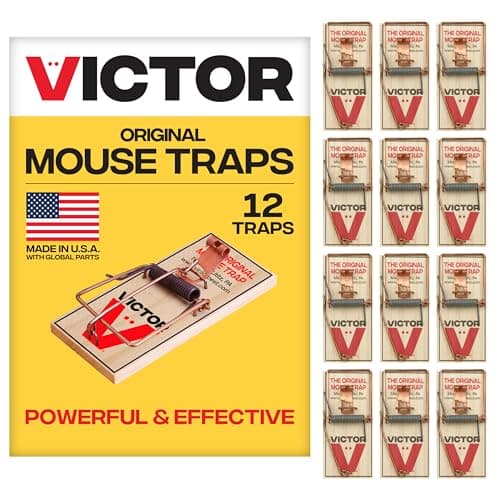 Our pickVictor Metal Pedal Mouse Trap (M150)The wooden snap trap everything else is measured against. Cheap enough to set a dozen, which is how mouse trapping actually works. | Most homes, in quantity | Spring-loaded bar, metal pedal | $12.39View on Amazon Price as of November 11, 2026 |
| 2 | 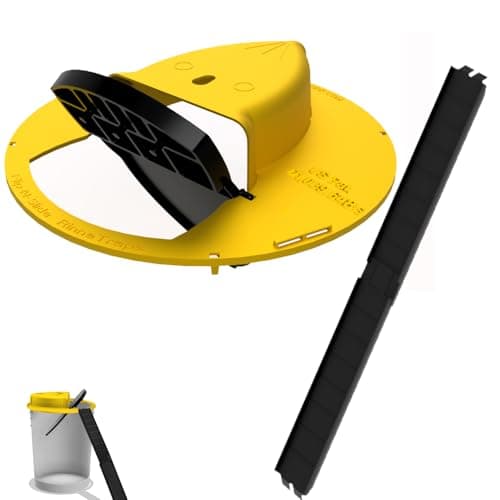 Flip N Slide Bucket Lid Mouse TrapA lid that turns any five-gallon bucket into a multi-catch trap. The one design here that keeps working after the first mouse, which is why it suits a shed you visit weekly. | Catching several mice unattended | Flipping ramp over a bucket | $19.98View on Amazon Price as of November 11, 2026 |
| 3 | 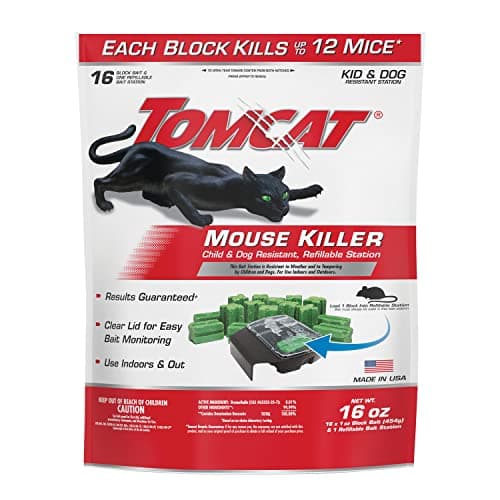 Tomcat Child & Dog Resistant Refillable Mouse StationA locking station for people who have decided on bait. The station is the safety feature; the bait inside it still carries a secondary-poisoning risk. | Bait that must stay out of reach | Locked tamper-resistant station | $8.00$12.9938% offView on Amazon Price as of November 11, 2026 |
| 4 | 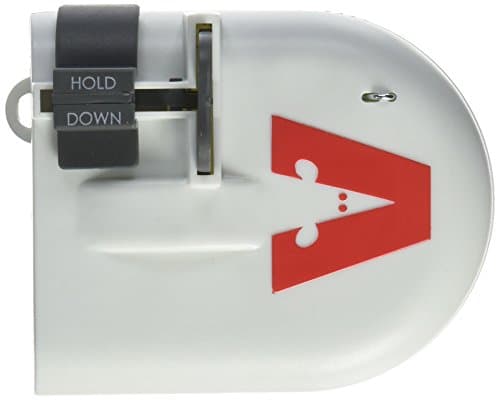 Victor Kill Vault Mouse Trap (M267)A snap trap sealed inside a plastic vault. The kill happens out of sight and out of reach, and you never touch the mouse. | Homes with a dog or a toddler | Enclosed snap bar in a sealed chamber | $6.57View on Amazon Price as of November 11, 2026 |
| 5 | 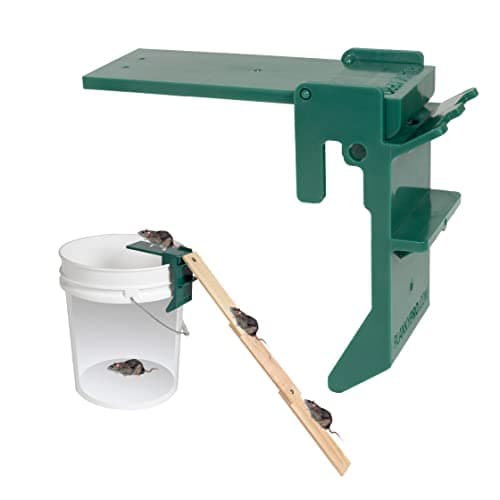 Walk the Plank Bucket Mouse TrapA see-saw plank that clamps to the rim of a bucket and tips the mouse in. Simpler than the lid designs and easier to store between seasons. | A bucket trap that packs flat | Counterweighted tipping plank | $16.99View on Amazon Price as of November 11, 2026 |
#ad — every price link goes to Amazon and Swat & Snap earns a commission on qualifying purchases. Prices are pulled live from the retailer; where one is not available the button reads “Check price on Amazon” rather than showing a stale number.
Victor Metal Pedal Mouse Trap (M150)
Victor · Most homes, in quantity
The wooden snap trap everything else is measured against. Cheap enough to set a dozen, which is how mouse trapping actually works.
- Costs little enough that quantity stops being a decision
- The metal pedal fires on weight, so a mouse cannot lick the bait off
- Nothing to charge, nothing to refill
- You see the result, and you have to handle it
- Exposed bar is a genuine hazard to a dog's nose or a toddler's fingers
Flip N Slide Bucket Lid Mouse Trap
RinneTraps · Catching several mice unattended
A lid that turns any five-gallon bucket into a multi-catch trap. The one design here that keeps working after the first mouse, which is why it suits a shed you visit weekly.
- Resets itself, so one set covers a week in a shed or a barn
- Works as a live trap with a dry bucket, or a kill trap with water — you decide
- Nothing to arm, so there is no spring to fire on a finger
- A bucket in the middle of a room is not a subtle piece of furniture
- Used with water it drowns the mouse, which is a slow death — dry-bucket use needs twice-daily checks
Tomcat Child & Dog Resistant Refillable Mouse Station
Tomcat · Bait that must stay out of reach
A locking station for people who have decided on bait. The station is the safety feature; the bait inside it still carries a secondary-poisoning risk.
- A dog cannot open it, which is the entire point of a station
- Refillable, so one station covers a long campaign
- Does nothing about secondary poisoning of a cat, an owl or a fox
- Mice die inside walls — a smell you cannot reach
Victor Kill Vault Mouse Trap (M267)
Victor · Homes with a dog or a toddler
A snap trap sealed inside a plastic vault. The kill happens out of sight and out of reach, and you never touch the mouse.
- The enclosure is the reason to buy it: a dog cannot get to the bar
- Seals after firing, so there is no smell and nothing to see
- Sets by pressing the lid, not by arming a bar with your fingers
- Single-use, so a real infestation gets expensive
- Bulkier than a bare snap trap in a tight wall run
Walk the Plank Bucket Mouse Trap
Walk the Plank · A bucket trap that packs flat
A see-saw plank that clamps to the rim of a bucket and tips the mouse in. Simpler than the lid designs and easier to store between seasons.
- Clamps on and off in seconds, and stores flat in a drawer
- Self-resetting, so the trap is still working on night five
- Waterproof ABS, so it survives a wet bucket and a winter in the garage
- The plank in the box is calibrated for smaller mice — a bigger plank is a separate purchase
- Needs the plank balanced correctly or it stops tipping
- Same welfare question as any bucket trap — see our note on water
Bucket traps earn their place here
In a house we are lukewarm about bucket traps, because a house gets checked often and a snap trap is simpler. A barn flips that.
You walk through a barn at feeding time, maybe twice a day, and you are not going to re-arm twelve traps in muck boots with a feed scoop in one hand. A bucket trap resets itself: the lid flips, the mouse drops, the lid returns, and the trap is live again for the next one. One unit can account for several mice between your visits, and that is the single most useful property a device can have in a building you visit on a schedule rather than continuously.
Two practical notes. Run it dry rather than with water in cold weather — a frozen bucket catches nothing and the welfare argument for drowning is not one we are going to make. And give the mice a way up: a plank, a length of two-by-four, a feed sack leaned against the rim. A bucket trap with no ramp is a bucket. Bucket mouse traps covers the mechanics, and do bucket traps work on rats is the honest answer for the larger animal, because a lot of barn rodent problems turn out to be rats.
Make sure it is mice
Worth five minutes before you buy twenty traps. Rat droppings are two to three times the size of mouse droppings and blunt-ended; mouse droppings are rice-grain sized and pointed. A rat run through a dirt floor is a smooth beaten path an inch or two wide. A mouse trap on a rat run will be set off and shrugged off, which costs you a fortnight.
Mice vs rats is the identification page, what size rat trap do I need covers the sizing problem, and if it is rats, best rat traps for chicken coops and best outdoor rat traps are the outbuilding equivalents of this page.
Housekeeping does more than any trap
Trapping is the response. These three things decide how big the population you are responding to is:
Get the feed into metal. Galvanised bins with tight lids. A plastic tub is a suggestion to a rodent; a steel can with a lid is a wall. This single change does more than any product on this page.
Sweep the spill. Daily if you can. Spilled grain in the corners is the reason the population supports itself.
Lift storage off the floor and away from the walls. Pallets, shelves, a clear foot of concrete behind stacked bales. Mice need cover to travel; removing cover removes routes and makes the ones that remain easy to trap.
Then keep two or three traps running permanently in the feed room as a monitor. A barn is never finished — but it can be quiet, and quiet is achievable with cheap traps, a steel feed bin and a broom.
Frequently asked
How many mouse traps do I need in a barn?
Are mouse traps safe to use around horses and livestock?
Should I use poison in a barn?
Do bucket traps work well in a barn?
What is the single most effective change in a barn?
How do I know whether I have mice or rats in the barn?
More on mice
One mouse is rarely one mouse. This hub covers what kills them, what only looks like it does, and where to put the thing you buy.
Not sure yet? Read how we pick.
Ryder M.
Ryder M. is the hands-on owner behind Magoo Media Group. He writes Swat & Snap because he got tired of pest-control advice that was either a sales pitch or a scare story.
Related on Swat & Snap
- Best mouse traps for a chicken coopBird-safe mouse trapping in and around a coop — enclosed traps, bucket traps, no poison, and the feed fix.
- Best mouse traps for shedsTraps that keep working in a building you check weekly: a self-resetting bucket trap, cheap snap traps in quantity, sealed disposal, and the winter repellent play.
- The best bucket mouse trapsSelf-resetting lid and plank designs for sheds and barns, plus the honest verdict on the water question.
- Best mouse bait stationsThree tamper-resistant stations for indoors, outdoors and holding snap traps, plus the honest case for filling a station with a trap instead of poison.
- The best fly traps for barns and stablesHigh-capacity bait traps for the perimeter, a silent light trap for the tack room, and the honest limits of each.
- Best rat traps for a chicken coopTrapping rats around poultry without risking the birds — enclosed traps, no poison, and the feed fix.