The best mouse repellent pouches
Pouches have one genuine use case and a lot of marketing beyond it. In a closed, unused volume they are a reasonable deterrent; in an open kitchen with mice already nesting, they do nothing at all.
By Ryder M.Published Updated
Swat & Snap earns a commission from qualifying purchases made through the links on this page, at no extra cost to you. It does not change which products we pick — see how we pick and our affiliate disclosure.
Where a pouch genuinely works
We are more skeptical about repellents than most sites, so it is worth being precise about the exception rather than dismissing the whole category.
A botanical pouch releases volatile oils into the air around it. Whether it deters a mouse depends entirely on whether that concentration holds, and that depends on the volume of air it is sitting in and how much that air moves. Which gives you a clear rule:
It can work in a sealed, small, unoccupied volume. A camper stored for the winter. A cabin shut up until May. A closed toolbox, a dresser drawer, a boxed-up pantry in an outbuilding, an engine bay with the hood down. In those spaces the oils build up and persist, and a mouse weighing up whether to nest there has a reason to go elsewhere.
It cannot work in an open, occupied room. A kitchen, a basement, a living room, an open garage with the door up half the day. The air volume is tens of times larger and constantly exchanging. The pouch still smells strongly to you at two feet, which is what makes people believe in it, and it is doing nothing at six feet.
It cannot evict an established nest. This is the part the packaging is quietest about. A mouse that has already built a nest in your wall cavity, with a food source, has committed to that site. A smell it does not like is not enough to make it abandon it. For that you need traps — see best mouse traps.
So the honest framing is: pouches are a prevention product for unused spaces, not a treatment product for houses.
What to look for
Sealed volume, not floor area. The useful number is cubic feet of enclosed space, not square feet of room. Fresh Cab's guidance is about one pouch per 125 cubic feet — roughly the inside of a small camper or a garden shed — and that number falls apart the moment the space is ventilated.
An active you can live with. Balsam fir reads as Christmas tree; peppermint and cinnamon read as candy. Both are strong. In a stored vehicle that is irrelevant; in a linen drawer it is the deciding factor, because the smell transfers to fabric.
A 30-day service life, and a plan for remembering. Nearly every pouch on the market is spent in about a month. The actual failure mode of this product category is not chemistry, it is week three, when nobody replaces them. If you are protecting something for a six-month winter, buy six months of pouches at once.
Registration status, stated honestly. Fresh Cab is registered with the EPA under the minimum-risk (25b) exemption. That means its ingredients are on an approved low-risk list — it does not mean the EPA reviewed and confirmed its efficacy the way it does for conventional pesticide actives. Treat efficacy claims on any botanical repellent as unverified.
Nothing a pet will chew. Pouches are not food, and a dog that eats a peppermint-oil pouch will have a bad night. Tuck them where the dog cannot reach, which in a stored vehicle is easy and in a kitchen cupboard is not.
Surfaces need a spray, not a pouch. A pouch sitting in the corner of an engine bay is not protecting a wiring loom four feet away. If the thing you are protecting is a run of cable, that is a spray job.
Quick picks
| # | Product | Best for | Mechanism | Price |
|---|---|---|---|---|
| 1 | 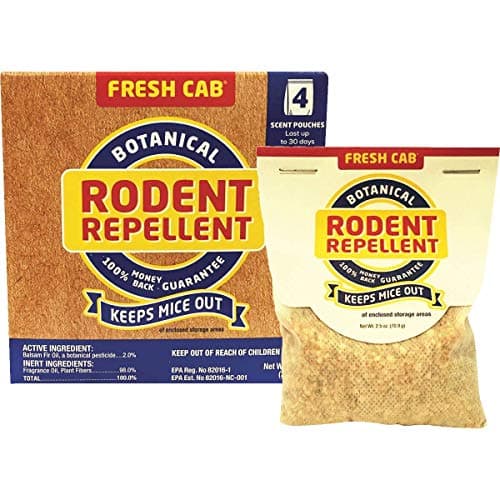 Our pickFresh Cab Botanical Rodent RepellentBalsam fir pouches, EPA minimum-risk registered. Useful for keeping mice out of a space nobody is using; not a solution for an active infestation. | Stored vehicles and cabins | Balsam fir oil | $24.12View on Amazon Price as of October 17, 2026 |
| 2 | 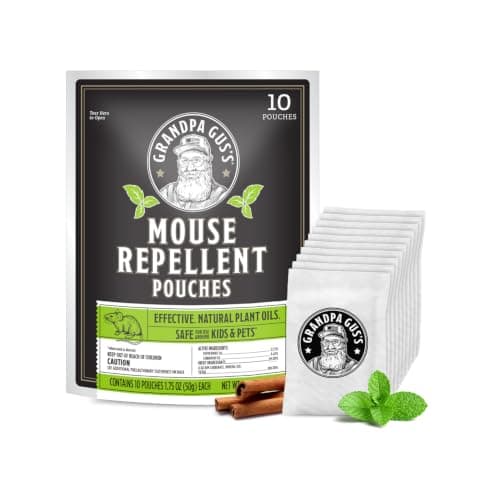 Grandpa Gus's Mouse Repellent PouchesPeppermint and cinnamon oil pouches. Same honest limits as any botanical repellent — a deterrent in a closed space, not a treatment. | Engine bays and drawers | Peppermint + cinnamon oil | $32.99View on Amazon Price as of October 17, 2026 |
| 3 | 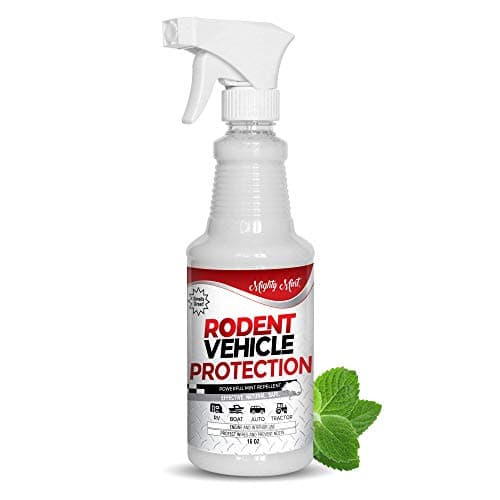 Mighty Mint Rodent Repellent Vehicle SprayA peppermint-oil spray formulated for engine bays and interiors. Covers surfaces a pouch cannot, and the label is honest that it needs reapplying roughly twice a week. | Treating an engine bay quickly | Peppermint essential oil | $19.78$21.9810% offView on Amazon Price as of October 17, 2026 |
#ad — every price link goes to Amazon and Swat & Snap earns a commission on qualifying purchases. Prices are pulled live from the retailer; where one is not available the button reads “Check price on Amazon” rather than showing a stale number.
Fresh Cab Botanical Rodent Repellent
Earth-Kind · Stored vehicles and cabins
Balsam fir pouches, EPA minimum-risk registered. Useful for keeping mice out of a space nobody is using; not a solution for an active infestation.
- The one repellent category with a real use case: sealed, unoccupied storage
- No mechanism to fail, nothing to reset
- A mouse already nesting in your wall will not leave because of a pouch
- Strong pine smell in a lived-in room
Grandpa Gus's Mouse Repellent Pouches
Grandpa Gus's · Engine bays and drawers
Peppermint and cinnamon oil pouches. Same honest limits as any botanical repellent — a deterrent in a closed space, not a treatment.
- Small enough to tuck into the places mice actually enter
- No bait, no snap, nothing a pet can trip
- Open rooms dilute it to nothing
- Replaced monthly, which people forget by week three
Mighty Mint Rodent Repellent Vehicle Spray
Mighty Mint · Treating an engine bay quickly
A peppermint-oil spray formulated for engine bays and interiors. Covers surfaces a pouch cannot, and the label is honest that it needs reapplying roughly twice a week.
- Reaches surfaces and cable runs that a pouch sitting in a corner never touches
- Plant-based actives, so nothing corrosive going onto engine components
- Twice-weekly reapplication is the real cost, and almost nobody keeps that up
- Washes off and evaporates — on a vehicle you drive, it is gone quickly
- Botanical repellents are not registered for efficacy the way EPA actives are
How the three compare
Built from each product's own stated specifications.
| Fresh Cab | Grandpa Gus's | Mighty Mint Vehicle | |
|---|---|---|---|
| Format | Fiber pouch | Sealed pouch | Trigger spray |
| Active | Balsam fir oil | Peppermint + cinnamon oil | Peppermint oil |
| Registration | EPA minimum-risk (25b) | Botanical, unregistered for efficacy | Botanical, unregistered for efficacy |
| Service life | About 30 days | About 30 days | Manufacturer suggests ~2x weekly |
| Best space | Stored vehicle, cabin, shed | Engine bay, drawer, toolbox | Engine bay, cable runs, interior |
| Covers | A volume | A small void | A surface |
| Smell | Strong pine | Strong mint and spice | Strong mint |
| Pet-safe by design | Yes, if out of reach | Yes, if out of reach | Yes, once dry |
| Works on an active nest | No | No | No |
The row that decides the purchase is "covers". If the thing you are protecting is a volume of air, buy a pouch. If it is a surface, buy the spray. Most people buying for a stored vehicle want both — pouches in the cabin and footwells, spray on the cable runs under the hood.
Where to put them
A stored camper or car. Pouches in the cabin, one per enclosed section: footwells, under the seats, the cab, any storage lockers, and the engine bay. Spray the cable runs and the inside of the engine bay. Park on hard standing rather than grass, leave nothing edible inside, and check monthly rather than in spring. Best rodent repellents for cars and RVs goes into the vehicle case in full, including the capsaicin tape option.
A cabin or house shut for the winter. Pouches in each closed room and cupboard, but do the real work first: every food item out, every gap sealed, and two traps left set as monitors so you know in May whether anything got in.
A shed or outbuilding. Pouch in each closed storage box rather than one in the middle of the floor. The box is the volume that holds a concentration; the shed mostly is not. Best mouse repellents for sheds is the dedicated page.
Drawers and stored textiles. A pouch per drawer works, and it will scent the fabric. Use the mint rather than the fir if that bothers you less.
Not in an open kitchen or basement. If that is where the problem is, this is the wrong product and the money is better spent on traps.
What to do instead if mice are already inside
Droppings, gnaw marks on packaging, scratching in a wall at night, or a stale ammonia smell means you have animals, not a prevention problem. Pouches will not fix that. The sequence that does:
- Lock up every food source — pet food into a lidded bin, dry goods into glass or rigid plastic, crumbs cleaned from under the appliances. What attracts mice is the full list.
- Set several traps flat against the walls on active runways, baited with a pea-sized smear. How many mouse traps do I need if you are unsure of the count.
- Seal the gaps with stainless steel wool and sealant once the catching slows — a mouse fits through a quarter-inch opening.
- Clean up properly, without sweeping or vacuuming dry droppings. Cleaning up mouse droppings has the method.
Expect that to be largely over inside two weeks — how long does it take to get rid of mice has the day-by-day timeline. Then pouches become useful again, as the thing you leave in the stored boxes afterwards.
What to skip
- Ultrasonic plug-ins. Repeated testing does not support them, and they are sold on exactly the same promise as a pouch without even the limited sealed-volume case. Do ultrasonic repellers work.
- Dryer sheets and loose cotton balls soaked in peppermint oil. The DIY version of a pouch, with less oil and a faster fade. If you want the sealed-volume effect, buy a product engineered to release slowly.
- One pouch for a whole garage. The volume is far too big and the door opens. You have bought a nice smell.
- Poison as a substitute. A poisoned mouse dies in a wall cavity, and in a stored vehicle or cabin that is a smell you inherit in spring. Mouse trap vs poison.
The short version
Buy Fresh Cab for a stored vehicle, a cabin or a shed, one pouch per enclosed 125 cubic feet, replaced monthly. Buy Grandpa Gus's for the small closed voids — engine bay, toolbox, drawer. Add the Mighty Mint spray if what you are protecting is a cable run rather than a volume of air. And if there are already droppings in your kitchen, close this page and buy traps instead: pouches prevent a mouse from choosing a space, and nothing on this page removes one that already has.
Frequently asked
Do mouse repellent pouches actually work?
How many mouse repellent pouches do I need?
How long do mouse repellent pouches last?
Are mouse repellent pouches safe for pets?
Will a repellent pouch get rid of mice already in my house?
Is Fresh Cab or peppermint better for a stored RV?
More on mice
One mouse is rarely one mouse. This hub covers what kills them, what only looks like it does, and where to put the thing you buy.
Not sure yet? Read how we pick.
Ryder M.
Ryder M. is the hands-on owner behind Magoo Media Group. He writes Swat & Snap because he got tired of pest-control advice that was either a sales pitch or a scare story.
Related on Swat & Snap
- The best rodent repellents for cars and RVsPouches, sprays, capsaicin tape and under-hood devices for stored cars and RVs — with honest limits on each.
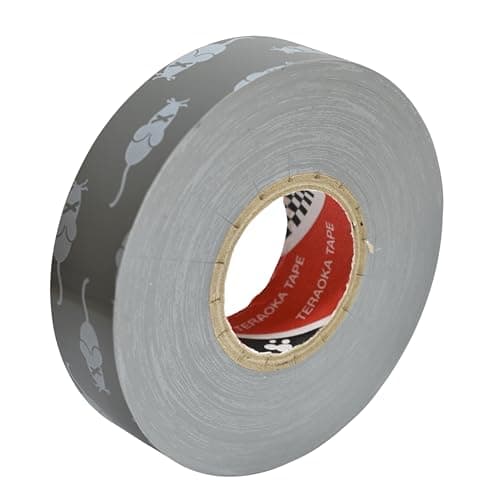
- Best mouse repellents for shedsBalsam fir pouches for a closed shed, peppermint for drawers and engines, spray for surfaces, and an enclosed trap for when mice are already in.
- Natural mouse repellentsThe narrow case where botanical pouches work — stored vehicles, cabins, closed drawers — and where they do not.
- Do ultrasonic repellers work on mice?The short answer is no. Why they seem to work for a fortnight, and what the testing actually found.
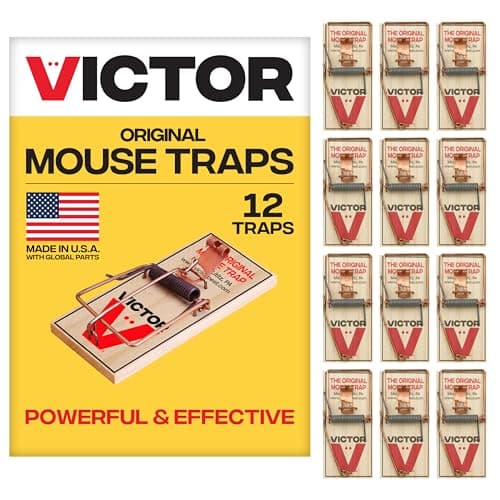
- What attracts mice to your house?The food, warmth and shelter that actually pull mice indoors, ranked by how much difference removing each one makes.
- The best mouse traps, by situationSix traps chosen by situation — cheap and plentiful, pet-safe by design, no-touch, or live catch.