The best rat repellents
This is the category where we have to lead with the bad news. A rat that has found food, water and cover on your property is not leaving because something smells unpleasant — and the products that promise otherwise are the most over-sold thing in rodent control.
By Ryder M.Published Updated

Swat & Snap earns a commission from qualifying purchases made through the links on this page, at no extra cost to you. It does not change which products we pick — see how we pick and our affiliate disclosure.
Start here: what a repellent can and cannot do
We sell nothing, and the only thing this page is worth to you is an honest answer, so here it is up front.
A repellent can discourage a rat from choosing a space it has not settled in. That is a real effect, in a real situation: a camper stored for the winter, a shed nobody opens between October and April, a closed engine bay, a cabin shut up for the season. In those places a volatile oil builds up in a small, still volume, and a rat weighing up whether to move in has a reason to go somewhere else.
A repellent cannot evict a rat that has already settled. This is the part the packaging is quietest about and the reason most people conclude the whole category is a fraud. A rat with a nest, a food source and a water source has made an enormous investment in that location. Rats are neophobic — genuinely wary of anything new — but that wariness is about new objects in a known territory, and it fades in days. A smell it dislikes is simply not stronger than a food supply it depends on.
So the honest framing, and the one this page is built on, is:
| Repellent | Traps + food removal + sealing | |
|---|---|---|
| Stops a rat moving into an unused space | Sometimes, in a sealed volume | Partly — sealing does |
| Removes rats already present | No | Yes |
| Works in an open yard | No | Yes |
| Works in an occupied house | Barely | Yes |
| Needs replacing monthly | Yes | No |
| Tells you whether it worked | No | Yes — you get a count |
If you are reading this because there are droppings in your garage, the row that matters is row two. Go to best rat traps and come back for the repellent later, as the thing you leave in the space afterwards.
Why rats are harder to repel than mice
It is worth understanding why this category underperforms on rats specifically, because the same products do marginally better on mice and the marketing does not distinguish.
Rats are bigger, and they commit harder. A Norway rat eats around an ounce a day and drinks daily. A colony that has found that on your property has solved a hard problem and will tolerate a lot of unpleasantness to keep it. A mouse living off crumbs is a cheaper animal to displace.
Rats habituate fast. Neophobia makes a rat avoid a new pouch for a few days. That is the window people mistake for efficacy. By week two the pouch is part of the furniture, and the oils have faded anyway.
Rats travel further. A rat will range a hundred feet or more between harborage and food, so an outdoor "repellent zone" has to hold a concentration across a space that is open to the wind. It cannot.
And rats dig and climb. Even if a repellent did push them off one route, a rat has more options than a mouse does — under decking, along a drain run, up a downpipe, through a soffit. What attracts rats covers what is actually drawing them; rats in the walls covers where they end up.
What to look for
An enclosed, small, unoccupied volume — this is the whole specification. If you cannot describe the space as sealed, small and unused, the product is going to disappoint you regardless of brand. A shed with the door shut qualifies. A garage with the door up half the day does not.
Cubic feet, not square feet. Fresh Cab's own guidance is roughly one pouch per 125 cubic feet — about the inside of a small camper or a garden shed. Any figure quoted in square feet for a pouch product is marketing rather than a specification.
A stated service life and a plan for honoring it. Essentially every botanical pouch on the market is spent in about 30 days. The real failure mode of this category is not chemistry, it is week three, when nobody replaces them. If you are protecting something over a six-month winter, buy six months at once and write the date on the pouch.
Registration status, read honestly. Fresh Cab is registered with the EPA under the minimum-risk (25b) exemption. That means its ingredients sit on an approved low-risk list. It does not mean the EPA reviewed and confirmed that it works, the way it does for a conventional pesticide active. Treat efficacy claims on every botanical repellent — including the ones we recommend — as unverified.
Surfaces need a spray; volumes need a pouch. A pouch sitting in the corner of an engine bay is not protecting a wiring loom four feet away. If the thing you are protecting is a run of cable, that is a spray job, and the trade is reapplication frequency.
Nothing that can be eaten by a pet. Pouches are not food, and a dog that chews through a peppermint-oil pouch will have a bad night. In a stored vehicle that is easy to arrange; in a kitchen cupboard it is not.
Skepticism about anything electronic. Ultrasonic and strobe devices are the biggest sellers in this category and the weakest performers. We include one below because people buy it anyway and deserve an honest read rather than a blank space.
And a price bracket, not a promise. These are inexpensive products — pouches and sprays sit at the low end of what you would spend on rodent control, and the electronic devices are a step up. None of them is expensive enough that cost should drive the decision; the decision is whether the space fits the use case at all.
Quick picks
| # | Product | Best for | Mechanism | Price |
|---|---|---|---|---|
| 1 | 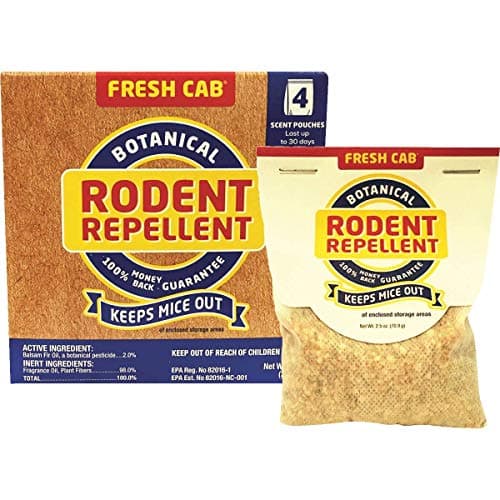 Our pickFresh Cab Botanical Rodent RepellentBalsam fir pouches, EPA minimum-risk registered. Useful for keeping mice out of a space nobody is using; not a solution for an active infestation. | Stored vehicles and cabins | Balsam fir oil | $23.56$24.705% offView on Amazon Price as of October 23, 2026 |
| 2 | 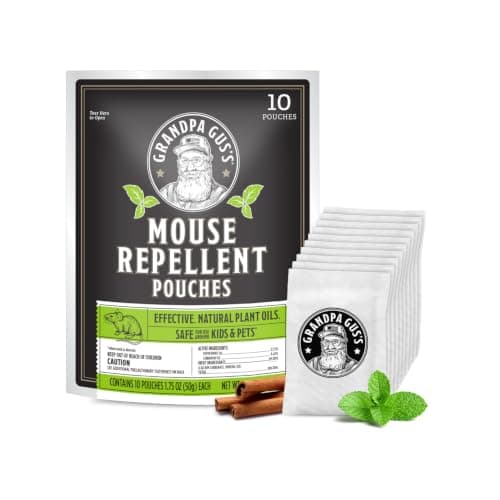 Grandpa Gus's Mouse Repellent PouchesPeppermint and cinnamon oil pouches. Same honest limits as any botanical repellent — a deterrent in a closed space, not a treatment. | Engine bays and drawers | Peppermint + cinnamon oil | $32.99View on Amazon Price as of October 23, 2026 |
| 3 | 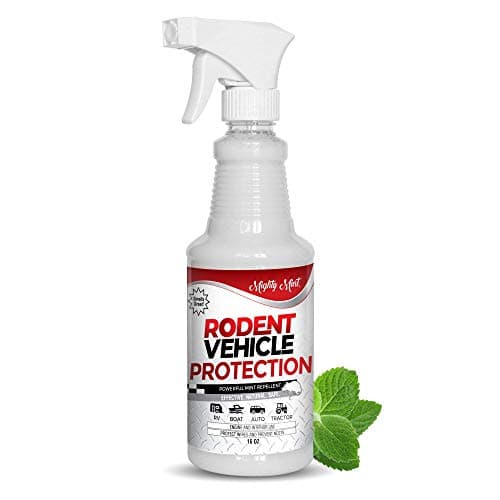 Mighty Mint Rodent Repellent Vehicle SprayA peppermint-oil spray formulated for engine bays and interiors. Covers surfaces a pouch cannot, and the label is honest that it needs reapplying roughly twice a week. | Treating an engine bay quickly | Peppermint essential oil | $21.98View on Amazon Price as of October 23, 2026 |
| 4 | 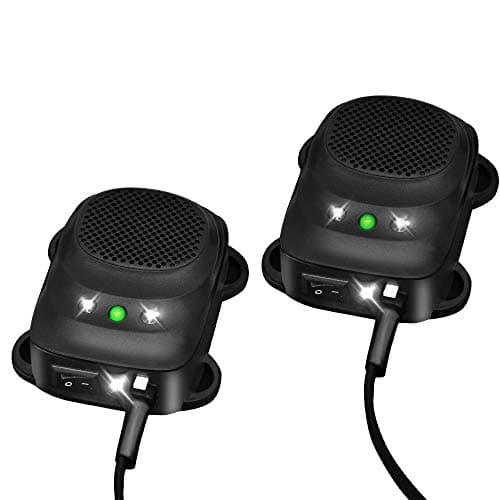 Loraffe Under Hood Animal RepellerAn under-hood unit combining ultrasound with an LED strobe. We list it because it dominates this search, and because the strobe is the half with a plausible mechanism — not the ultrasound. | The category people buy — read our caveat | Ultrasound + LED strobe | $55.90View on Amazon Price as of October 23, 2026 |
#ad — every price link goes to Amazon and Swat & Snap earns a commission on qualifying purchases. Prices are pulled live from the retailer; where one is not available the button reads “Check price on Amazon” rather than showing a stale number.
Fresh Cab Botanical Rodent Repellent
Earth-Kind · Stored vehicles and cabins
Balsam fir pouches, EPA minimum-risk registered. Useful for keeping mice out of a space nobody is using; not a solution for an active infestation.
- The one repellent category with a real use case: sealed, unoccupied storage
- No mechanism to fail, nothing to reset
- A mouse already nesting in your wall will not leave because of a pouch
- Strong pine smell in a lived-in room
Grandpa Gus's Mouse Repellent Pouches
Grandpa Gus's · Engine bays and drawers
Peppermint and cinnamon oil pouches. Same honest limits as any botanical repellent — a deterrent in a closed space, not a treatment.
- Small enough to tuck into the places mice actually enter
- No bait, no snap, nothing a pet can trip
- Open rooms dilute it to nothing
- Replaced monthly, which people forget by week three
Mighty Mint Rodent Repellent Vehicle Spray
Mighty Mint · Treating an engine bay quickly
A peppermint-oil spray formulated for engine bays and interiors. Covers surfaces a pouch cannot, and the label is honest that it needs reapplying roughly twice a week.
- Reaches surfaces and cable runs that a pouch sitting in a corner never touches
- Plant-based actives, so nothing corrosive going onto engine components
- Twice-weekly reapplication is the real cost, and almost nobody keeps that up
- Washes off and evaporates — on a vehicle you drive, it is gone quickly
- Botanical repellents are not registered for efficacy the way EPA actives are
Loraffe Under Hood Animal Repeller
Loraffe · The category people buy — read our caveat
An under-hood unit combining ultrasound with an LED strobe. We list it because it dominates this search, and because the strobe is the half with a plausible mechanism — not the ultrasound.
- An engine bay is a small enclosed volume, which is the one condition where a repellent has a chance
- The LED strobe is the more defensible half — rodents avoid lit, exposed spaces
- Published extension testing does not support ultrasound for rodent control, and rodents habituate to a constant sound
- Wired versions draw from the battery; battery versions go flat without telling you
- No substitute for exclusion and trapping around where the vehicle is parked
How the four compare
Built from each product's own stated specifications.
| Fresh Cab | Grandpa Gus's | Mighty Mint Vehicle | Loraffe Under Hood | |
|---|---|---|---|---|
| Format | Fiber pouch | Sealed pouch | Trigger spray | Electronic device |
| Active | Balsam fir oil | Peppermint + cinnamon oil | Peppermint oil | Ultrasonic + flashing light |
| Registration | EPA minimum-risk (25b) | Botanical, unregistered for efficacy | Botanical, unregistered for efficacy | Device, not a pesticide |
| Service life | About 30 days | About 30 days | Manufacturer suggests ~2x weekly | Battery-powered, ongoing |
| Covers | A volume | A small void | A surface | Claims a volume |
| Best space | Stored vehicle, shed, cabin | Engine bay, drawer, toolbox | Engine bay, cable runs | Engine bay |
| Smell | Strong pine | Strong mint and spice | Strong mint | None |
| Evicts an established colony | No | No | No | No |
| Our confidence | Moderate, in a sealed space | Moderate, in a small void | Low — reapplication kills it | Low — see the caveat |
The row we would ask you to read twice is the second from the bottom. Every product in this category shares that answer, and any page that tells you otherwise is selling you something.
The honest cons, pick by pick
Fresh Cab. The pine smell is strong and it transfers to fabric, which matters in a camper you will sleep in next spring. Thirty days is thirty days — a pouch put in during October has done nothing by Christmas. And a rat already nesting in the shed will not leave because of it.
Grandpa Gus's. Small enough to tuck into the places rodents actually enter, which is its real advantage, but an open room dilutes it to nothing within hours. Monthly replacement is the plan and almost nobody keeps to it past week three.
Mighty Mint vehicle spray. It reaches cable runs and surfaces a pouch never touches, and the label is honest that it needs reapplying roughly twice a week. That is the real cost of this product, and on a vehicle you actually drive it is close to pointless — it washes off and evaporates.
Loraffe under-hood device. This is the category people search for and we are not going to pretend the evidence supports it. Ultrasonic output does not travel through sheet metal, it does not go round corners, and published testing on ultrasonic rodent repellers has repeatedly failed to find a durable effect. The flashing light may do marginally more than the sound. If you buy it, buy it as a supplement to pouches and sealing rather than as the solution, and do not run one in a space where a pet rodent lives. Our full read is on do ultrasonic repellers work.
Where repellents genuinely earn their place
Four situations, and only four.
A stored vehicle, camper or boat. The strongest case in the category. Pouches in each enclosed section — cab, footwells, under the seats, lockers, engine bay — plus spray on the cable runs. Park on hard standing rather than grass, leave nothing edible inside, and check monthly instead of in spring. Best rodent repellents for cars and RVs goes through the vehicle case in full, including the capsaicin tape option.
A shed or outbuilding shut for the season. One pouch per closed storage box beats one pouch in the middle of the floor, because the box is the volume that holds a concentration and the shed mostly is not.
A cabin or property closed up for months. Pouches in each closed room and cupboard — but do the real work first: all food out, gaps sealed, and two traps left set as monitors so you know in spring whether anything got in.
A closed engine bay on a vehicle that sits. Pouch plus spray, replaced on schedule.
Notice what is not on that list: your kitchen, your basement, your attic, your yard. In every one of those, the money is better spent on traps.
What to do instead when rats are already there
Droppings half an inch or longer, gnawed cable or packaging, greasy smear marks along a joist or skirting, scratching in a wall at night, or a burrow entrance in the yard means you have animals, not a prevention problem. The sequence that works:
- Cut the water. This is the step people skip and it is the one rats cannot design around — unlike mice, a rat needs to drink daily. Fix the dripping outside tap, lid the water butt, bring pet bowls in at night, clear the blocked gutter.
- Cut the food. Compost with no cooked waste in a bin with a solid base, catch trays under bird feeders, latching bin lids, chicken and pet feed into metal bins, windfall fruit picked up. What attracts rats is the full list.
- Cut the cover. A clear strip along the fence line, stored timber up off the ground, ivy off the wall, nothing stacked against the house. Rats will not cross open ground if they can avoid it.
- Trap, in quantity, pre-baited. Rat-sized traps on confirmed runways, left unset with bait on them for three to five days so the animals habituate, then armed on the same night. How many rat traps do I need has the counts, and best rat traps for gardens covers the boxed setup for anything outdoors.
- Seal. Hardware cloth, sheet metal or mortar over every gap bigger than a quarter. Not expanding foam alone — rats chew through it.
- Clean up properly once it is over, wet rather than dry, which matters for health rather than for trapping. Cleaning up rat droppings has the method.
Then, and only then, a repellent is a sensible thing to leave in the stored boxes afterwards.
What to skip
- Ultrasonic plug-ins for a room or a yard. The testing does not support them, and an open space is the worst possible condition for any sound-based claim.
- Ultrasonic stakes in a garden. There is nothing to hold a sound field outdoors at all.
- Peppermint oil on cotton balls. The DIY version of a pouch with less oil and a faster fade. If you want the sealed-volume effect, buy something engineered to release slowly.
- Mothballs. Off-label, and therefore unlawful. Registered mothball labels specify the use site as air-tight containers and storage closets, so scattering them in a crawl space, an attic or along a fence line for rodents is not a use the label permits — and a pesticide label is legally binding. They are also a genuine inhalation hazard in an enclosed space.
- Ammonia dishes and used cat litter. Folk remedies with no supporting evidence, and in the case of ammonia, a real hazard in a confined space.
- Poison as a substitute. A poisoned rat dies somewhere you cannot reach, and anticoagulant bait poisons whatever eats the carcass — owls, foxes, cats and dogs. Rat trap vs poison is the full argument.
- One pouch for a whole garage. The volume is far too big and the door opens. You have bought a nice smell.
The short version
Repellents have one honest job: keeping rats out of a sealed, small, unused space. Buy Fresh Cab for a stored vehicle, a shed or a closed cabin, one pouch per enclosed 125 cubic feet, replaced monthly. Add Grandpa Gus's for the small closed voids and the Mighty Mint spray for cable runs, and treat the under-hood electronic device as a supplement you should not rely on. If there are already droppings on your property, close this page: cut the water, cut the food, cut the cover, trap in quantity after pre-baiting, and seal everything bigger than a quarter. That is what actually moves rats off a property, and no pouch on the market is a substitute for it.
Frequently asked
Do rat repellents actually work?
What is the best rat repellent?
Do ultrasonic rat repellers work?
What smells keep rats away?
Will a repellent get rid of rats in my walls or attic?
Are mothballs a good rat repellent?
How long do rat repellent pouches last?
More on rats
Rats are cautious, strong and much harder to trap than mice. Everything here assumes you only get one good attempt at a wary animal.
Not sure yet? Read how we pick.
Ryder M.
Ryder M. is the hands-on owner behind Magoo Media Group. He writes Swat & Snap because he got tired of pest-control advice that was either a sales pitch or a scare story.
Related on Swat & Snap
- What attracts rats to your house and yard?The food, water and harbourage that actually draw rats to a property, ranked by how much removing each one changes.
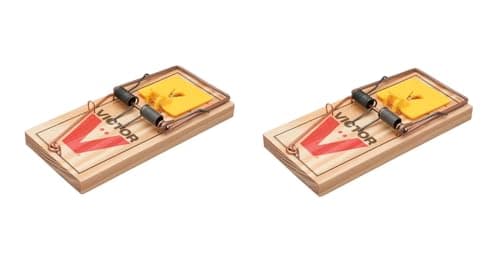
- The best rat traps, by situationSnap, electronic, self-resetting and live traps compared — plus the pre-baiting step that decides success.
- Pet-safe rodent repellentsThe essential oils that are toxic to cats, the ones that are not, and what a repellent can realistically achieve.
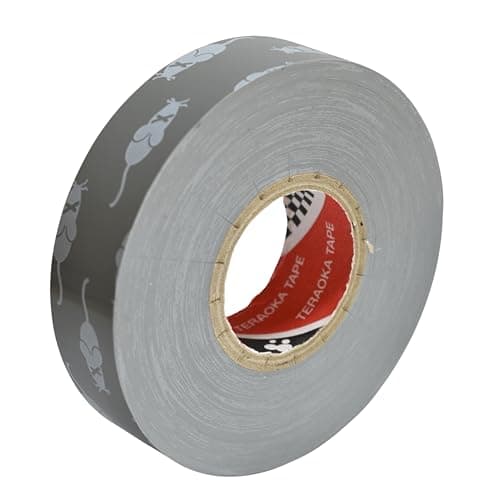
- The best rodent repellents for cars and RVsPouches, sprays, capsaicin tape and under-hood devices for stored cars and RVs — with honest limits on each.
- Do ultrasonic repellers work on mice?The short answer is no. Why they seem to work for a fortnight, and what the testing actually found.
- How to get rid of ratsPre-bait, set everything at once, then exclude. Timeline, the harborage audit, and when to call someone.